Where we heard itCNBC’s “Fast Money,” Oct. 27, 2026, with Evan Brown, lead global multi-asset portfolio manager at UBS Asset Management, the day before the Fed’s rate decision.
Evan Brown thinks bonds finally pay you for the risk. Asked on CNBC’s Fast Money on Oct. 27 whether investors are getting paid to own Treasuries, the UBS Asset Management portfolio manager said yes, and pointed to the coupon. With a 5% coupon on the 10-year, “that’s doing a lot of work for you,” he said.
His math: hold the note for a year, and if yields rise a full point, “your total return is basically flat or just a little bit negative.” Then the other side of the bet.
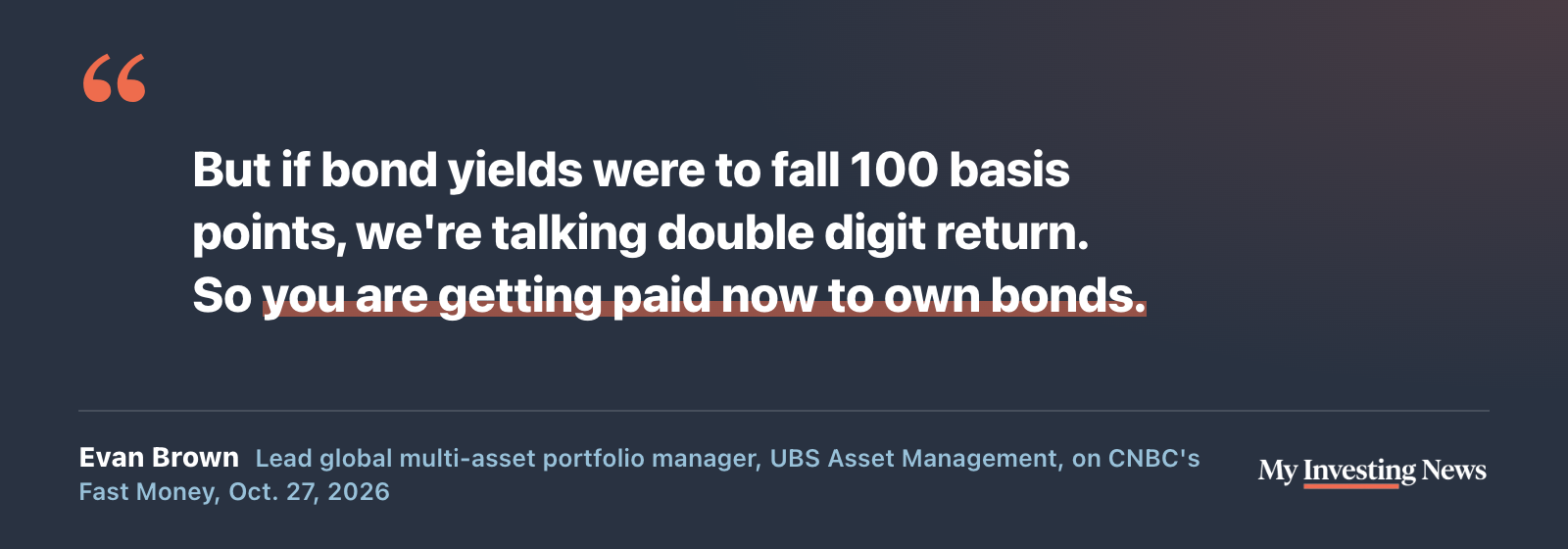
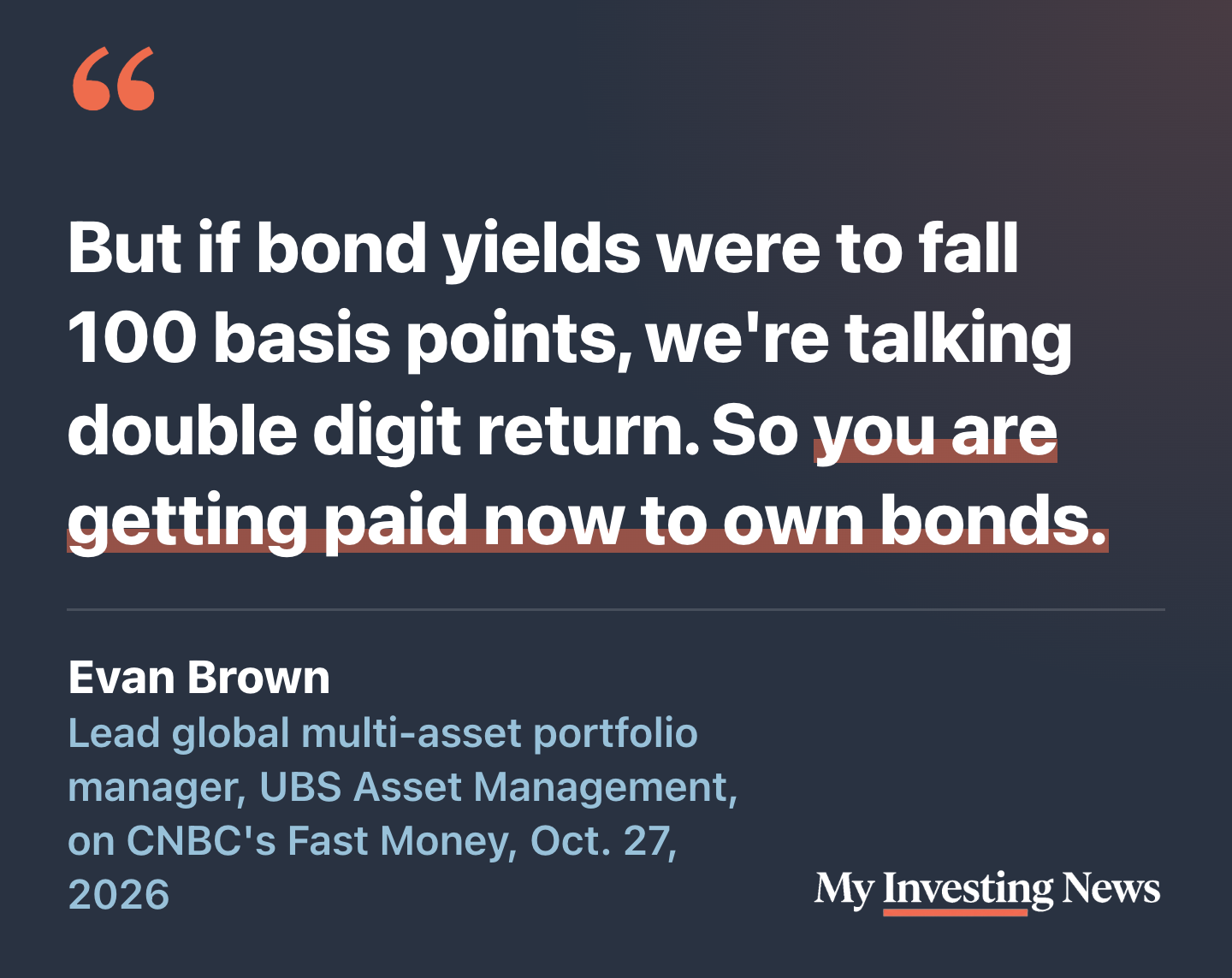
The 10-year Treasury yield closed at 4.99% on Oct. 27. It first closed at 5% this cycle on Sept. 15, its first close at that level since July 2007, and peaked at 5.31% on Oct. 5. Mortgage rates followed the 10-year to a 52-week high on the way up.
Running Brown’s Numbers
His arithmetic holds. Take a new 10-year note bought at par with a 5% coupon. If yields rise one percentage point and stay there for a year, the note’s price falls about 6.9%, the coupon pays 5%, and the total return is a loss of 1.9%. If yields fall a point, the price gain plus the coupon comes to 12.5%. With no change, you earn the coupon, 5.0%. A rise of about 0.72 point is where the coupon stops covering the price loss.
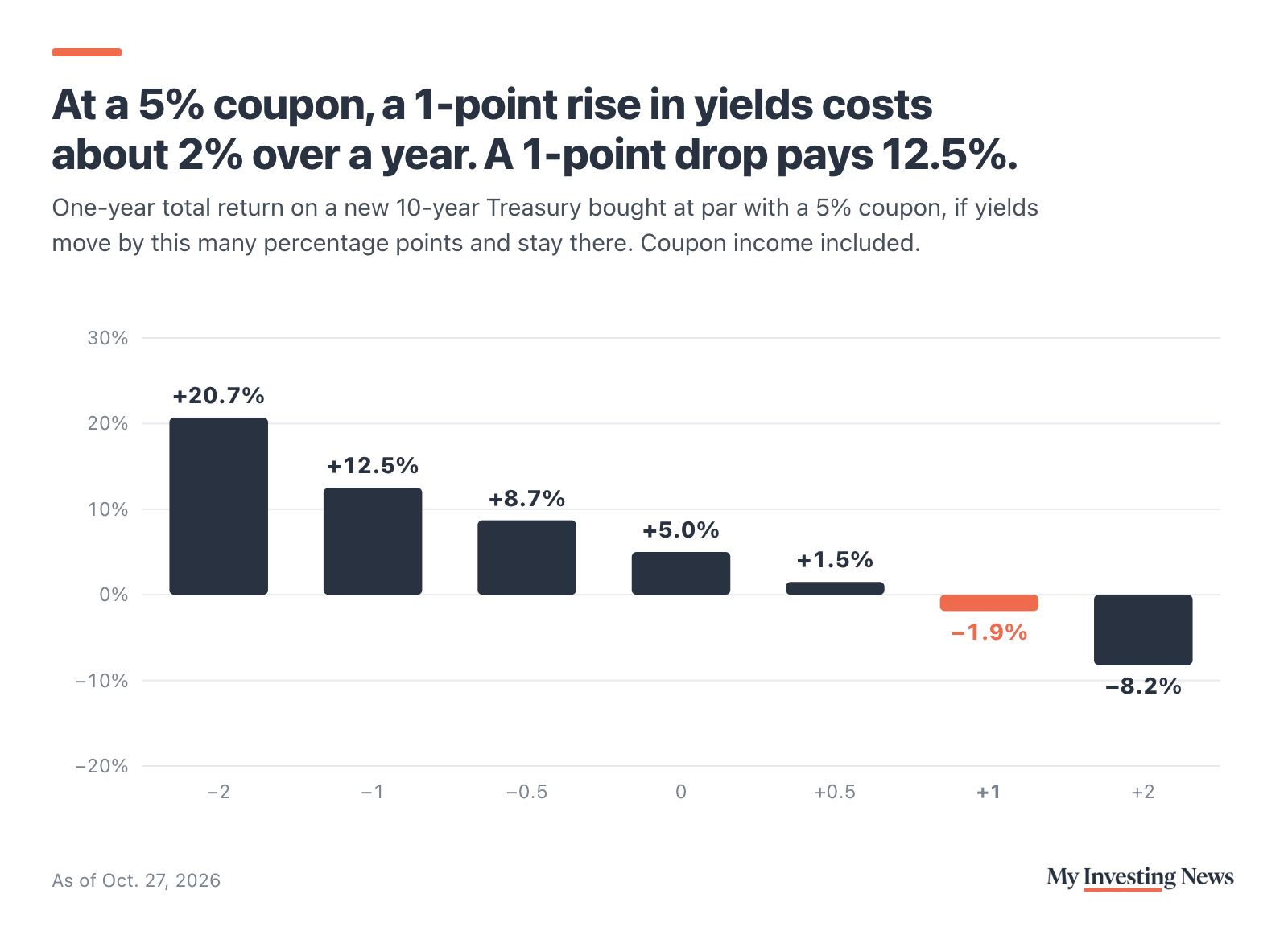
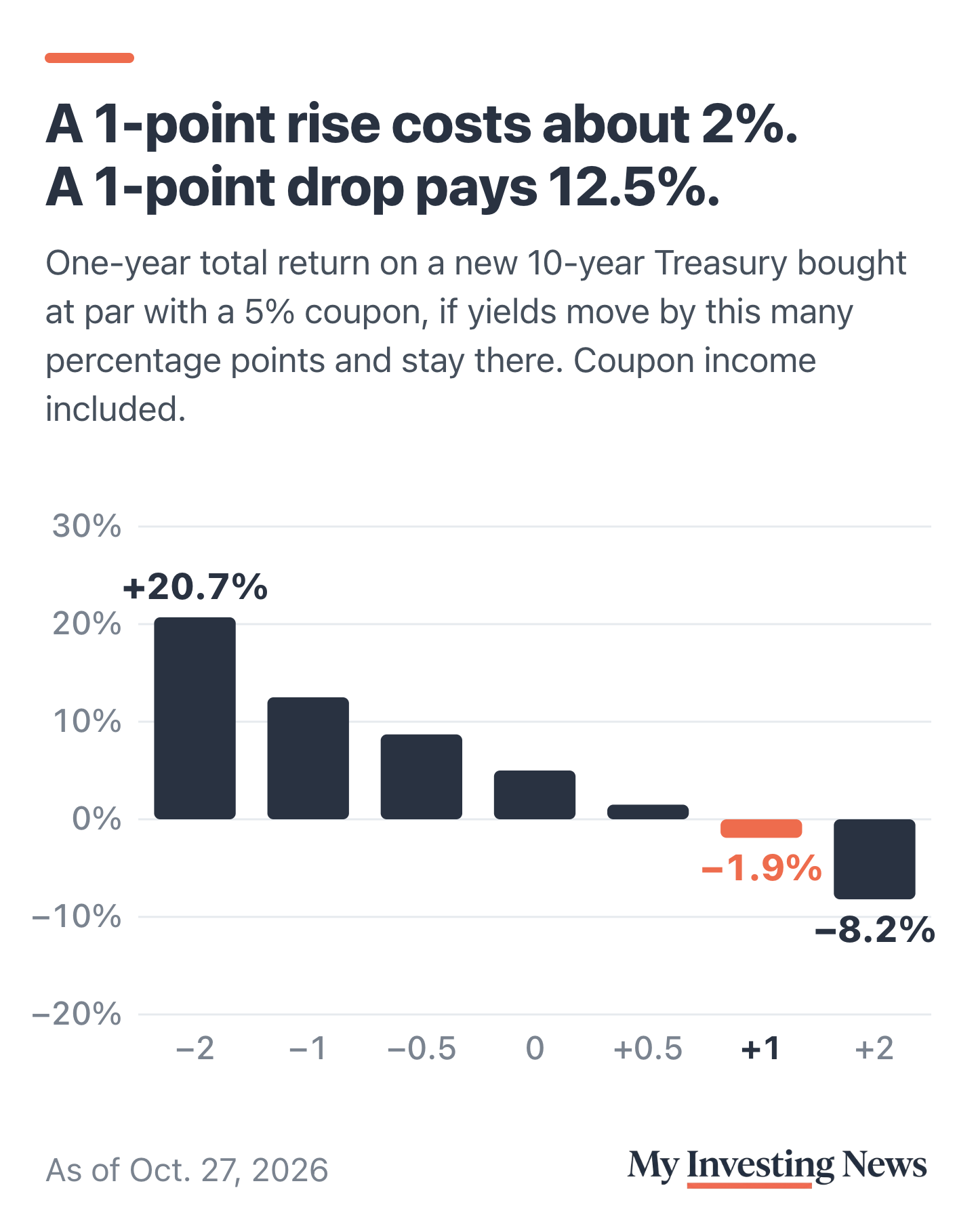
The payoff is lopsided because of how bond math works. A falling yield lifts a bond’s price by more than a rising yield of the same size cuts it, and a higher coupon gives a bigger cushion against losses. On a 2% coupon, the same 1-point rise would cut the price about 7.8% against 2% of interest, for a 5.8% loss. That gap is the work Brown says the coupon is doing.
What 5% Has Meant Since 1962
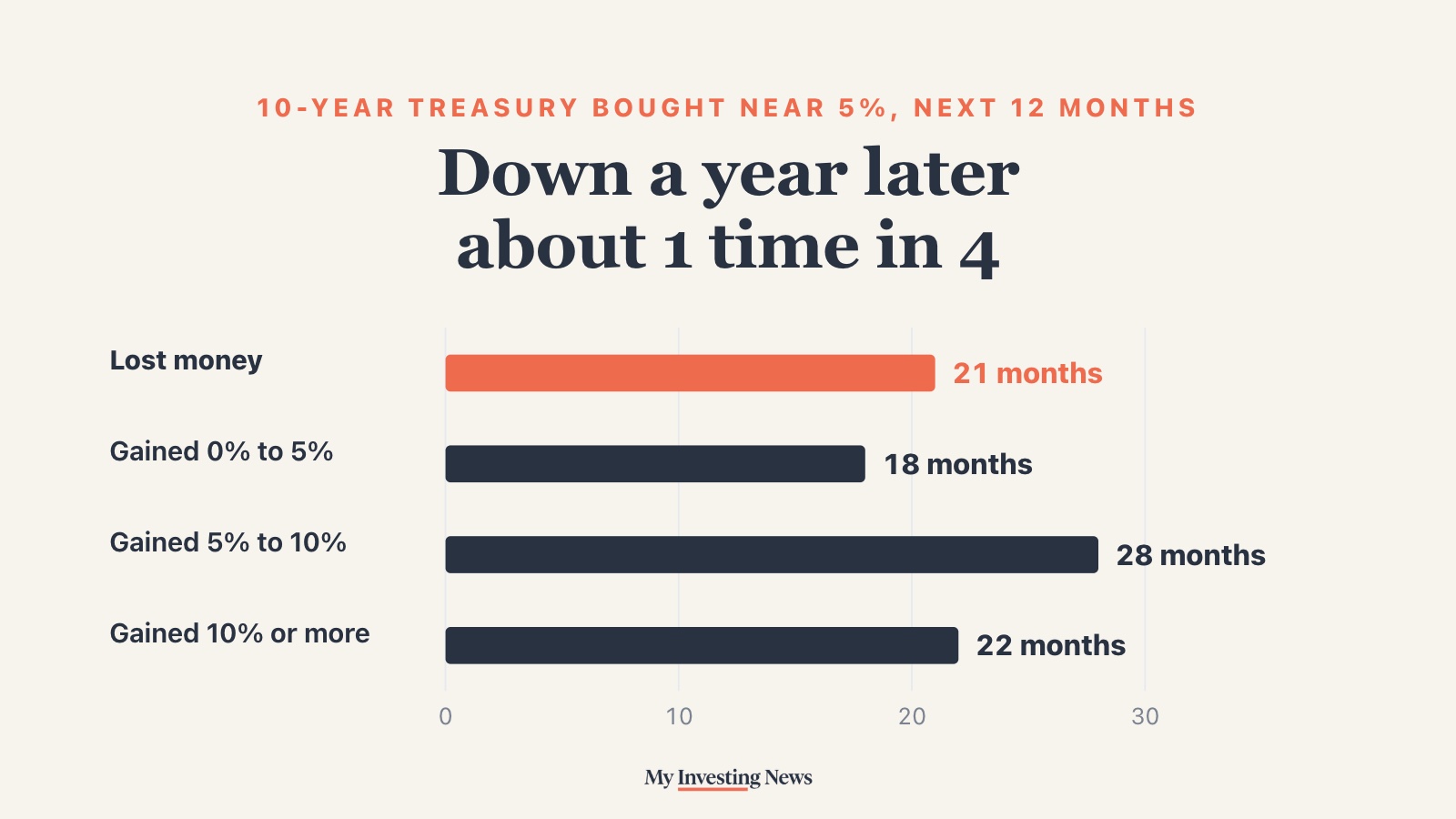
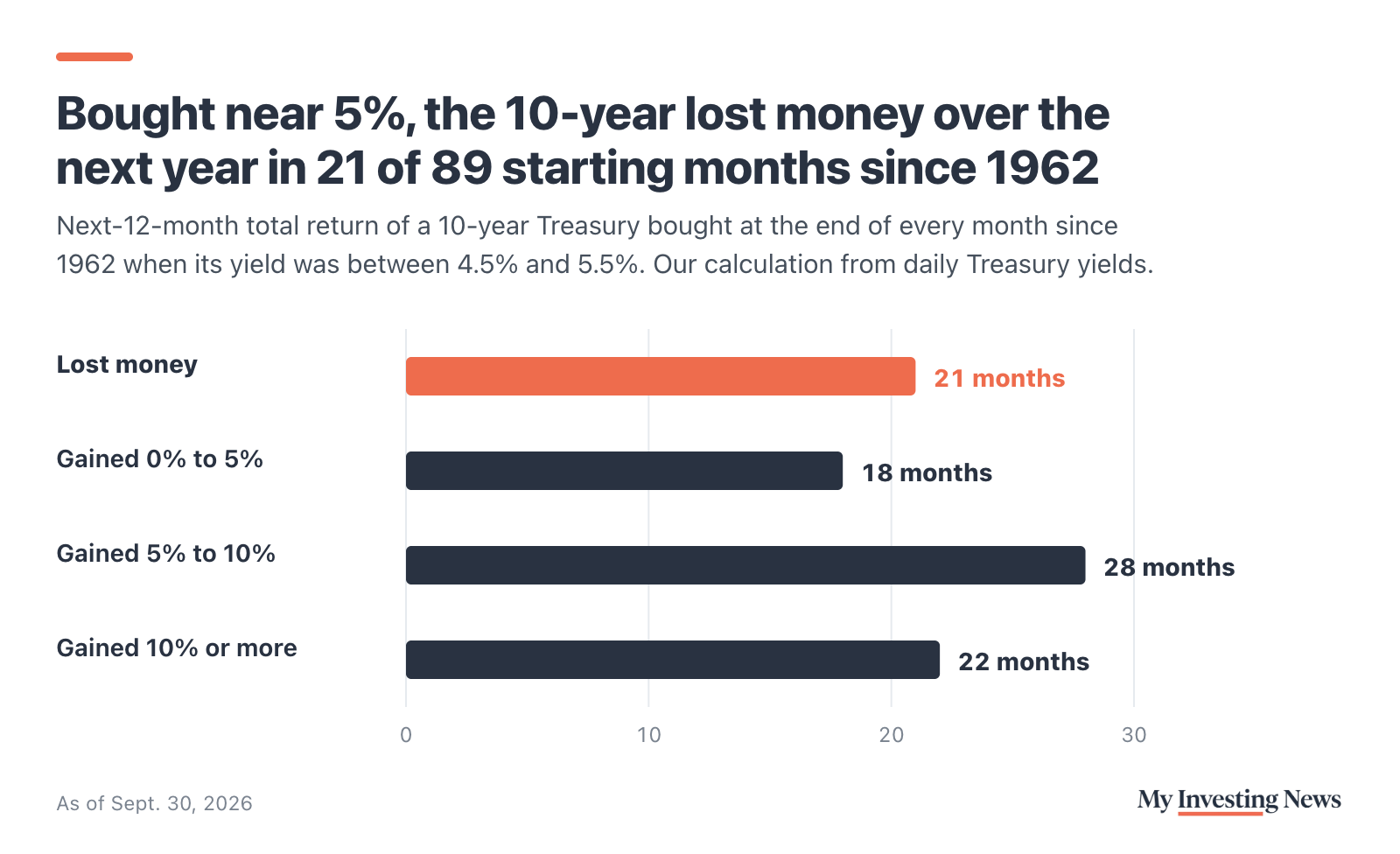
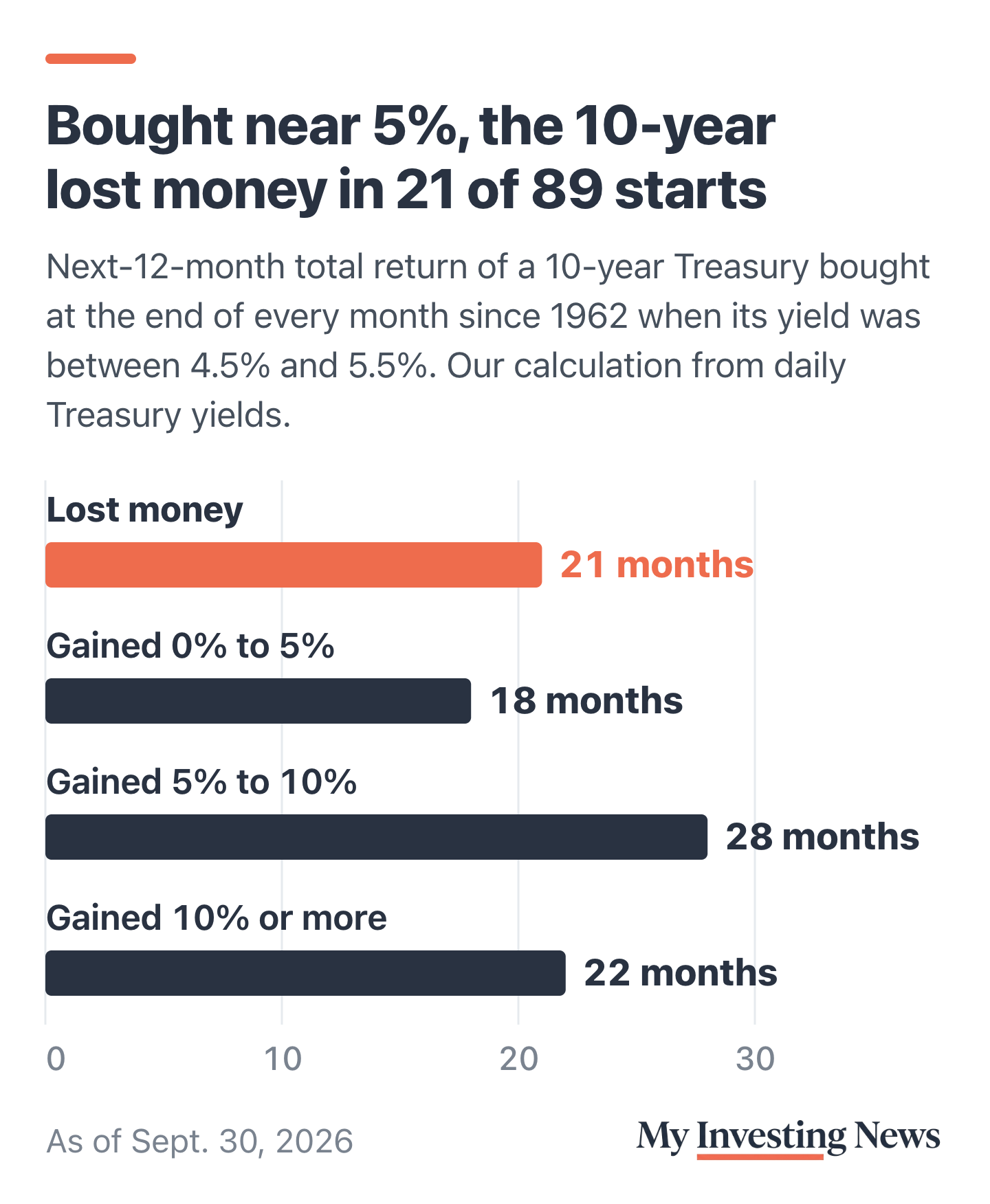
A scenario is one thing. The record is another. We took every month-end since 1962 when the 10-year yield was between 4.5% and 5.5%, 89 months in all, and calculated what a 10-year note bought then returned over the following 12 months, including interest. The starting points cluster in a handful of periods: the mid-1960s, 1993, 1998 to 2002, 2004 to 2007 and 2023 to 2025.
The note made money in 68 of the 89, about three times in four. The median return was 5.7%. It lost money in 21. The worst was a 10.1% loss for a note bought at the end of October 1993, just before the 1994 bond rout. The best was a 19.3% gain from May 2002.
A 10-year bought near 5%, next 12 months
Testing ‘Basically Flat’
History backs both halves of his claim. In the 9 cases where the 10-year started near 5% and yields rose roughly a point over the next year (three-quarters of a point to a point and a quarter), the note returned anywhere from a 3.2% loss to about breakeven. That is “basically flat or just a little bit negative.” In all 11 cases where yields fell a point or more, mostly in 2001 and 2002 and again in 2007, the return was 13.0% to 19.3%, all double digits.
The risk is a bigger rise. In 15 starting months, yields climbed a point or more, and the losses ran from 2.6% to 10.1%. The worst came when yields jumped more than two points, as they did in 1994.
Starting near 5% didn’t make losing years rarer. A 10-year note lost money over the next year 23% of the time across all 765 starting months since 1962, about the same as from 5%. The difference is how much room the coupon leaves. From yields below 2%, the note lost money in 81% of the 59 starting months, all between 2011 and 2022.
What Could Change the Math
Brown spoke the day before the Fed’s Oct. 28 decision. He expected no change, with two or three dissents, and said there was a reasonable case for a hike given recent inflation. Ed Yardeni has argued that surging yields are a sign of strength, and abroad, French bond yields spiked during France’s debt crisis.
The Nov. 3 midterm elections fall between the numbers here and this story. All the yields above are as of Oct. 27, and an election surprise or a Fed turn toward more hikes could push yields up by more than a point. History says that is where the 5% cushion runs out.
Brown says a 5% coupon means investors are now paid to own bonds. The math and the record agree: a 1-point rise has cost roughly 0% to 3% over a year, and a 1-point drop has paid double digits. The risk is a bigger jump in yields, which turned notes bought near 5% into losses of up to 10.1%.