Where we heard itBloomberg Businessweek (radio and podcast), episode “Fed Meets Amidst ‘Most Confusing Economy Yet,’” Oct. 27, 2026. Speaker: Christopher Merrill, co-founder and global CEO of Harrison Street.
Christopher Merrill runs a firm that owns both ends of American life. Harrison Street, which says it manages more than $110 billion in real estate, infrastructure and credit, invests in student housing near big universities and in senior housing. On Bloomberg Businessweek on Oct. 27, he described the two as one business: “our student housing, we have the parents on the lease. And then when you go to senior housing, you get the kids on the lease.”
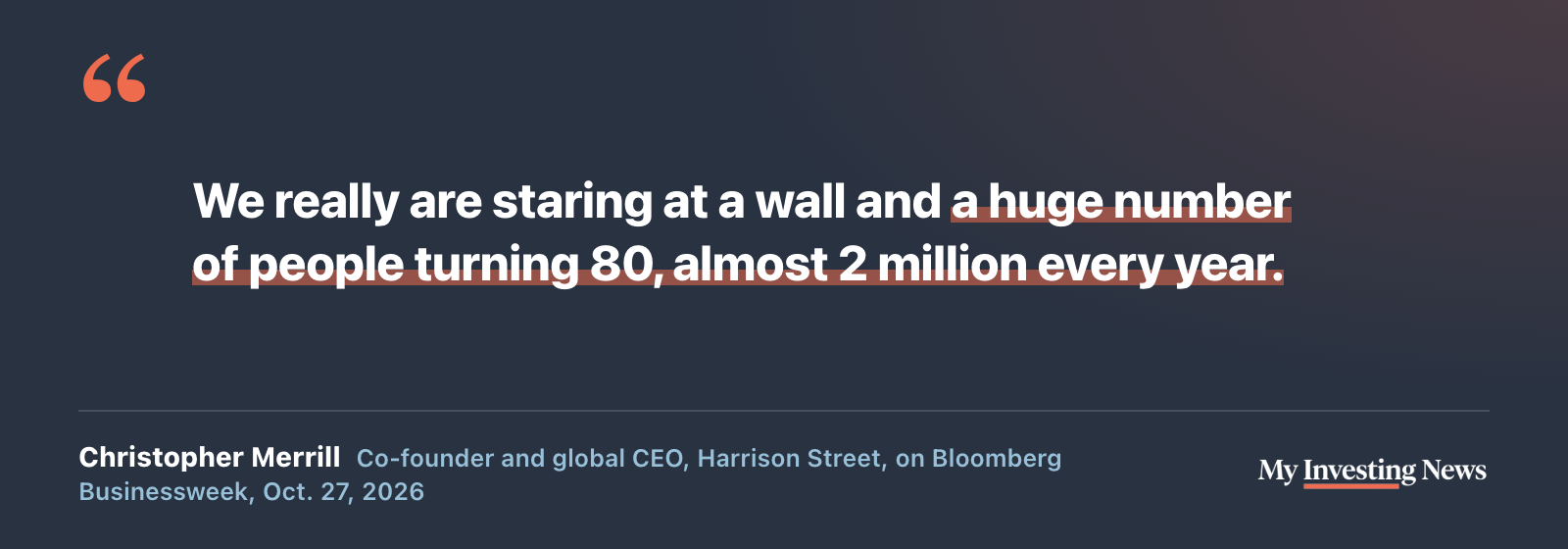
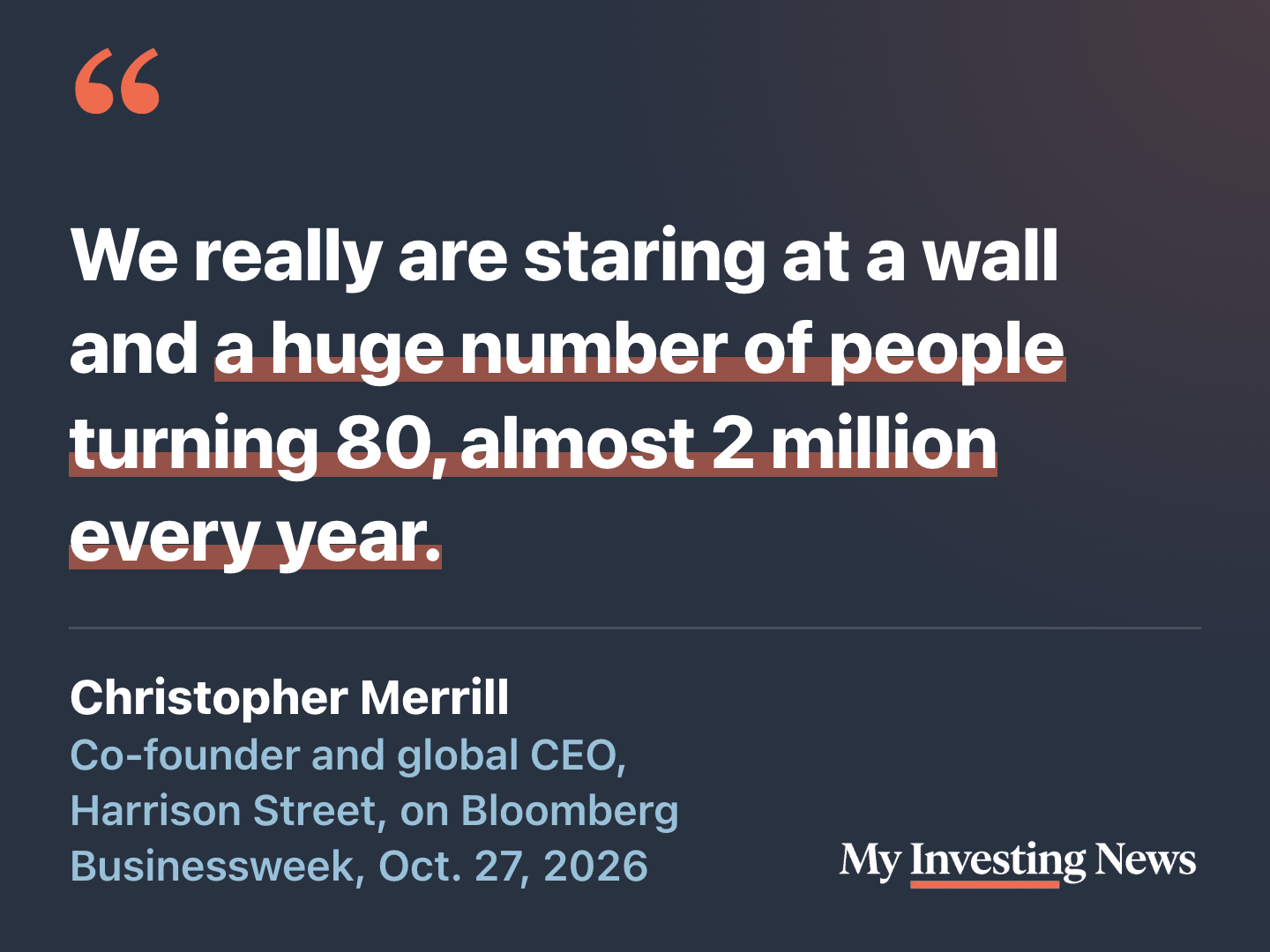
He made two predictions along the way. Asked whether in-person college is at risk, he said: “I do think probably 15 to 20% of the universities will go out of business over time.” Then, turning to the aging population, he described what he sees coming in senior housing:
He added that about one in three people over 85 have some level of dementia or memory-care need, and that the industry is “not creating enough product,” blaming tariffs and higher interest rates for the lack of new supply. We checked his numbers against federal data.
The Wave of 80th Birthdays
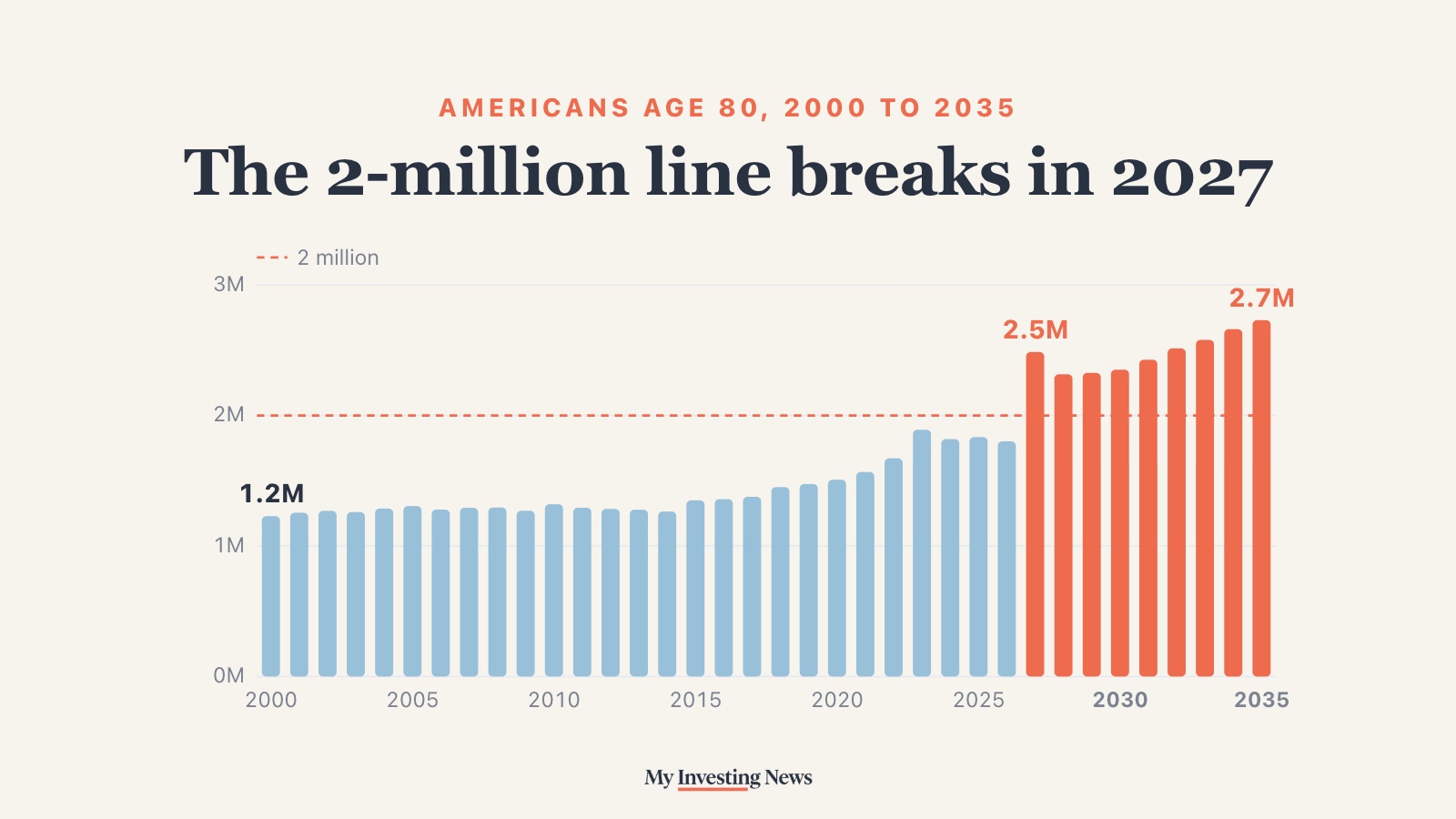
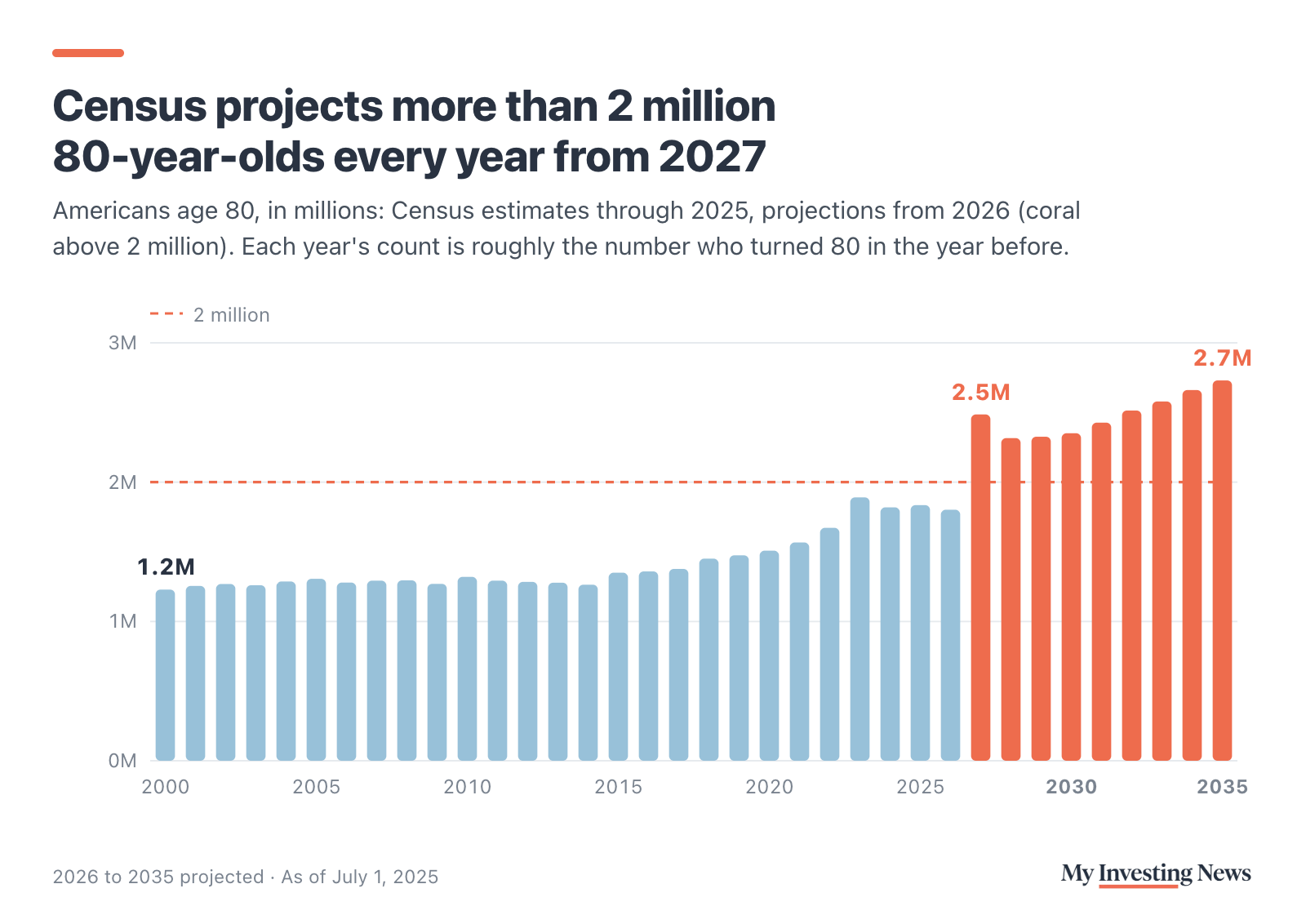
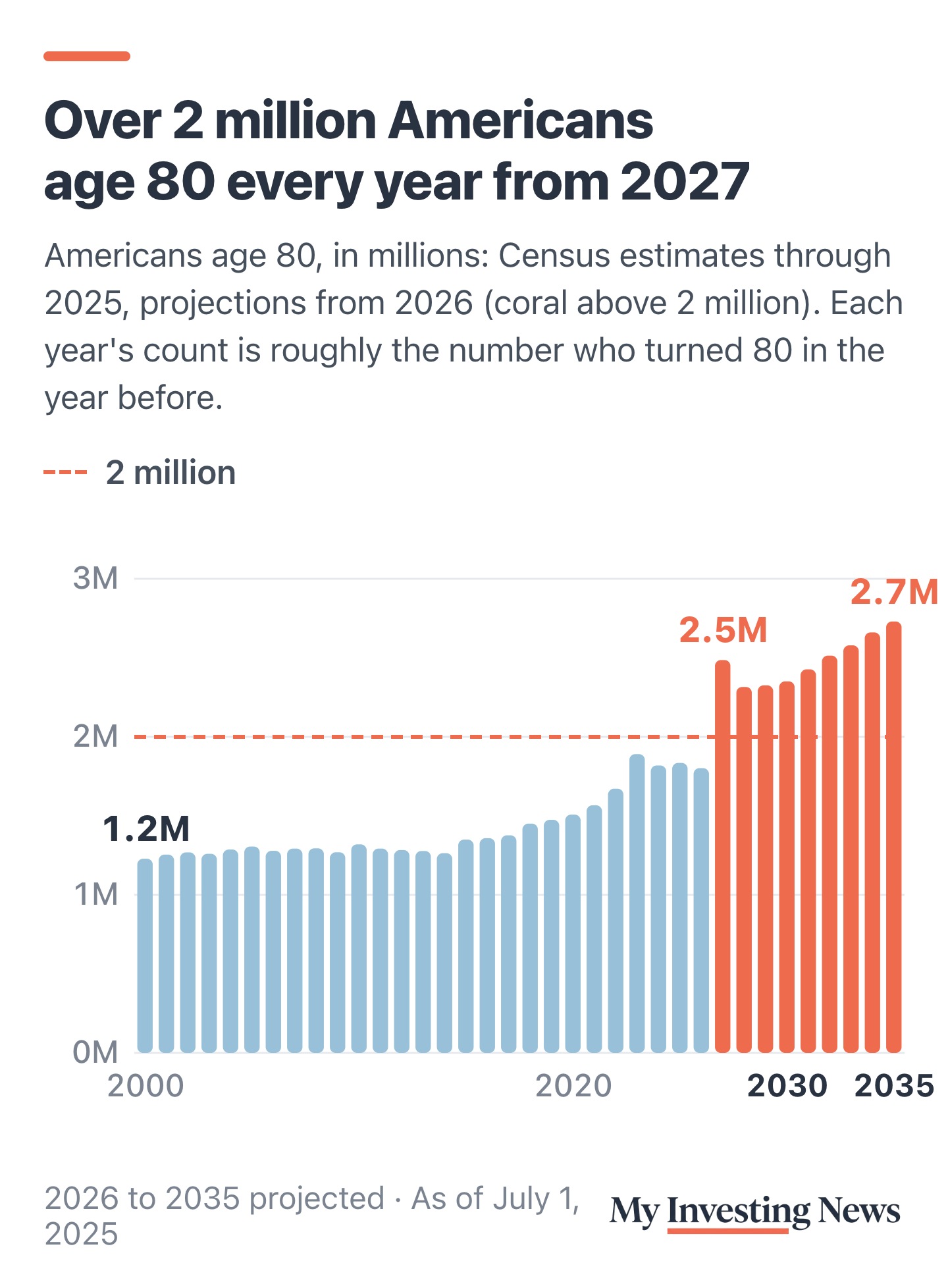
Merrill’s “almost 2 million” is about right for today, and it is low for what comes next. The Census Bureau estimates that 1.84 million Americans were exactly 80 on July 1, 2025, close to the number who turned 80 in the year before. That was up from 1.23 million in 2000, and the recent high was 1.89 million in 2023. Census projections put the count at 1.80 million in 2026, then 2.49 million in 2027.
The jump is the baby boom arriving. The people who turn 80 between mid-2026 and mid-2027 were born between mid-1946 and mid-1947, the first full year of the postwar birth surge. From there, Census projects more than 2 million 80-year-olds every year through 2040, the end of our window, averaging 2.49 million a year from 2027 to 2035. That compares with an average of 1.60 million a year over the past decade.
His dementia figure holds up too. The Alzheimer’s Association’s 2026 Facts and Figures report puts the share of Americans 85 and older with clinical Alzheimer’s dementia at 35.8%, against 13.8% for ages 75 to 84 and 5.2% for ages 65 to 74. That covers Alzheimer’s alone, so the share with any dementia is higher. Census counts about 7.0 million Americans 85 and older today.
Merrill’s claims, checked
The College Closures Already Happened, Mostly at For-Profits
Merrill’s 15% to 20% sounds dramatic, but by the federal count the country has already lost that share of its colleges. There were 3,896 degree-granting institutions in the 2022-23 school year, the latest in the National Center for Education Statistics count, down 830 or 17.6% from 4,726 a decade earlier. NCES records 726 closures over those 10 years.
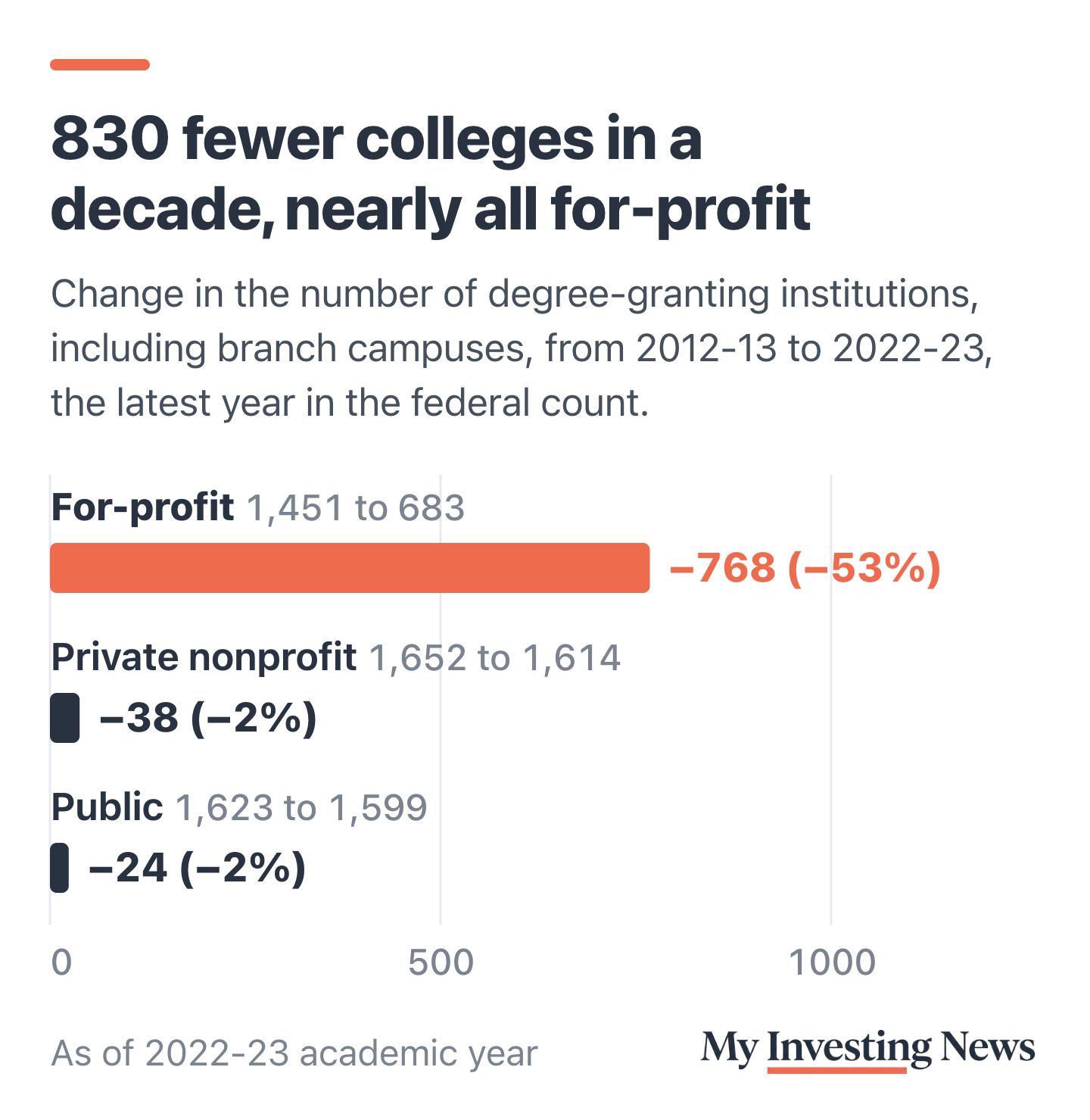
Nearly all of the drop came from for-profit schools, which fell from 1,451 to 683. Private nonprofit colleges, the small schools Merrill says will find it “very hard” to survive, went from 1,652 to 1,614, down 2.3%. Public colleges fell by 24.
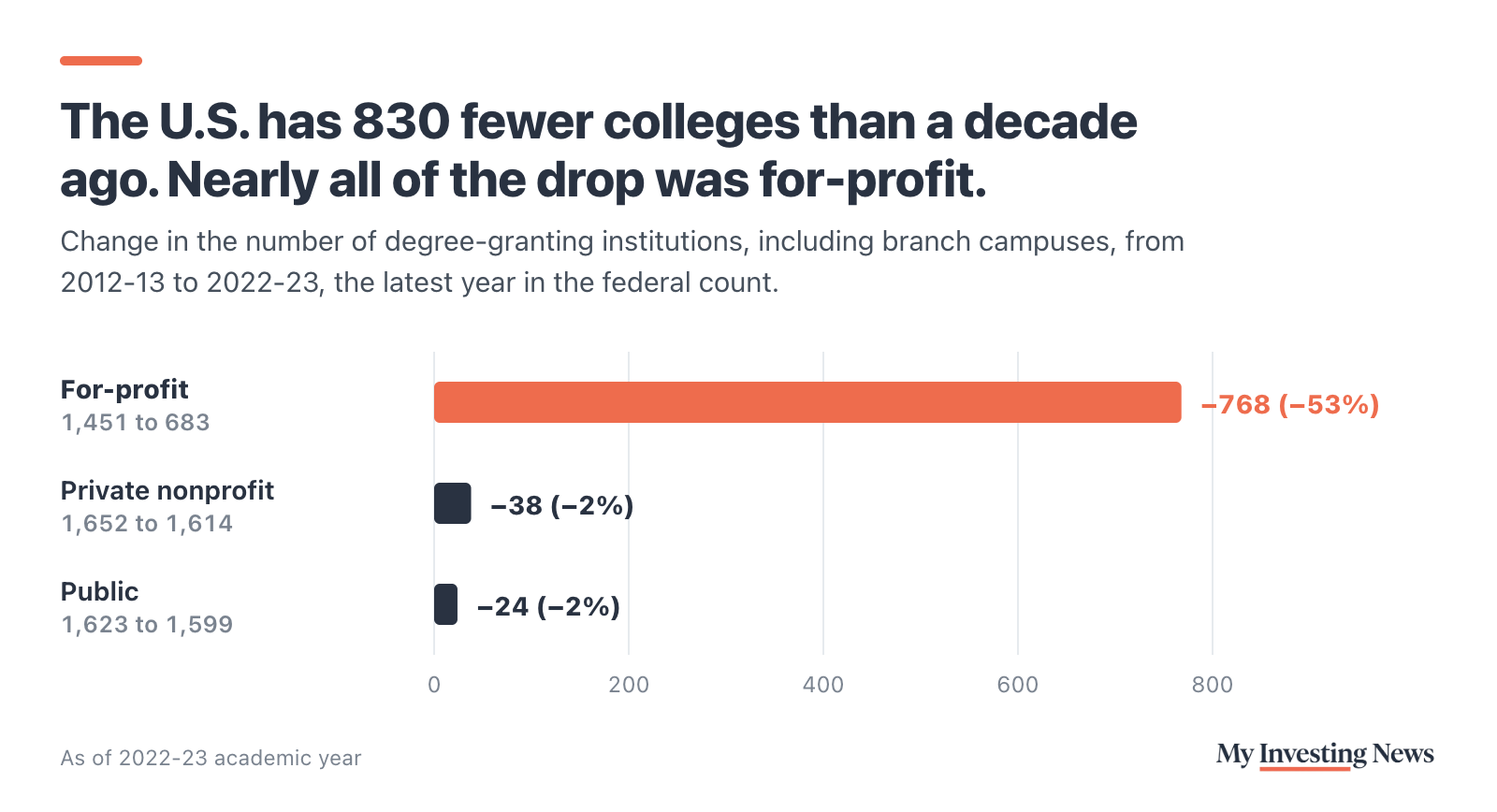
That is the real test of his forecast. Fifteen to 20% of today’s 1,614 private nonprofit colleges would be 242 to 323 schools. NCES counted 141 private nonprofit closures in the decade to 2022-23, so his range would take roughly 17 to 23 years at that pace, or a faster pace than the past decade. He said “over time,” and he did not give a date. Some colleges are already competing on price: more schools now offer three-year bachelor’s degrees.
What to Watch
For families, the numbers point to more competition for senior housing in the late 2020s, as the boomer cohorts reach 80. Merrill’s complaint about supply fits the broader building slump: homebuilder confidence recently hit a 14-year low, with higher rates the main reason cited.
Asked on the same show whether the midterms change his plans, Merrill said an election can move interest rates, rents and new supply, but not people’s need for education or the aging of the population. The next data points are Census’s 2026 population estimates by age, due next year, and the next NCES update, which will add the 2023-24 school year to the closure count.
Merrill says a wall of 80-year-olds is coming and that 15% to 20% of universities will close. Census data backs the first claim and then some: about 1.8 million Americans are 80 now, and Census projects 2.5 million in 2027. The college count has already fallen about 18% in a decade, but nearly all of that was for-profit schools, so his forecast for smaller nonprofits is still a forecast.