Where we heard itBloomberg Businessweek with Carol Massar and Tim Stenovec, Oct. 23, 2026, with Ray Madoff, a professor at Boston College Law School and author of “The Second Estate: How the Tax Code Made an American Aristocracy.”
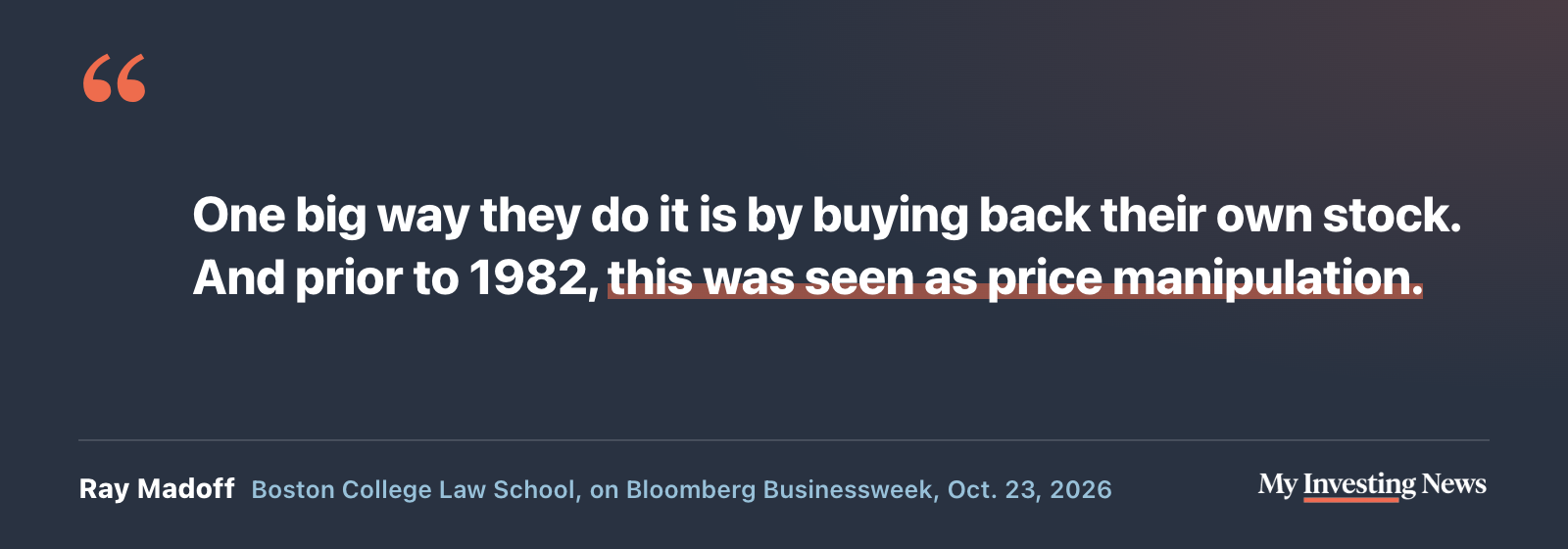
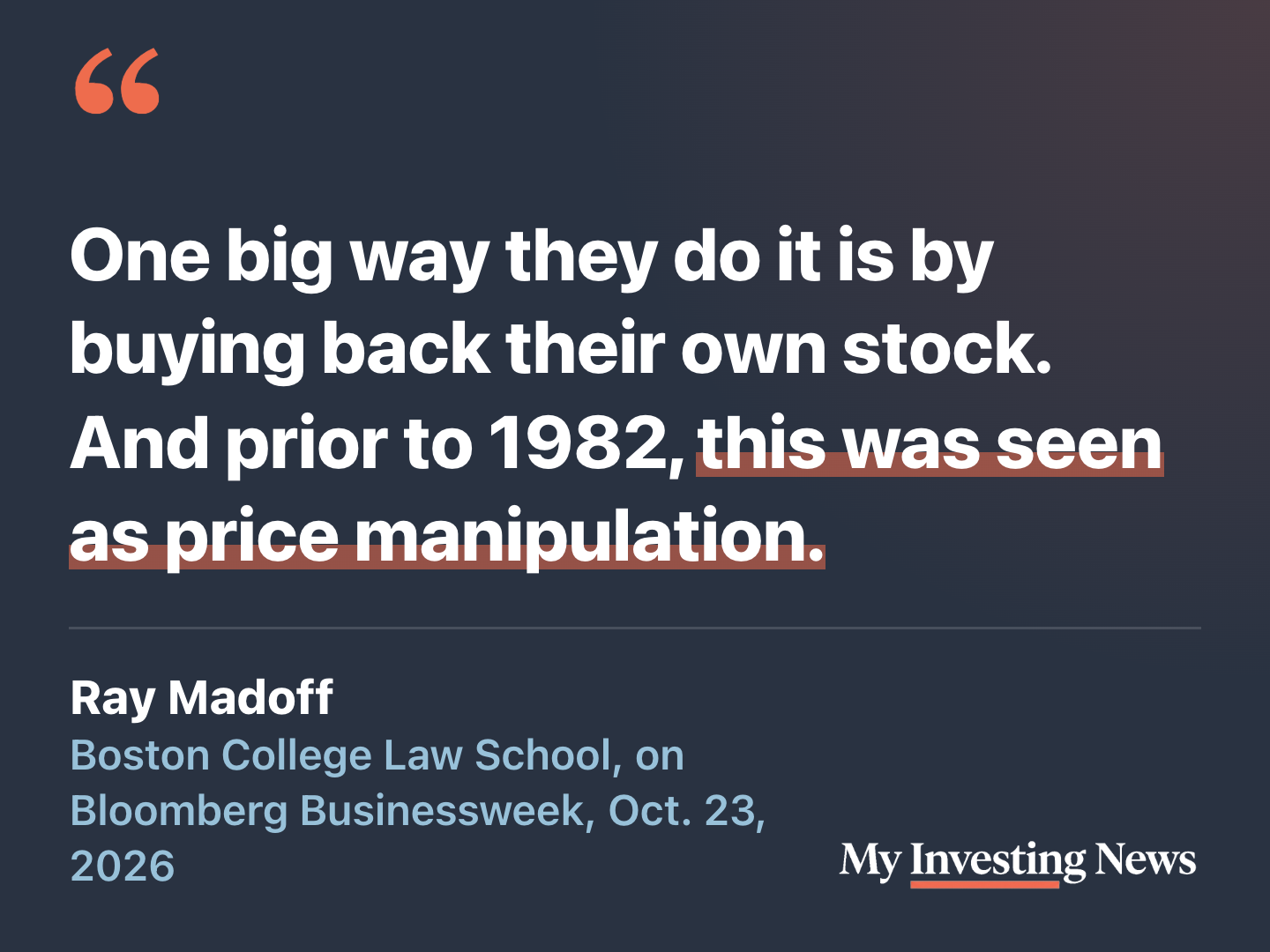
Ray Madoff thinks the way companies pay their owners changed in 1982, and that the change still shapes who pays taxes. On Bloomberg Businessweek on Oct. 23, the Boston College law professor told hosts Carol Massar and Tim Stenovec that “prior to 1982, the main way they shared profits was through dividends,” and that “dividends used to be taxed the same as salaries and wages.”
America’s best-known rich people take token salaries, she said, because they “want to be compensated through the growing value of their stock.” Their companies help that along by retiring their own shares. When a company buys back its own stock, she said, “the value of the shares goes up.”
What Changed in 1982
Her history matches the SEC’s own account, with one nuance: buybacks were never banned. A company buying its own shares in the market simply had no protection from manipulation claims. The agency debated how to police those purchases from 1967 on, and it proposed a rule in 1970, 1973 and 1980 that never took effect, according to its 2003 release revising the rule.
On Nov. 17, 1982, it adopted Rule 10b-18 instead. The rule says a company will not be deemed to have manipulated its stock “solely by reason of the manner, timing, price, or volume of its repurchases,” as long as it follows limits on how and when it buys. The SEC calls it a safe harbor. It was revised in 2003 and still stands.
Eight Decades of Fed Data
The Federal Reserve’s financial accounts show what came next. They net the new stock U.S. nonfinancial companies sell against the shares they retire, through buybacks or cash takeovers. From 1946 through 1981, companies sold more stock than they retired in 30 of 36 years. In 1982 they still sold $1.9 billion more than they retired, and in 1983 $20 billion more.
Then the sign flipped. In 1984, companies retired $79 billion more stock than they sold, and from 1984 through 2025 they were net buyers of their own shares in 39 of 42 years. The only exceptions were 1991 to 1993. Added up, they retired about $9.2 trillion more stock than they sold over those 42 years.
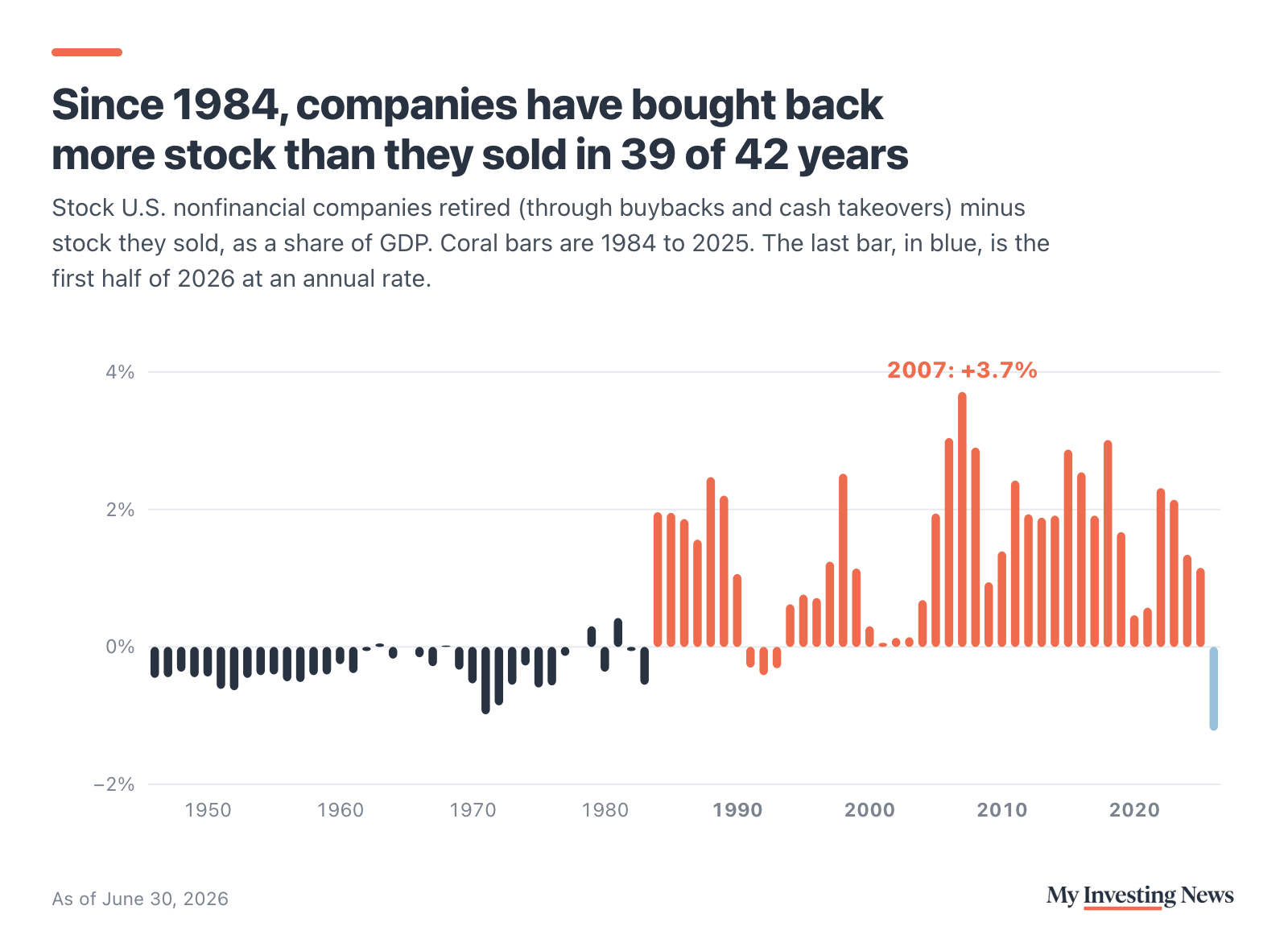
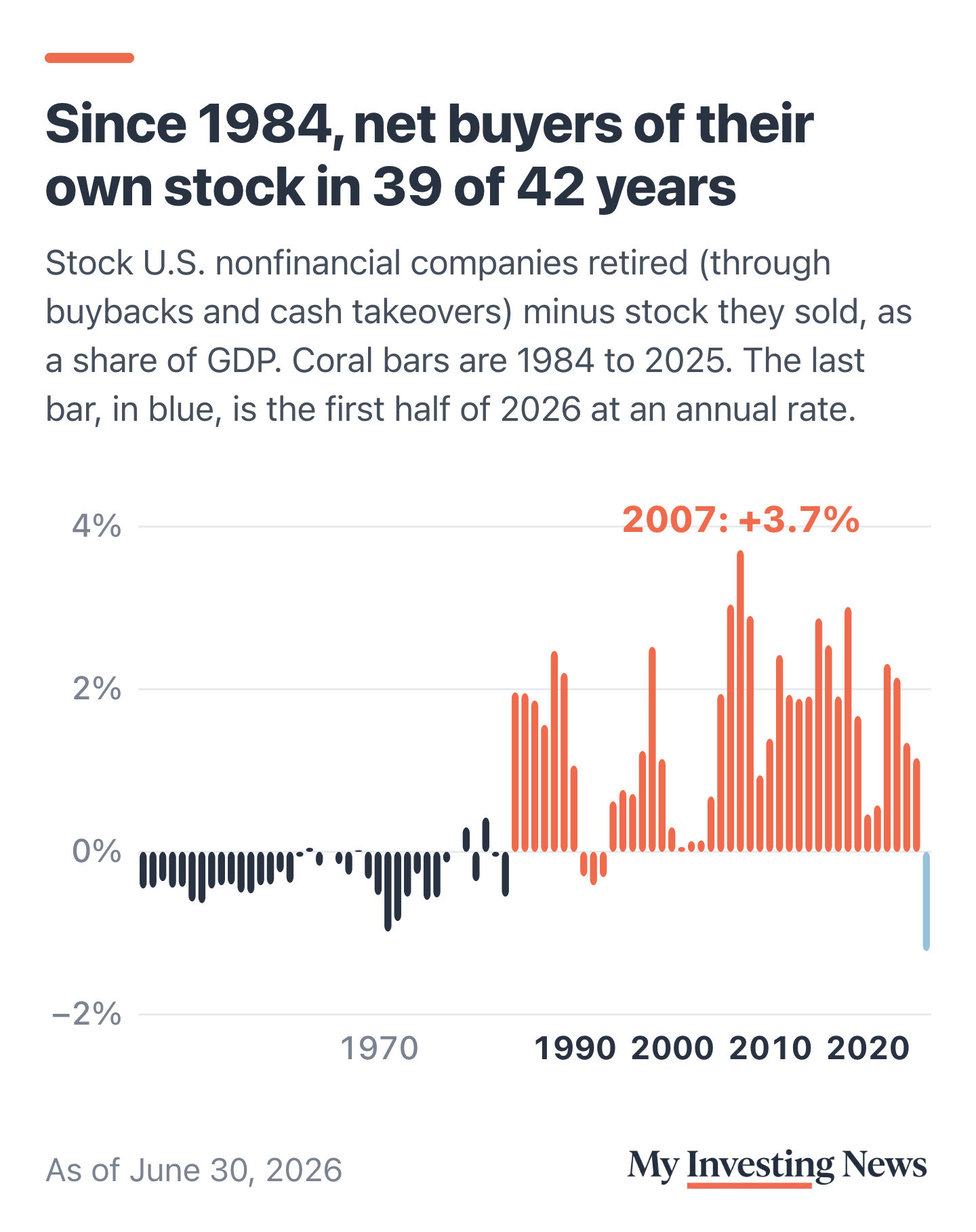
Measured against the economy, the peak came in 2007, at 3.7% of GDP. The biggest year in dollars was 2018, at $621 billion. In 2025 the figure was $355 billion, or 1.15% of GDP.
A Trillion-Dollar Habit
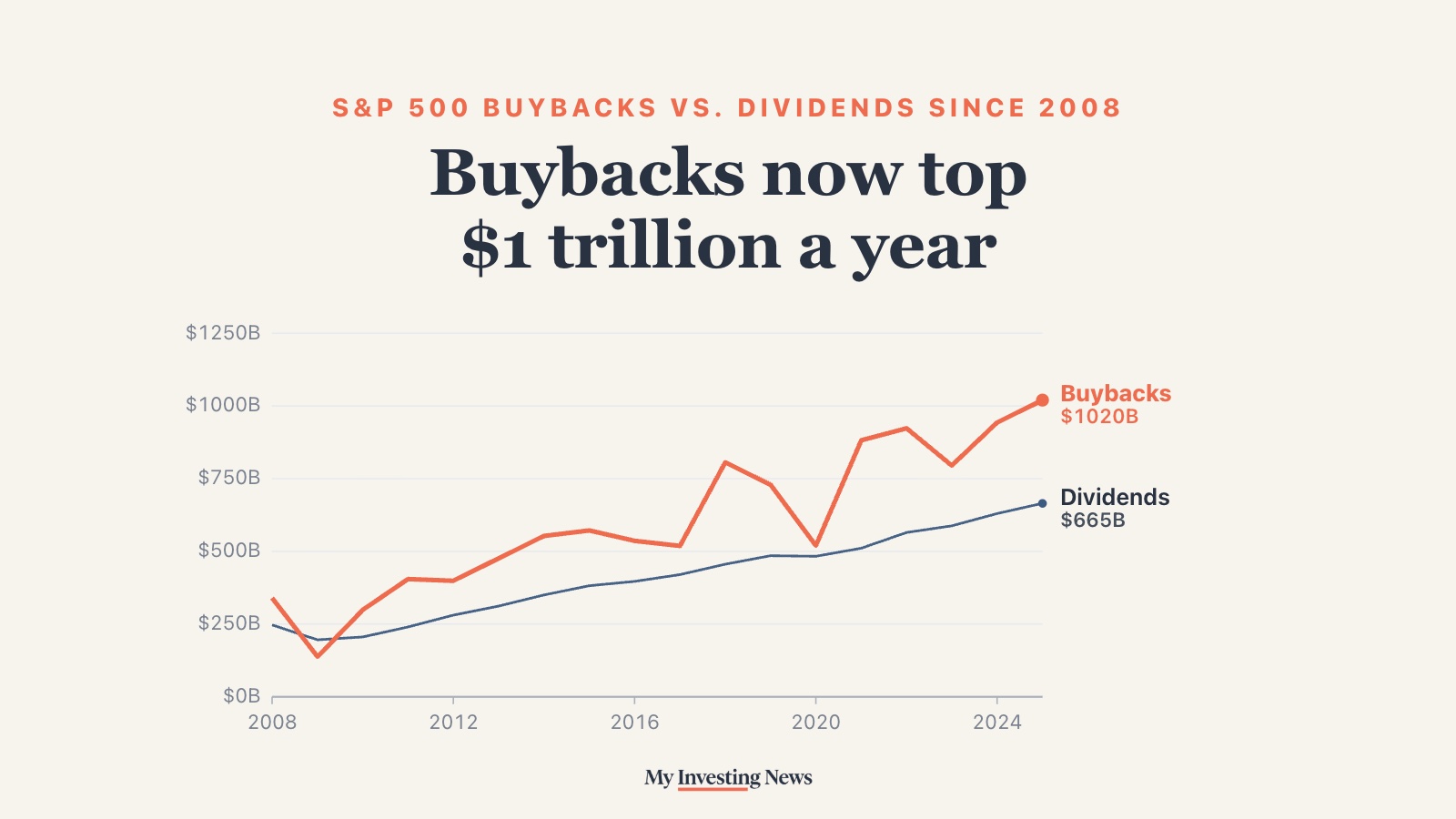
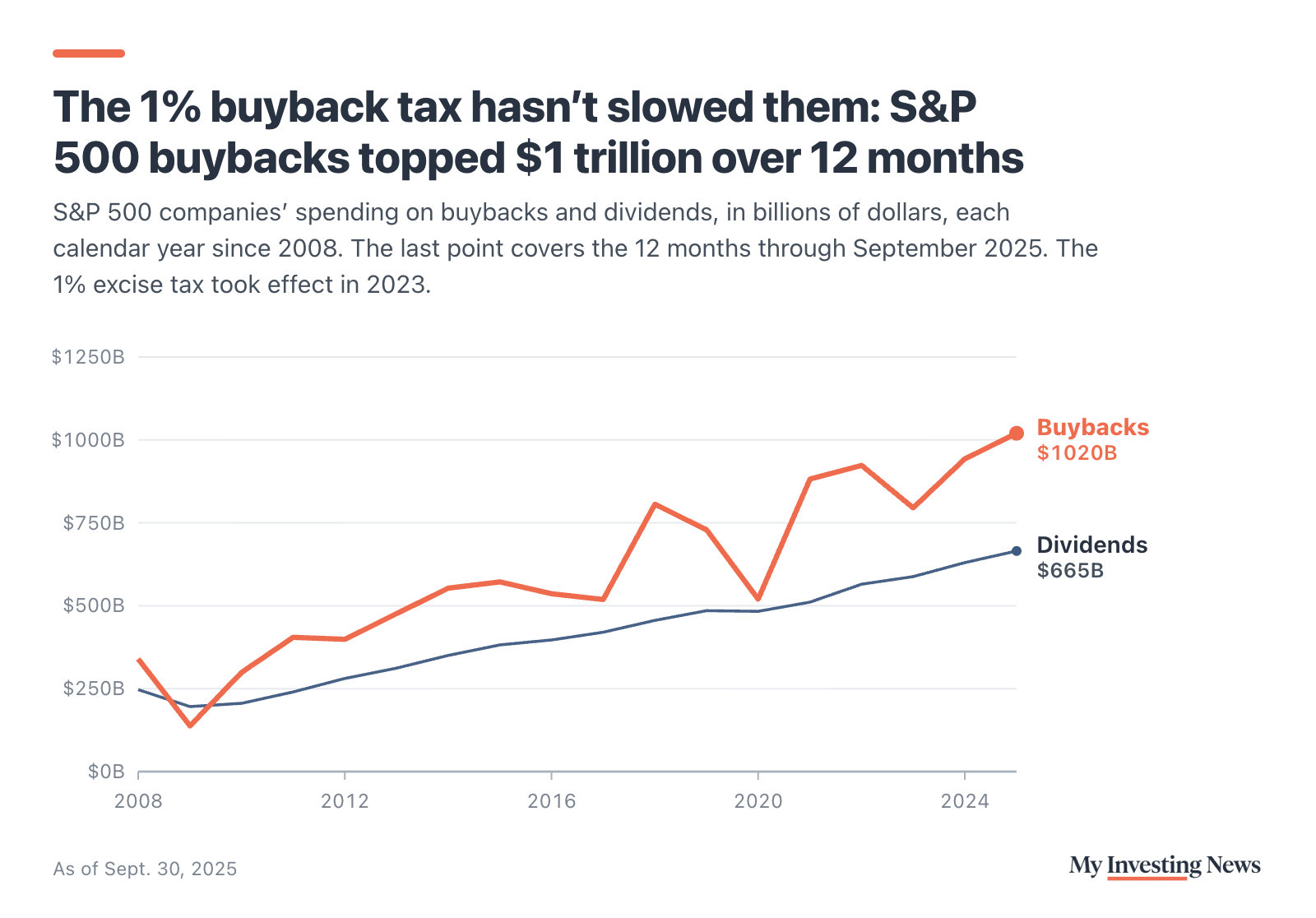
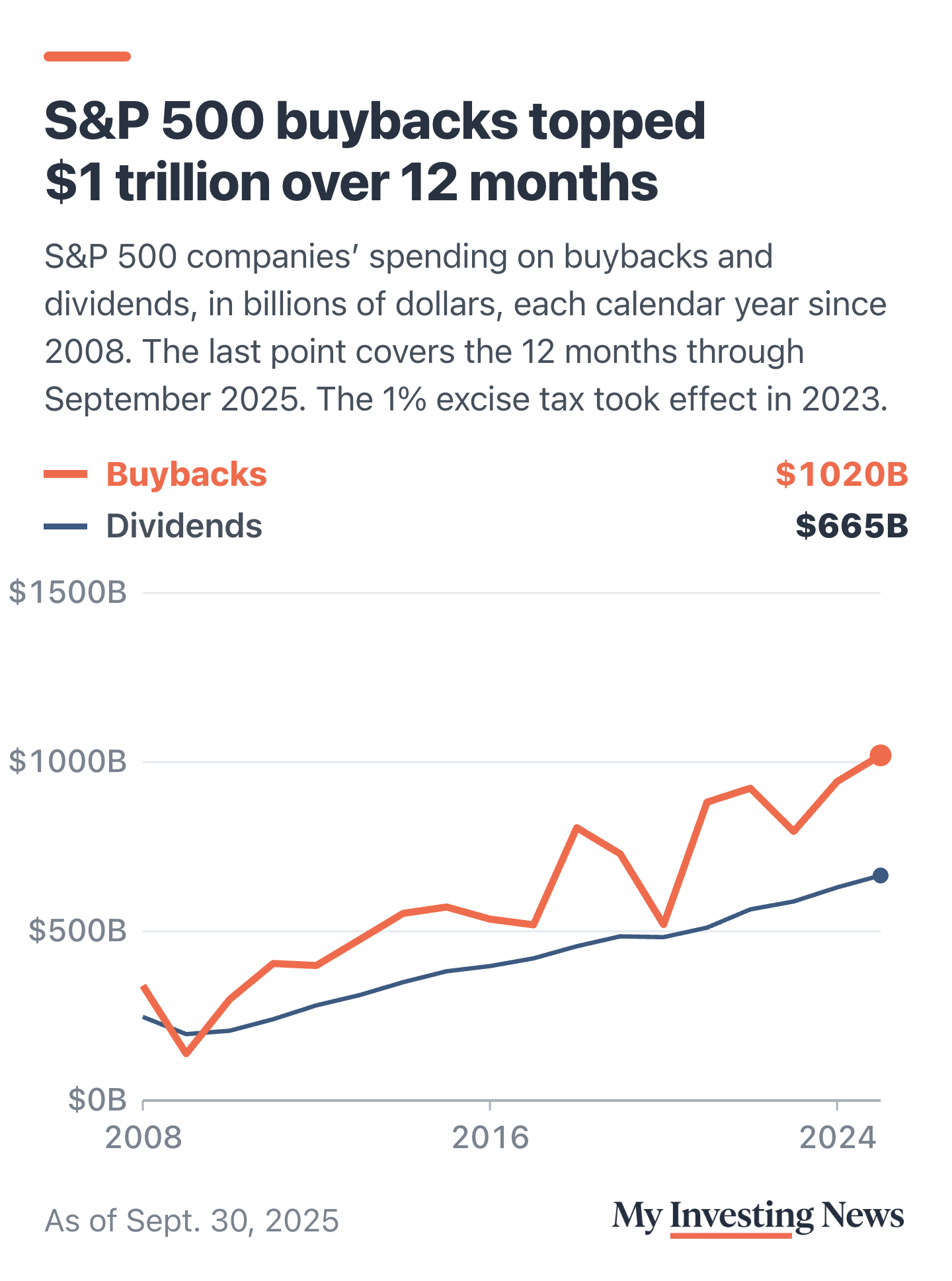
S&P Dow Jones Indices tracks the same habit company by company. In its latest published tally, S&P 500 companies spent $1.02 trillion on buybacks in the 12 months through September 2025, against $665 billion in dividends. Buybacks equaled about 47% of the group’s operating earnings. Calendar 2024 set the annual record at $942.5 billion, and the first quarter of 2025 set the quarterly record at $293.5 billion.
Buybacks by the numbers
Since 2008, dividends have topped buybacks only once, in 2009, when S&P 500 companies cut buybacks to $138 billion and paid $196 billion in dividends. The same thing happened in 2020, when buybacks fell to $520 billion from $729 billion the year before while dividends held near $483 billion. That fits a common pattern: dividends are hard to cut, so buybacks are the part of the payout companies turn down first.
The 1% Tax, and a 2026 Twist
Congress added a 1% excise tax on buybacks for repurchases after Dec. 31, 2022. It is 1% of the value of the stock a company buys back, reduced by the value of the stock it issues during the year, including shares given to employees. S&P Dow Jones Indices estimates the tax cost S&P 500 companies $8.4 billion in 2024, about 0.44% of their operating earnings. Buybacks set records anyway.
The newest Fed figures point the other way. Nonfinancial companies issued more stock than they retired in the first quarter of 2026, at an annual rate of $181 billion, and again in the second quarter, at $608 billion. That second-quarter figure is the largest in the Fed’s quarterly data, which go back to 1946, and at 1.87% of GDP it trails only the first quarter of 2000. It is the first time since late 1999 and early 2000 that two quarters in a row showed net issuance.
The Fed’s data don’t name companies, and they don’t say why. The timing does coincide with the AI spending boom, where, as our look at Ken Griffin’s GPU warning found, Amazon and Oracle now spend more on their build-out than their businesses bring in. Meta’s Oct. 26 sale of 40 million shares at $625 each, through forward contracts that can settle as late as November 2027, isn’t in these numbers yet.
What to Watch
Madoff’s larger point is about taxes on the people who own the shares. Gains from buybacks build up inside the stock, and owners who don’t sell don’t owe tax on them. She said the wealthy borrow against their shares instead, and borrowing against stock is common well beyond billionaires: margin debt hit a record $1.5 trillion in June. Her proposals include taxing gains whenever assets are transferred, as Canada does, and treating inheritances as income.
The next Fed financial accounts, due in December, will show whether net issuance continued into the third quarter. The Nov. 3 midterms set who writes the next tax bill, which is where any change to the 1% rate would start. And much of America’s private wealth sits outside public stock entirely: 3 million owners of private businesses are worth more than 10 times the Forbes 400, researchers found.
Madoff says buybacks were seen as price manipulation until 1982, and the SEC’s record backs her: the 1982 safe harbor came after 15 years of debate. Since 1984, U.S. companies have bought back more stock than they sold in 39 of 42 years. The test for that habit is already in the Fed’s data: in the first half of 2026, companies sold more stock than they retired.