Where we heard itCNBC’s “Squawk on the Street,” Oct. 22, 2026, with Bill Ackman, founder and CEO of Pershing Square, speaking to Sara Eisen from the Tel Aviv Stock Exchange.
Bill Ackman has been betting on Fannie Mae FNMA and Freddie Mac FMCC since 2013, and he isn’t backing off. Asked on CNBC on Oct. 22 whether he was still bullish after a rough year for the two mortgage giants, the Pershing Square CEO said, “Yes, very bullish,” and laid out what he called the simplest fix.
His plan: count “the $300 billion of payments that have been made” by the two companies to the Treasury as “fully repaying the $191 billion that was advanced during the financial crisis,” then list the shares on a major exchange like the New York Stock Exchange. Do that, he said, and the payoff is large.
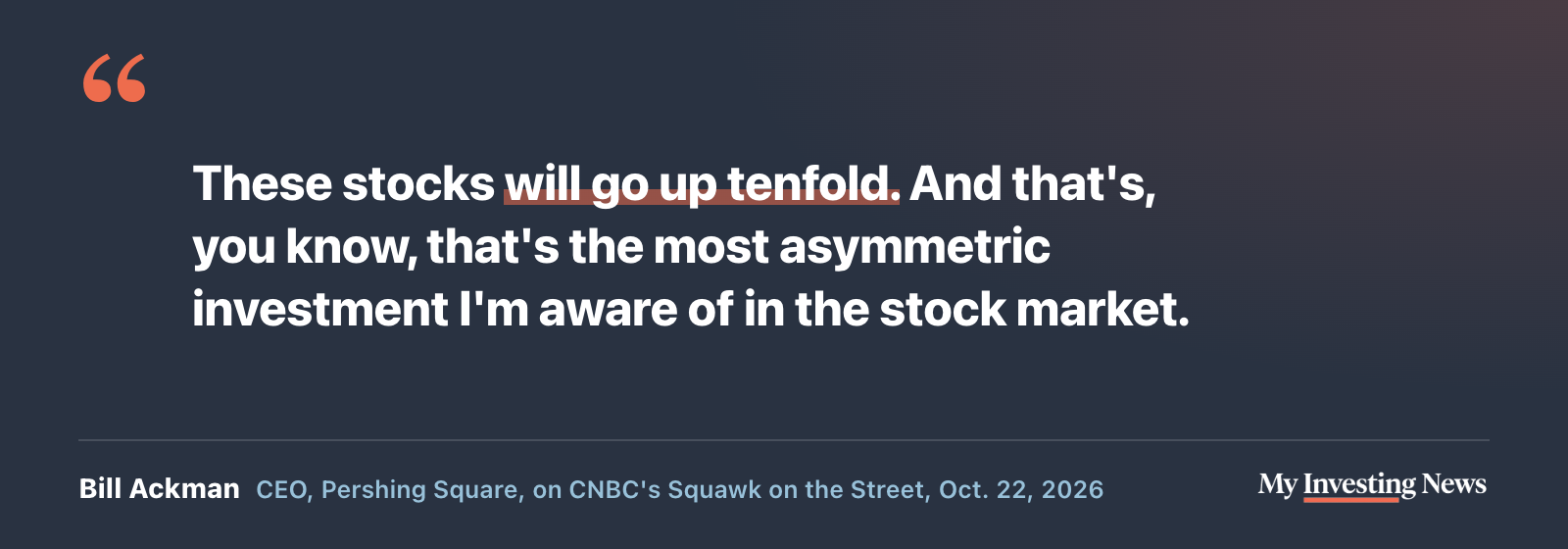
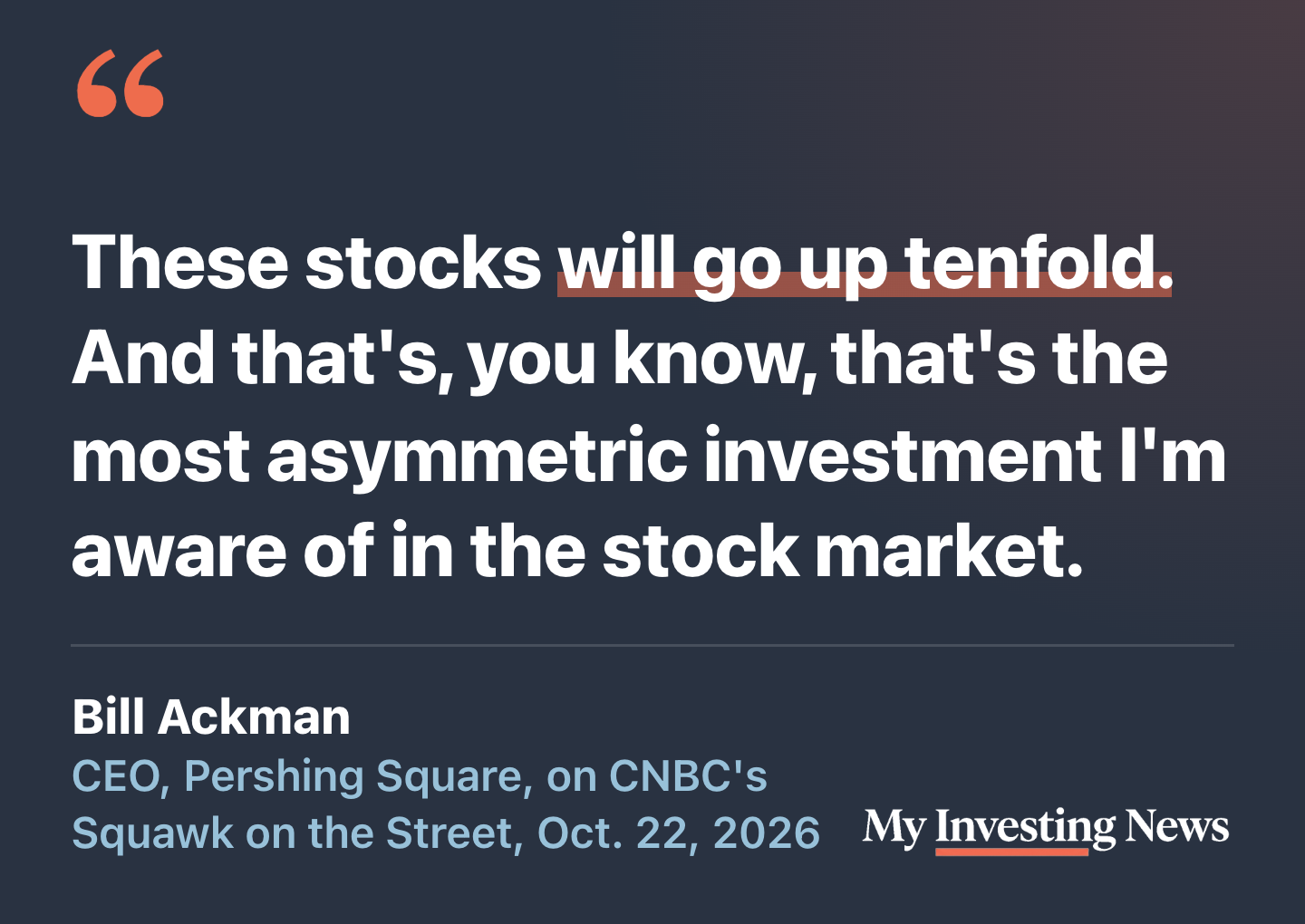
Fannie closed at $4.21 that day, up 12.6%, and Freddie rose 14.8%. As of the Oct. 27 close, Fannie stood at $4.29 and Freddie at $3.91. Tenfold from there is about $43 a share. Ackman put it slightly higher: in his scenario, he said, these are “well into the high $40s, $50 stock.”
The Ledger Behind His Numbers
Ackman’s two figures check out. Federal Housing Finance Agency tables show the companies drew $191.5 billion from Treasury after they were taken over in 2008 ($119.8 billion for Fannie, $71.6 billion for Freddie). They paid back $301.0 billion in dividends on Treasury’s senior preferred stock through mid-2019, $109.6 billion more than they took. Payments passed draws in early 2014, after the 2012 net worth sweep started sending nearly all profits to Treasury: $170.2 billion arrived in 2013 and 2014 alone.
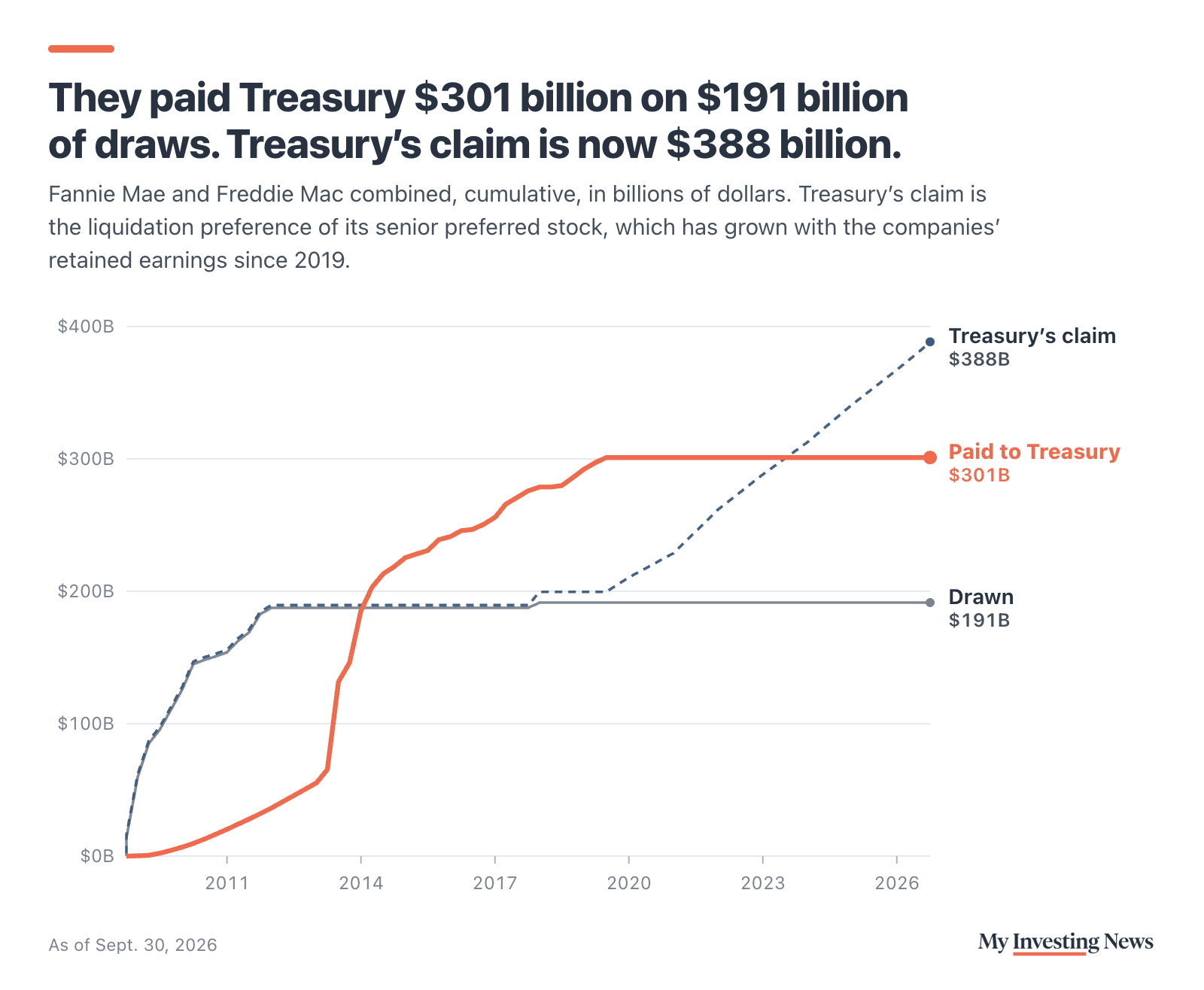
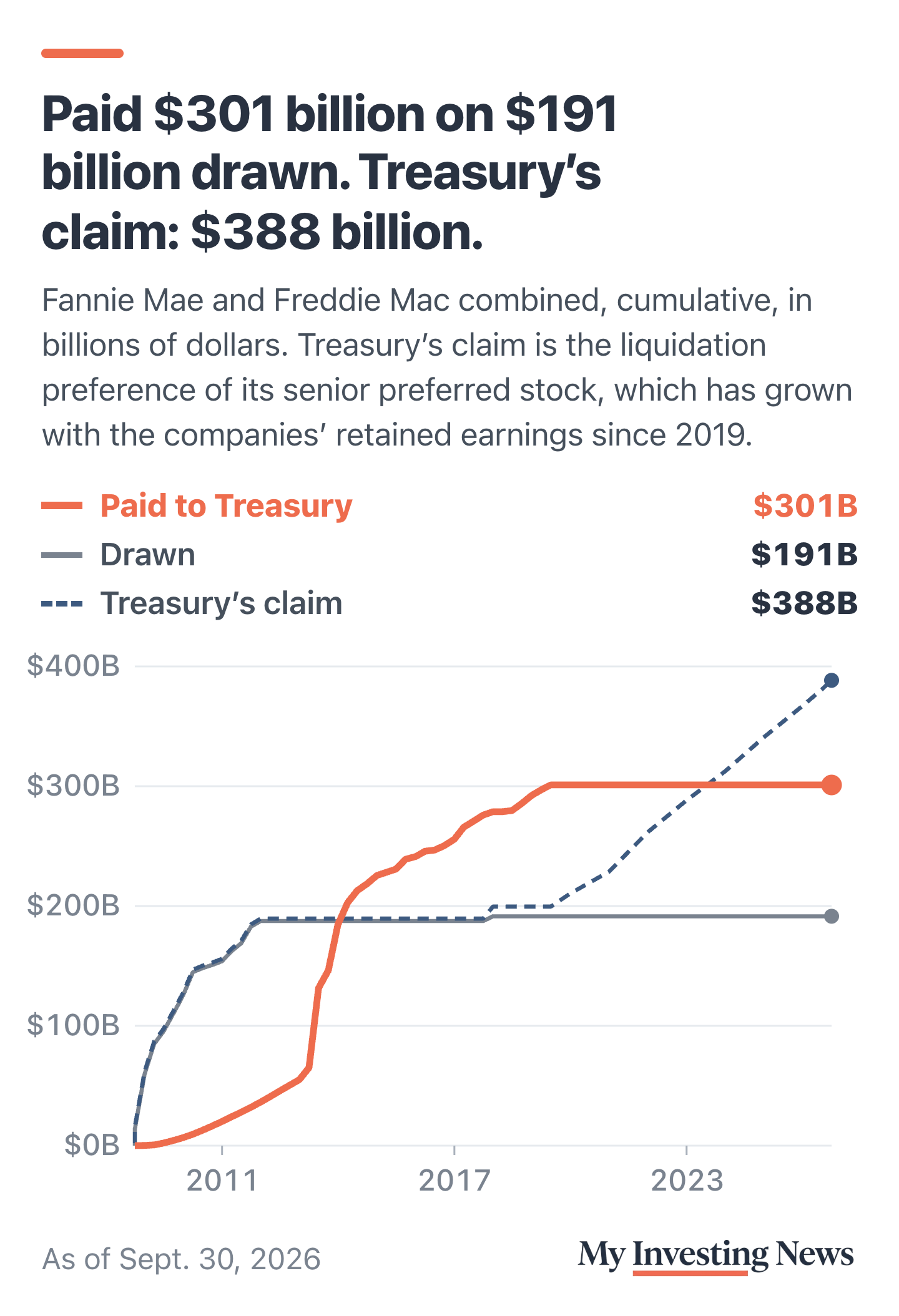
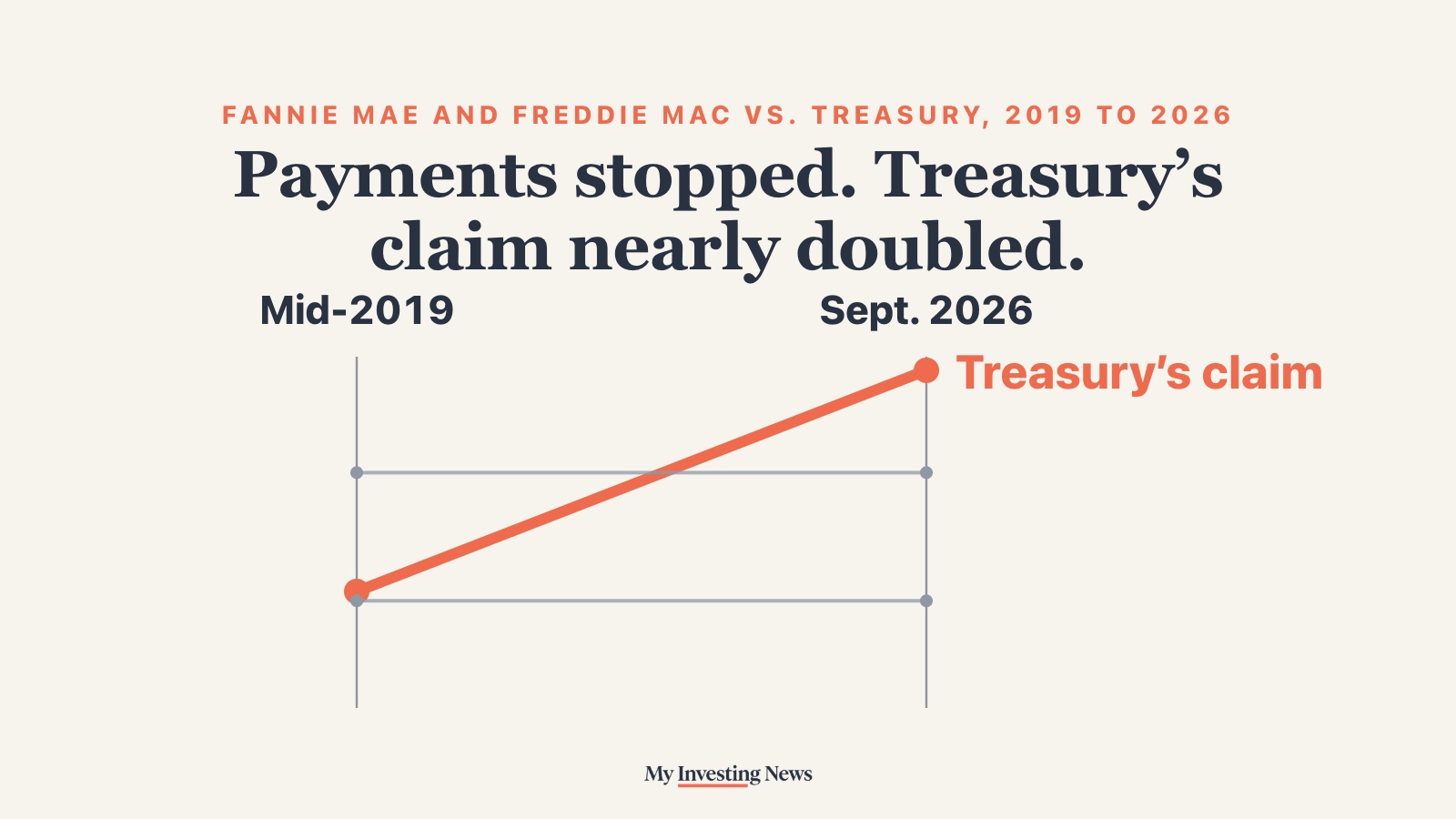
The catch is in how those payments were booked. They were dividends, and they never reduced what Treasury is owed. Under their agreements with Treasury, the companies may not redeem the senior preferred while Treasury’s funding commitment is in place. Since late 2019, when Treasury let them start keeping their earnings, each quarter’s gain in net worth has been added to the stock’s liquidation preference instead. That claim was $199.5 billion in mid-2019. As of Sept. 30, 2026, it was $388.4 billion: $238.0 billion at Fannie and $150.4 billion at Freddie, according to their latest quarterly filings.
Treasury also holds warrants to buy 79.9% of each company’s common stock for a nominal price. That is why the accounting matters so much to shareholders. Ackman’s argument is that the payments already made should count, which would wipe out the claim and let the companies relist. Under the contracts as written, the claim keeps growing as long as they keep making money.
Fannie Mae and Freddie Mac vs. Treasury
Ackman’s Record on the Trade
Pershing Square disclosed in a Nov. 15, 2013 filing that it owned 9.98% of Fannie’s common stock and 9.77% of Freddie’s, bought for about $265 million, or about $2.29 a share for Fannie. Fannie closed at $3.30 that day. At the Sohn conference in May 2014, Ackman set targets of $23 a share, or $47 in a bull case, if the companies were recapitalized and released from government control.
Neither has happened, and the stock never got near either target. Fannie started 2025 at $3.44, peaked at a close of $15.31 on Sept. 11, 2025, on hopes of a release and a share sale, then slid as the timeline stretched out. It began 2026 at $11.00 and fell as low as $3.15 on Oct. 14. Ackman’s own summary on CNBC was close: “$3 to $15 or so last year” and “$15 to $3 this year.” He said Fannie and Freddie drove much of Pershing’s relative underperformance this year, and that the firm owns “well north of 200 million shares” of the two combined.
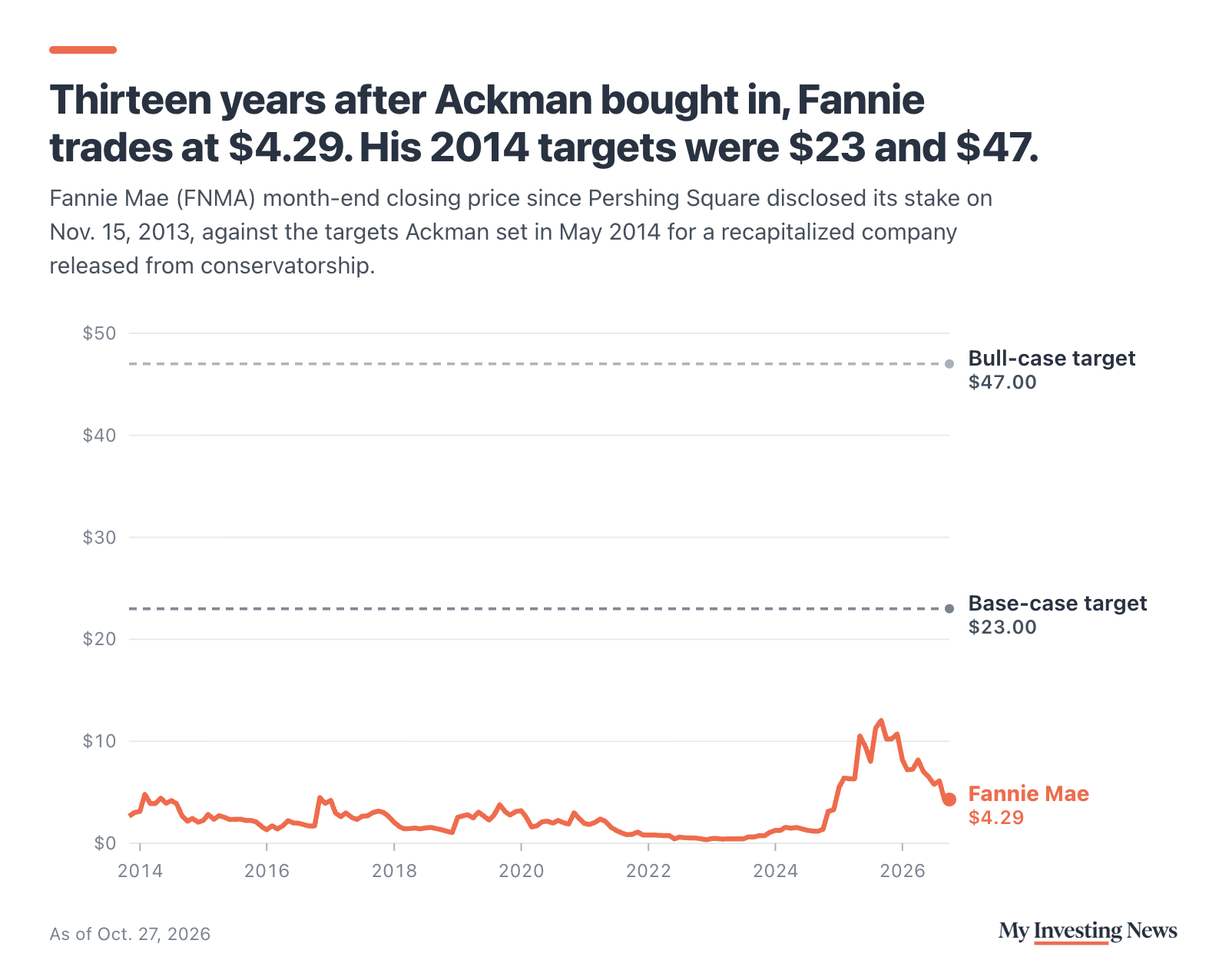
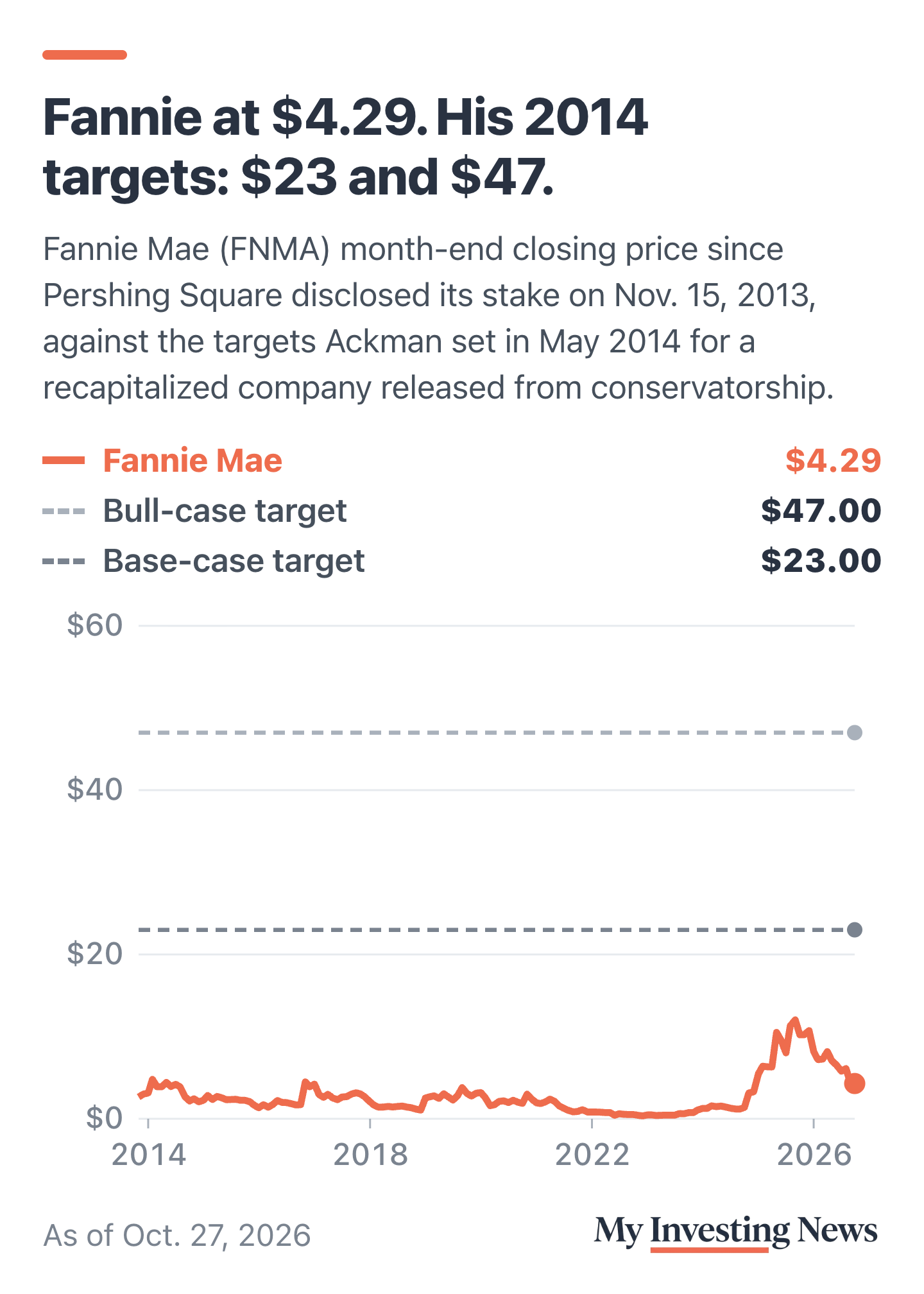
Measured from his roughly $2.29 cost, Fannie is up about 87% in nearly 13 years. From the $3.30 close on the day of the filing, it is up 30%. The SPDR S&P 500 ETF SPY returned 432% over the same stretch, including dividends. The call has no deadline, so it isn’t a miss yet: our Track Records page scores it “not yet.”
What Bettors and Washington Say
Prediction markets have soured on a quick exit. Bettors on Polymarket put the odds of a Fannie Mae IPO before 2027 at 2.9% and of a Freddie Mac IPO at 4.5%, as of early Oct. 28. The Fannie market peaked at 68% on Dec. 18, 2025. Bettors were too early before: on Oct. 28, 2025, they gave a Fannie IPO by June 30, 2026 a 77.5% chance, and none came. Those markets track a public offering, which isn’t quite Ackman’s plan: he wants the existing shares relisted, with no new sale required.
Eisen noted that Treasury Secretary Scott Bessent had pointed in a podcast that week to 2027 or 2028 for dealing with the ownership structure. Ackman said he would “get busy on this right after the turn of the year and get it done in the 2027 time frame.” Ackman said he understood Bessent’s “North Star” that the change in ownership can’t be allowed to affect mortgage rates, a live concern after mortgage rates followed the 10-year Treasury to a 52-week high this fall and builder confidence fell to a 14-year low.
What to Watch
Ackman spoke before the Nov. 3 midterm elections. If they go against the Republicans, he said, the release “is one of the few things the president can do simply by executive order.” Until something changes, each quarter of profit adds to Treasury’s claim, so the gap between what the companies have paid and what they are said to owe keeps widening.
Ackman says counting Fannie and Freddie’s $301.0 billion of payments as repayment and relisting them would send the shares up tenfold. His numbers are right, but the contracts treat those payments as dividends, and Treasury’s claim has grown to $388.4 billion. The risk is time: his 2014 targets of $23 and $47 are still far off, with Fannie at $4.29 as of Oct. 27.