Where we heard itCNBC, Squawk Box, “Watch CNBC’s full interview with former Fed governor and CEA chair Stephen Miran.” Aired Oct. 27, 2026. Speaker: Stephen Miran, senior strategist at Hudson Bay Capital and former Fed governor. Watch at CNBC
Stephen Miran thinks the Federal Reserve is about to fight the wrong inflation. On CNBC’s Squawk Box on Oct. 27, 2026, the former Fed governor said much of the price pressure in the Fed’s preferred gauge is temporary, and that raising rates to fight it would hit the economy a year or two after the problem has passed.
Miran served on the Fed’s Board of Governors from September 2025 until he resigned in May 2026, and chaired the White House Council of Economic Advisers before that. He is now a senior strategist at Hudson Bay Capital. His view carries weight with investors because the Fed has already turned hawkish: it raised rates by a quarter point in September, lifting the top of its target range to 4%.
What Miran Said About the ‘Temporary’ Part
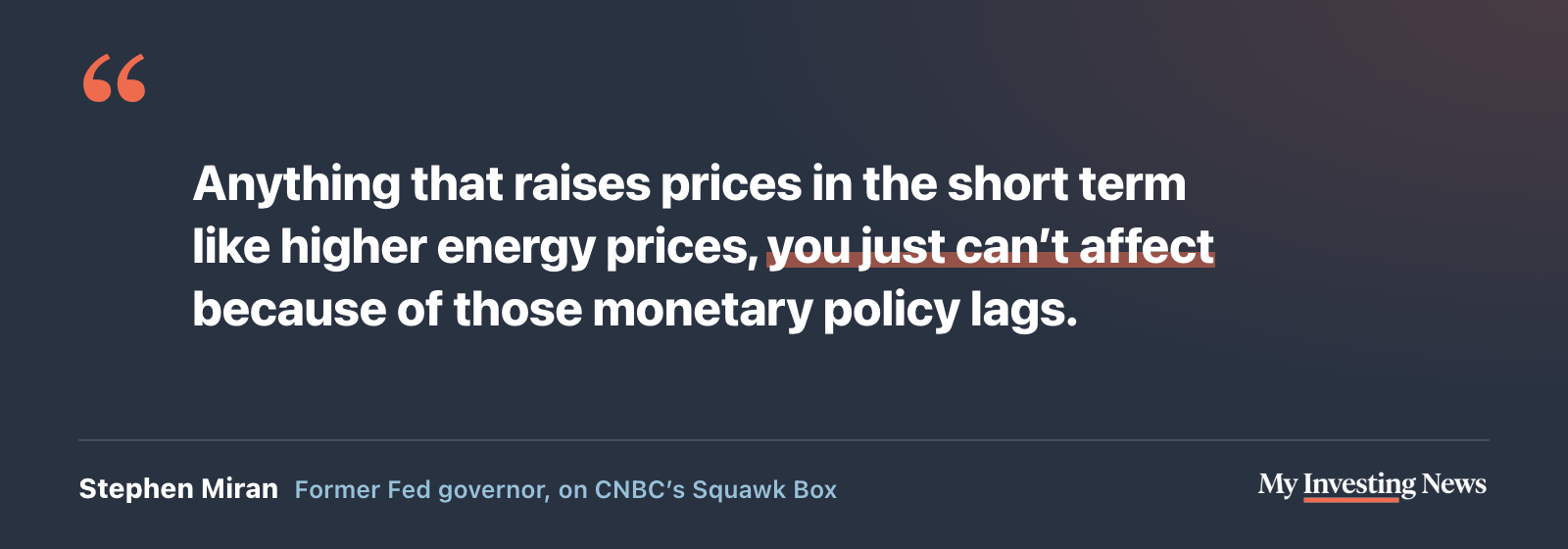
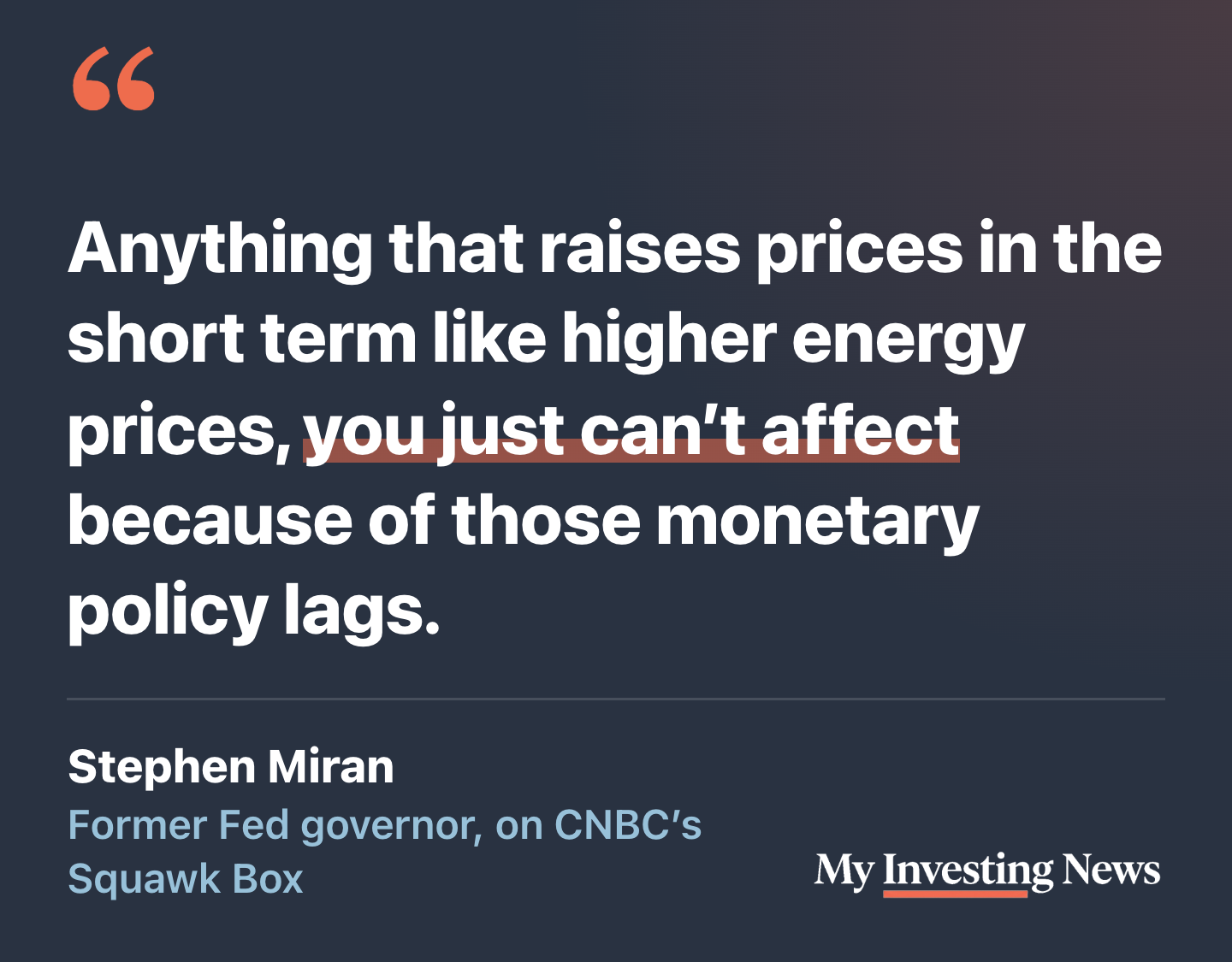
Miran pointed to a Goldman Sachs report from a few days earlier. “There was a nice report from Goldman Sachs a couple days ago which argued that over 1% of the core PCE data is due to temporary factors like energy in Iran and mismeasurement of things related to the tech build out,” he said. “And if that’s the case, there’s not a good reason for expecting those to get repeated and you can look through them.”
He went further than the bank. “I think that they’re actually understating this issue,” Miran said, and he put underlying inflation “in between two and two and a half percent right now.” Core PCE is the personal consumption expenditures price index without food and energy, the measure the Fed watches most closely against its 2% goal.
Checking the Claim Against the Record
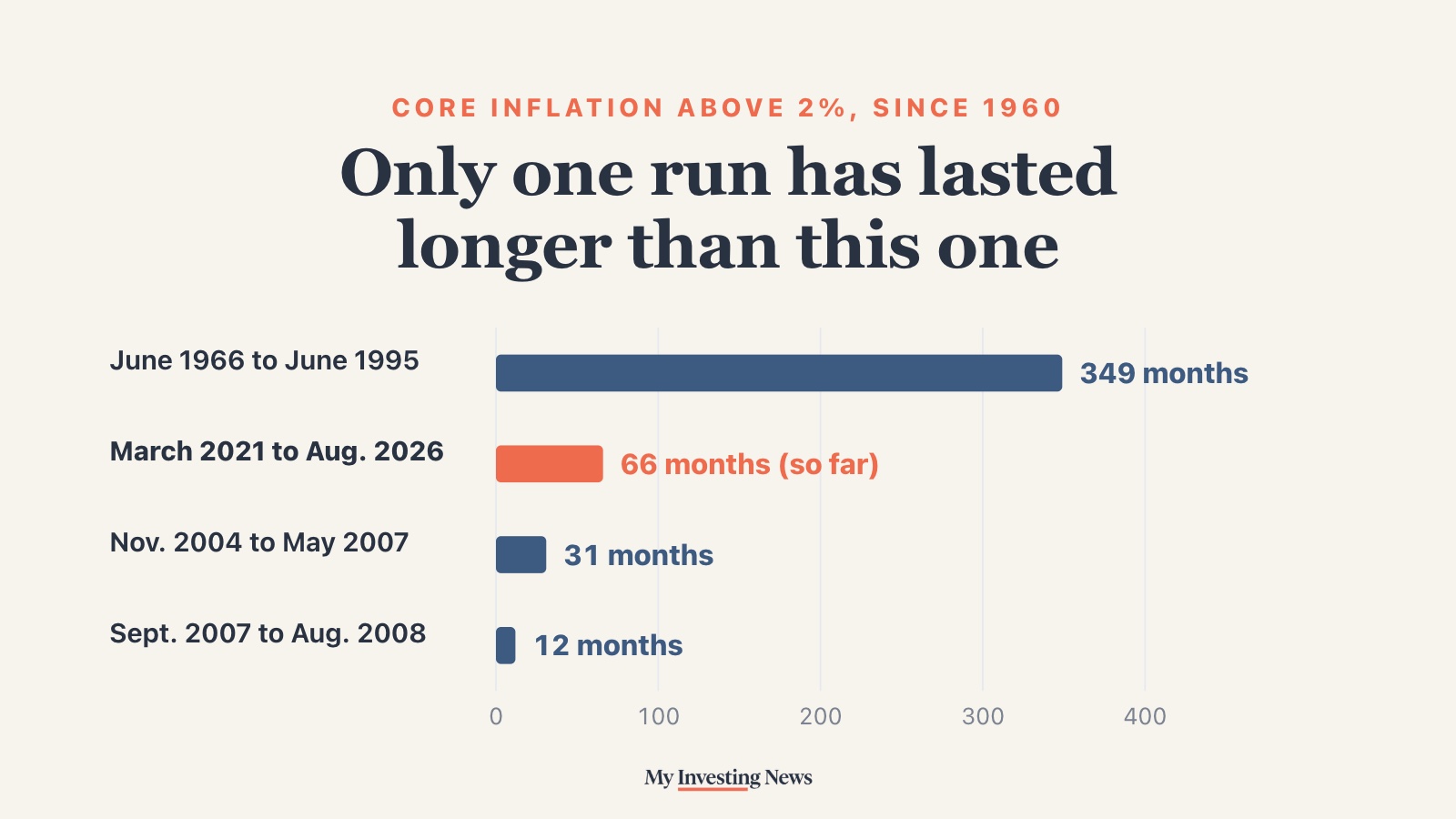
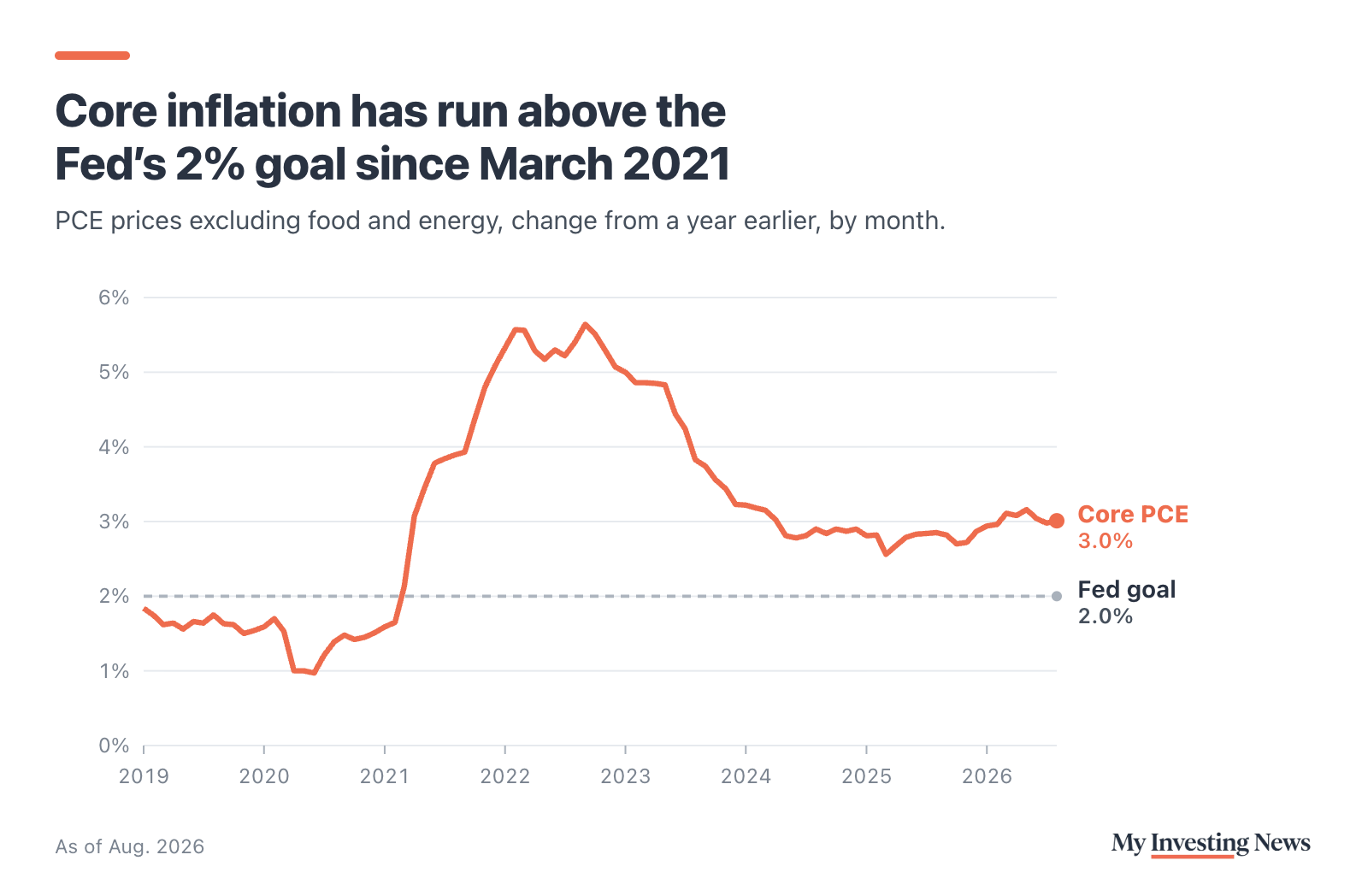
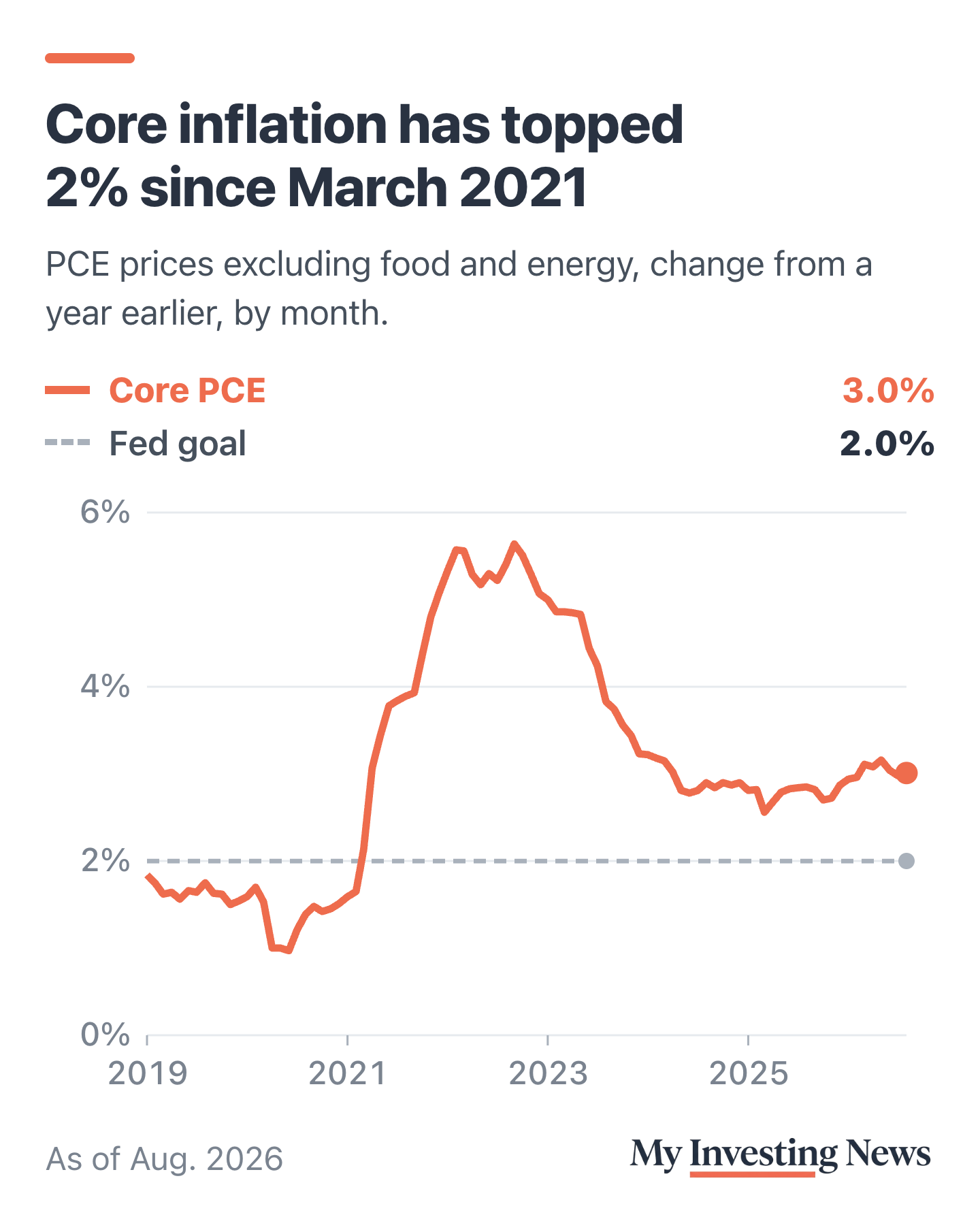
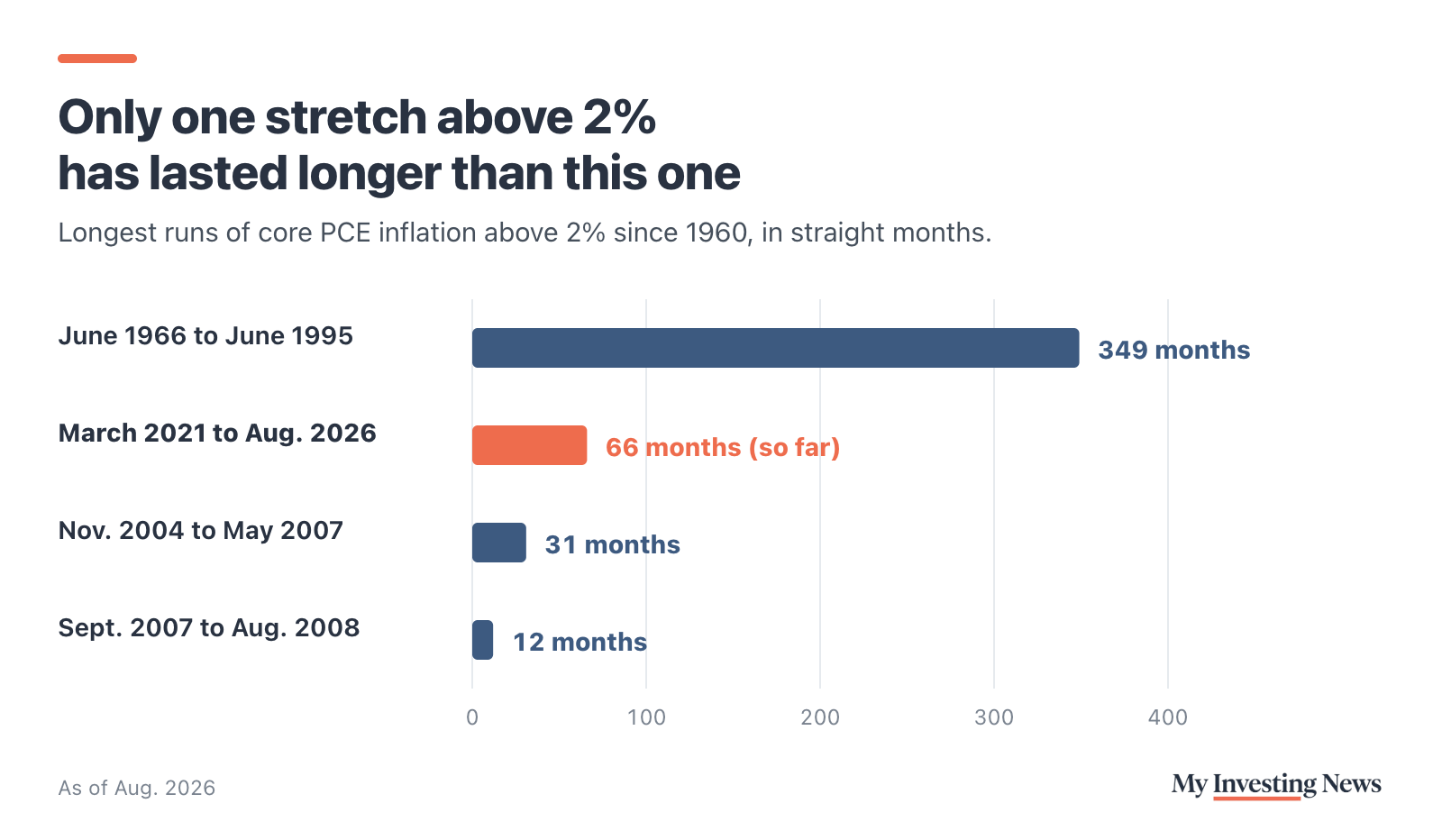
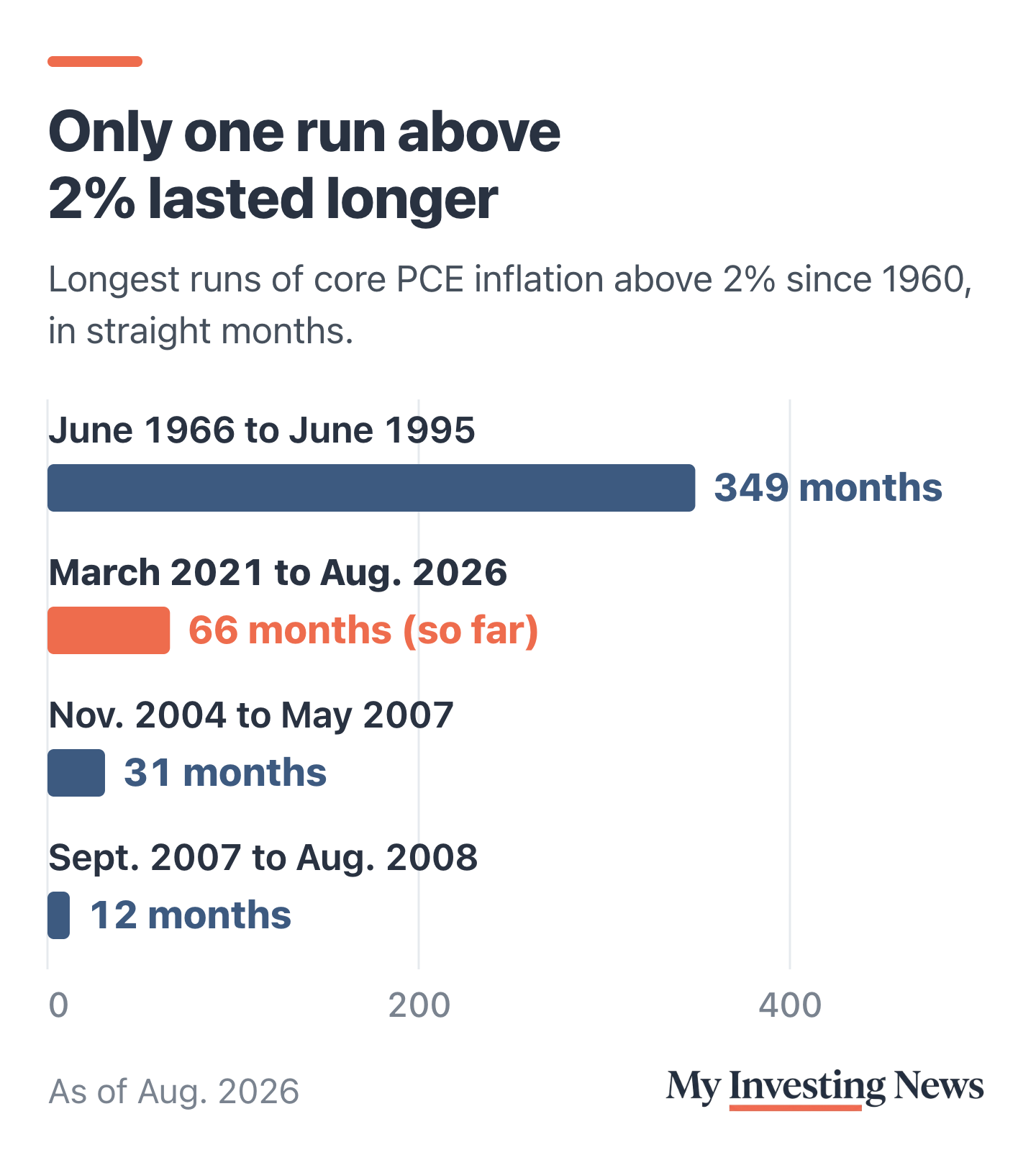
The headline number is high by recent standards. Core PCE prices rose 3.0% in the 12 months through August, up from 2.9% a year earlier, according to the Bureau of Economic Analysis. It has now run above 2% for 66 straight months, every month since March 2021. Only one run in BEA data going back to 1960 has lasted longer: the stretch from June 1966 to June 1995.
The recent trend gives Miran some support. Over the three months from June to August, core prices rose at a 2.0% annual rate, close to the Fed’s goal. Over six months the pace was 2.7%. Overall PCE inflation, which includes the energy costs he blames on the conflict with Iran, was 3.4% in August, higher than the core rate.
His arithmetic is harder to pin down. Taken literally, stripping more than a point from August’s 3.0% would leave core inflation below 2%. Miran’s own estimate of the underlying rate, 2% to 2.5%, sits a little higher than that, which suggests he reads Goldman’s number as a rough guide. We could not find the Goldman report he cited, so its estimate rests on his description.
Inflation and the Fed by the numbers
Why He Would Not Have Hiked
Asked whether he would vote to raise rates in December, Miran said no. “I wouldn’t have supported a raise in September either. But it does seem that’s where the Fed is going,” he said. He said the Fed has a “completely new reaction function,” noting that it got more hawkish over three months of better inflation data before September and “ended up hiking anyway.”
Fed Chair Kevin Warsh had said in mid-October that there was no need to rush another hike in October. Miran argued that rising long-term rates through most of the year mostly reflected stronger growth expectations, a case Ed Yardeni made about surging yields as well. Bond traders were not doubting the Fed, he said: inflation expectations in financial markets have been “cool as a cucumber.”
Miran named the two things that would change his mind: wage growth moving higher in a way that feeds into prices, or rents climbing fast enough to push up overall inflation. Those, he said, are the kinds of persistent pressure that rate moves can reach in time.
What to Watch
The Fed’s October meeting wrapped up on Oct. 28, the day after Miran spoke. Going in, bettors on Polymarket put the odds of a hold at 96% as of the evening of Oct. 27. The next test of Miran’s case is the September PCE report, due from the BEA at 8:30 a.m. on Oct. 29. If core inflation stays above 2%, the run reaches 67 months. Another soft monthly reading, like the 0.1% to 0.2% gains from June to August, would back his view that the worst is passing.
Bettors on Polymarket put the odds of a quarter-point hike at the Fed’s Dec. 8 to 9 meeting at 76.5% as of the evening of Oct. 27. Miran expects the Fed to follow through, and he expects it to be the wrong call if energy prices and measurement quirks fade on their own over the next year.
Miran says more than a point of core inflation comes from short-lived energy costs and measurement problems, so the Fed should look through it instead of hiking into a fragile labor market. The record cuts both ways: core prices have risen faster than 2% for 66 straight months, the longest run since one that ended in 1995, but the three-month pace has cooled to 2.0%. The risk to his view is that energy costs and tech-related price pressure prove stickier than a temporary bump.