Where we heard itMad Money on CNBC, Oct. 27, 2026, host Jim Cramer (CNBC recap), and Thoughts on the Market, Morgan Stanley’s podcast, “The Next Stage of the Market Correction,” Oct. 26, 2026, with Mike Wilson (show page).
Two well-known market voices named the same risk for the days after the Nov. 3 midterm elections. On CNBC’s “Mad Money” on Oct. 27, Jim Cramer said he wasn’t ready to call an all clear after a second straight day of gains in AI stocks, and he listed what still lay ahead: a Federal Reserve meeting, the election and the chance of renewed U.S. air strikes on Iran.
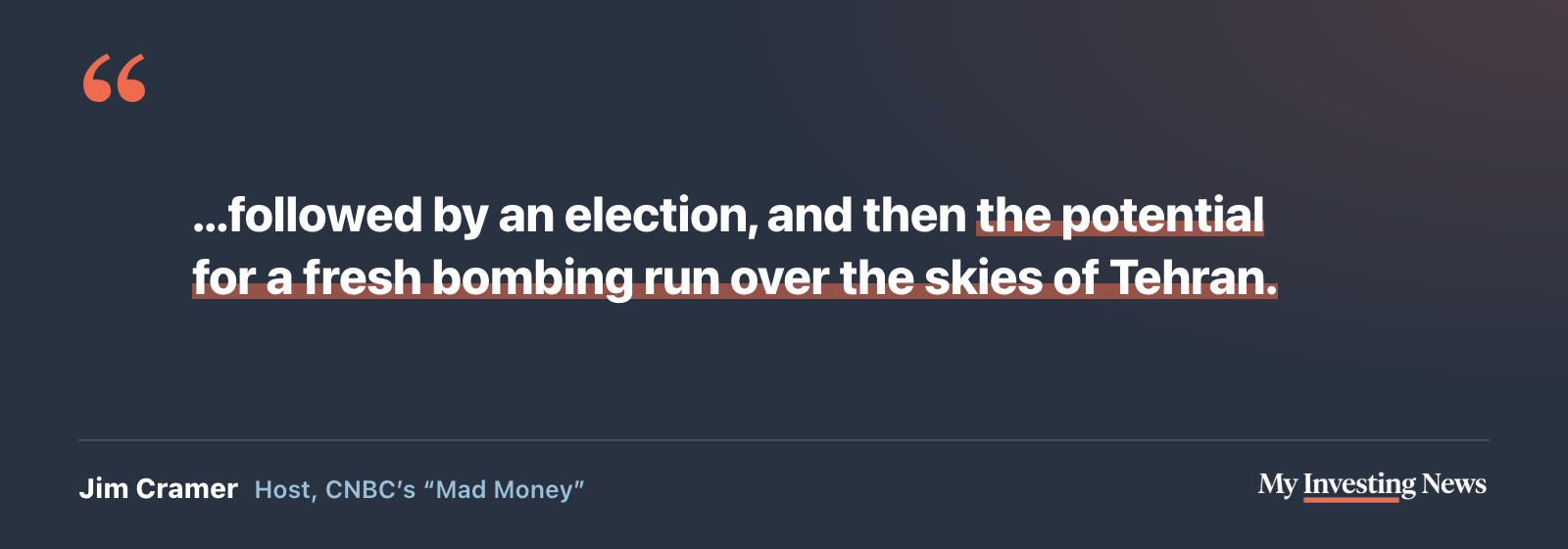
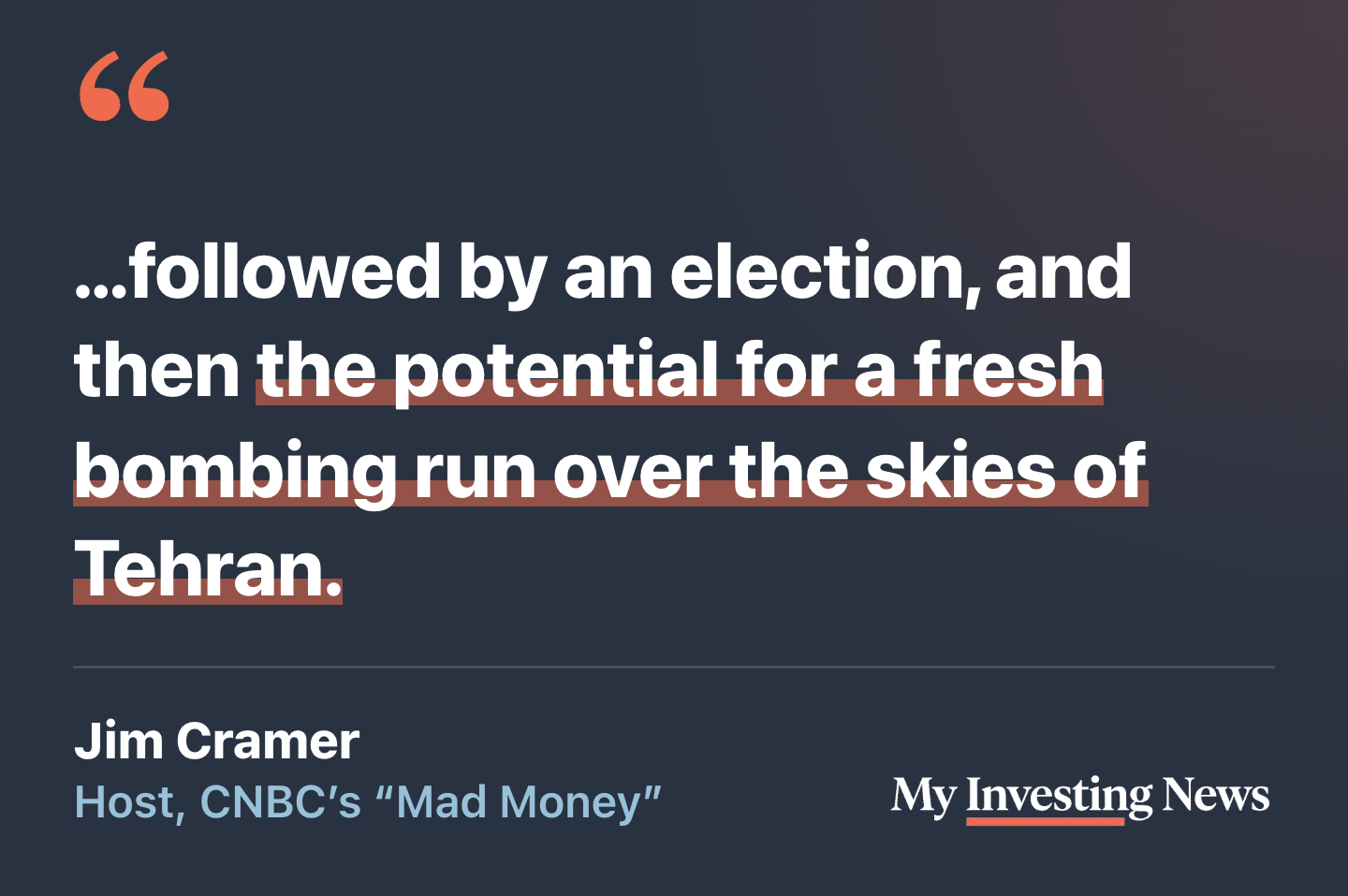
A day earlier, Morgan Stanley’s chief U.S. equity strategist, Mike Wilson, told listeners of the firm’s podcast that “a blue wave is not a surprise anymore,” and that “the larger overhang is what may happen after the vote, including the possibility of a renewed military escalation in Iran.” Cramer put it more bluntly:
What the Money Says
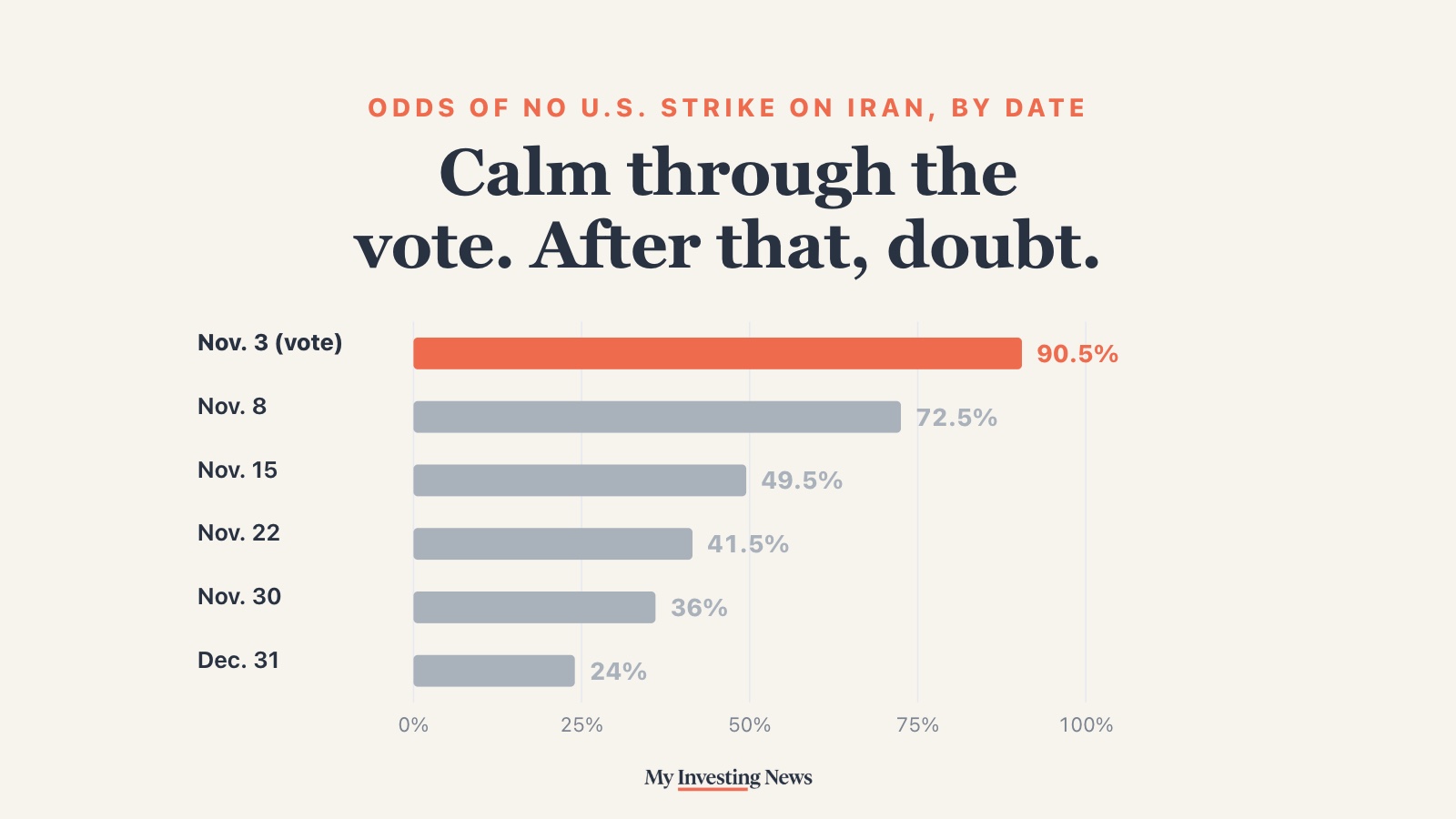
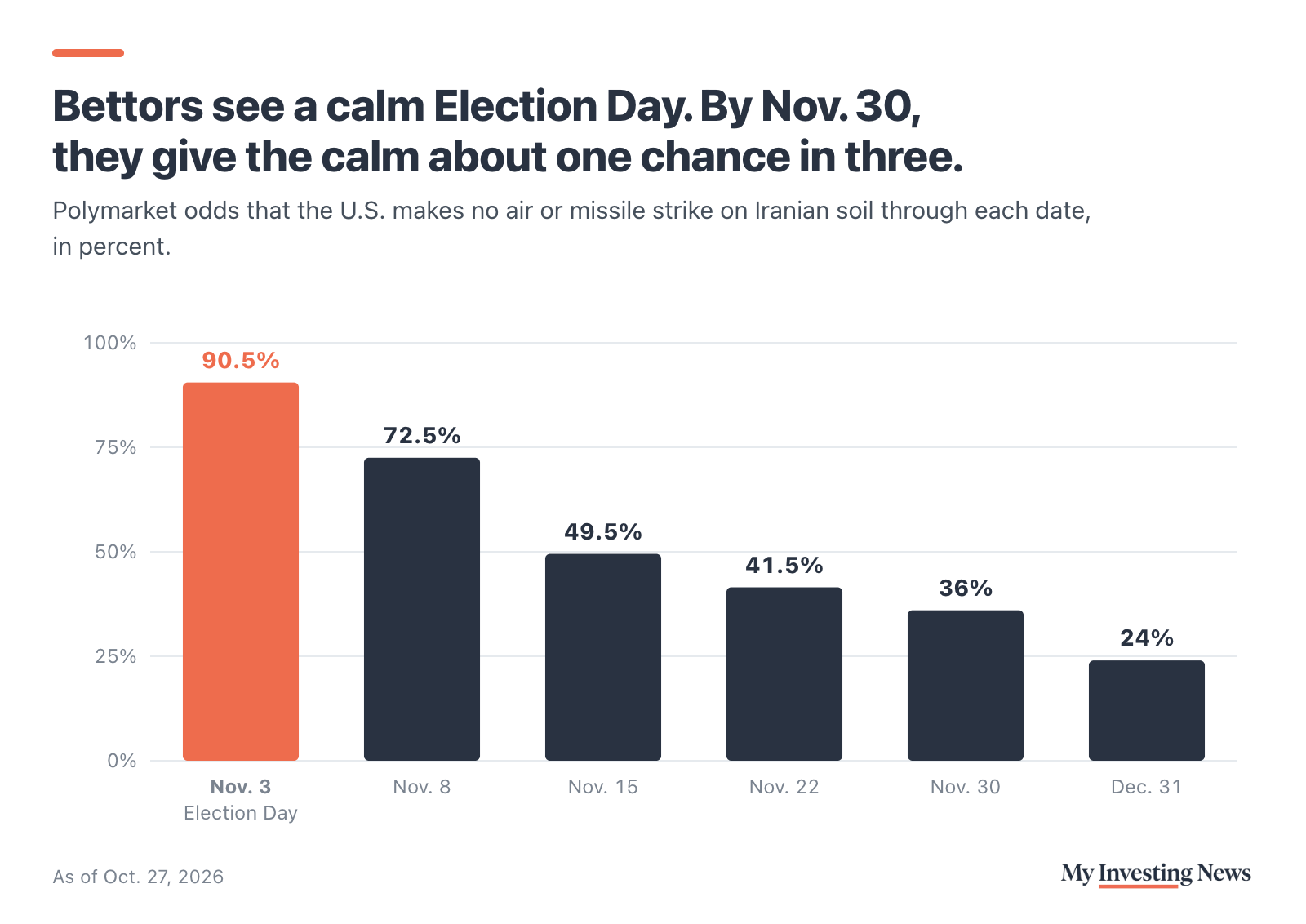
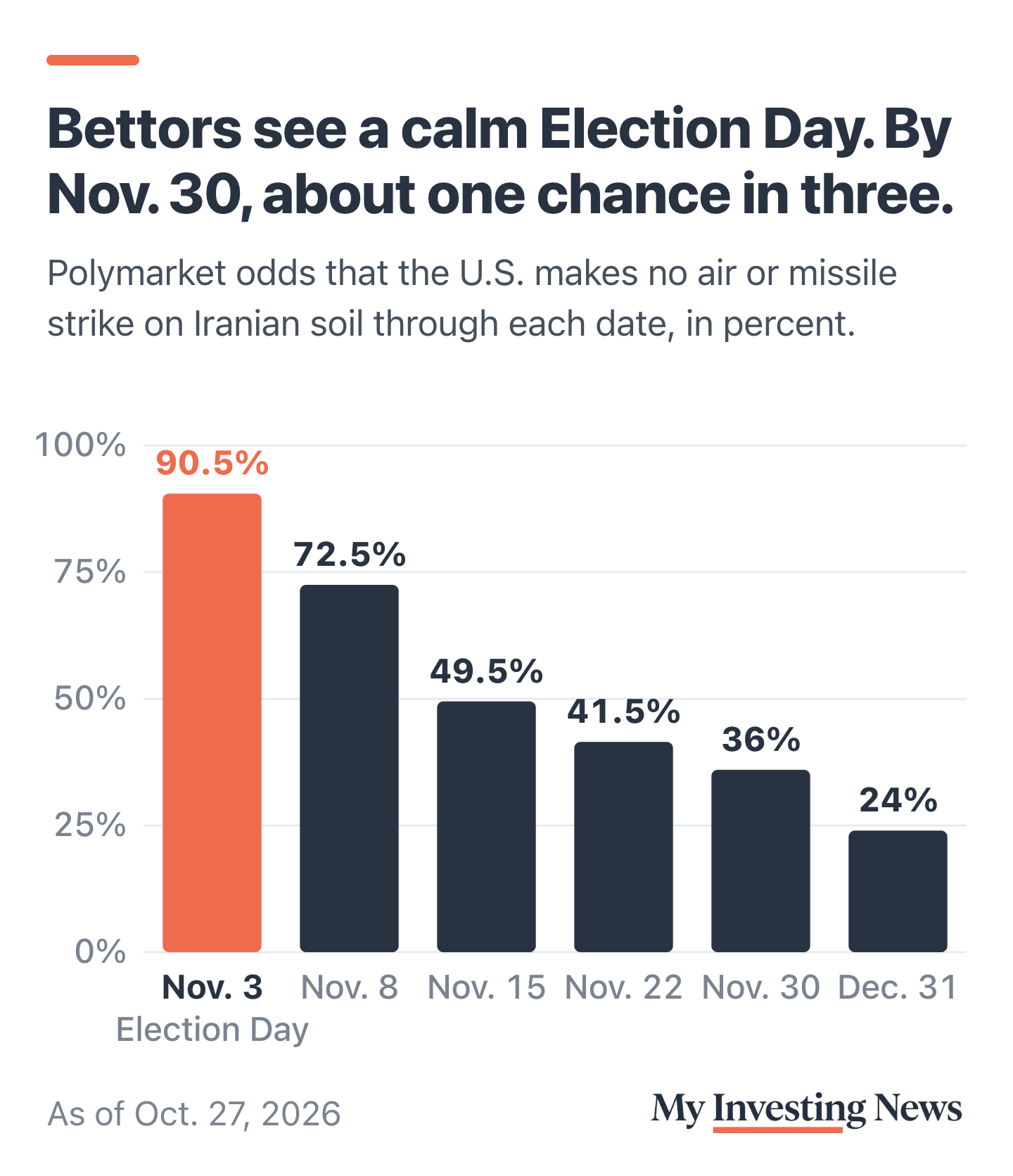
Bettors on Polymarket agree on the timing. As of 11:30 p.m. ET on Oct. 27, they put the odds that the U.S. makes no air or missile strike on Iranian soil through Election Day at 90.5%. The odds fall with each later date: 72.5% through Nov. 8, 49.5% through Nov. 15, 36% through Nov. 30 and 24% through Dec. 31. Put the other way, bettors see a U.S. strike before the end of the year as about three times as likely as no strike.
Polymarket calls these ceasefire markets. Their rules count only a U.S. air strike or surface-to-surface missile strike that hits Iran’s territory, so intercepted weapons, naval gunfire and cyberattacks don’t end the calm. More than $28 million has traded on the current series, which opened Sept. 17, and $1.4 million on a separate contract that runs through Election Day. All 13 dates in the series that settled by Oct. 27, from Sept. 20 to Oct. 24, resolved with no strike.
The near-term calm has a stated source. President Donald Trump said on Oct. 8 that he would not order strikes on Iran before the vote, the Associated Press reported. He told TIME that new strikes after the midterms were “possible,” and on Oct. 25 he told Fox News, “Do I finish it off, which would be very easy to do, or do I make a deal?” Late on Oct. 27, The Wall Street Journal reported that Washington had told Gulf allies to prepare for a possible short, intense campaign after the election.
Bettors moved with the news. The Election Day contract stood at 72.5% on Oct. 9, the day after Trump’s pledge, and at 78.5% on Oct. 24. By late Oct. 27 it was 90.5%. Over the week through Oct. 27, the odds of calm through Nov. 30 slid from 46% to 36%, and through Dec. 31 from 34.5% to 24%. The money grew more confident of a quiet vote and less confident of a quiet December at the same time.
Twice Before, the Calm Broke When Bettors Felt Safest
The same kind of market has priced two earlier lulls this year, and both ended with bettors caught off guard. In May, a Polymarket series asked whether the U.S.-Iran ceasefire would last through a run of dates. On the evening of May 24, bettors put the odds that it would last through May 25 at 95.5%, and through May 31 at 81.5%. The U.S. struck Iranian targets on May 25, NPR reported, and that contract and every later one settled with a strike.
August looked the same. On the evening of Aug. 29, bettors gave the calm a 98.8% chance of holding through Aug. 31 and 77.5% through Sept. 30. The next day, U.S. forces struck two Iranian launchers on Larak Island, ending a month without U.S. military action against Iran, CBS News reported. More U.S. strikes followed on Sept. 1.
Two cases are a small record. But in both rounds, the longer-dated contracts were the ones that got it right. When the May series opened, its Dec. 31 contract gave the calm only 34.5%, and the August series’ Oct. 31 contract gave it 58%. Both settled with a strike. The near dates, which looked safest, were where bettors were wrong. Today’s 90.5% for Election Day is a little less confident than either of those readings the night before a break.
Iran ceasefire odds and oil, as of Oct. 27
What Oil Did When the Calm Broke
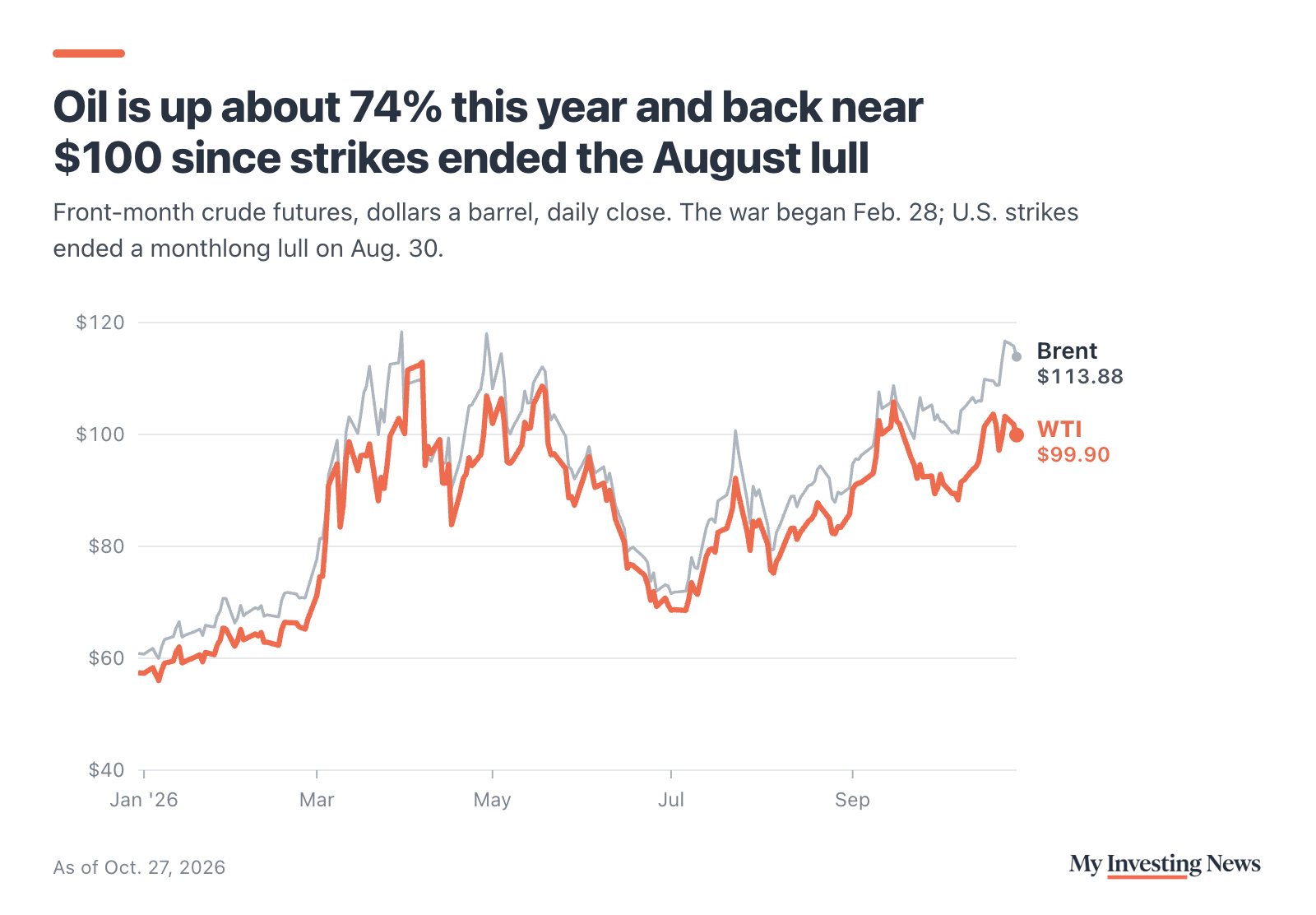
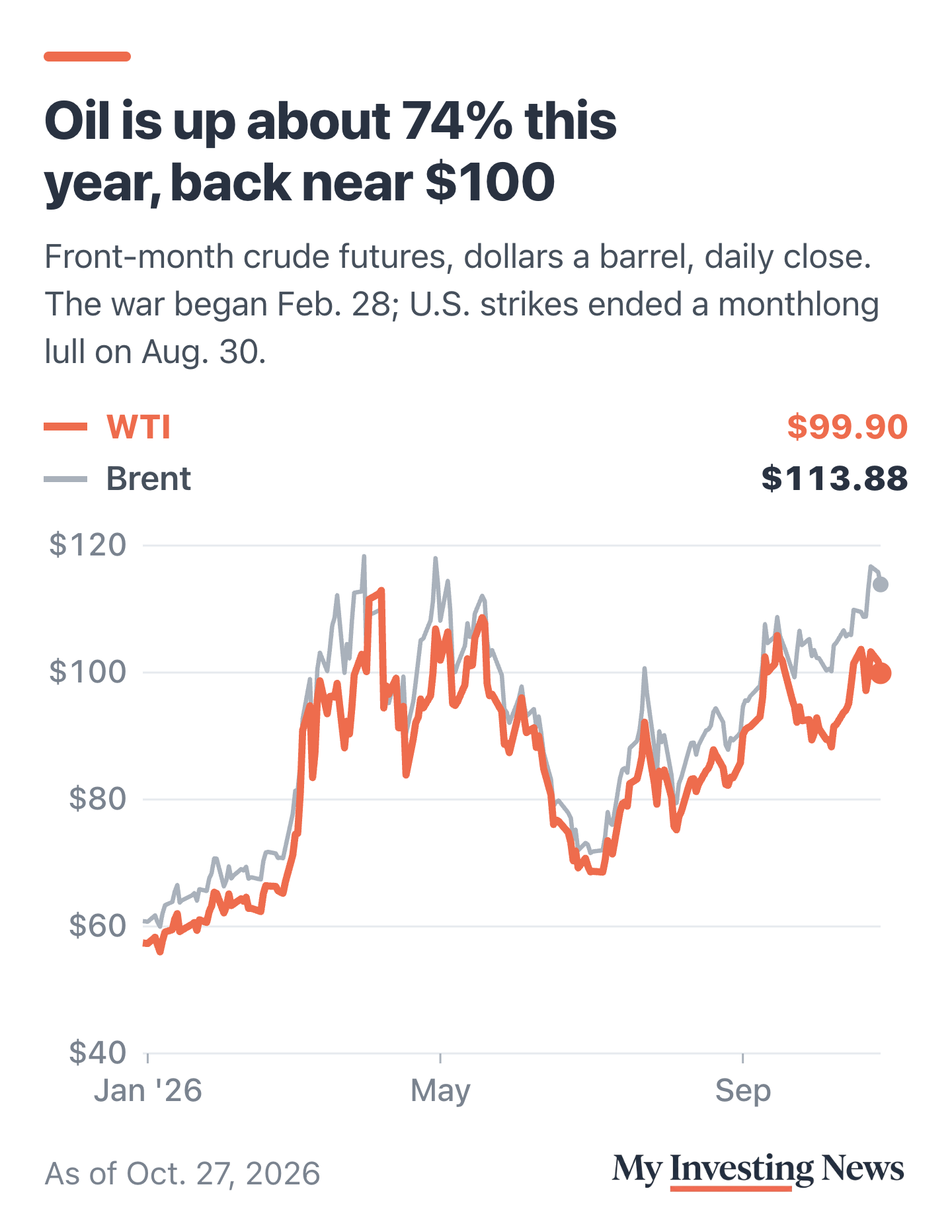
Oil is the market most exposed to the answer. Front-month WTI crude futures settled at $99.90 a barrel on Oct. 27, up 74% from $57.42 at the end of 2025, and Brent at $113.88. WTI peaked this year at $112.95 on April 7, the day the U.S. and Iran announced a two-week ceasefire. By mid-October, energy stocks were up more than 50% for the year.
The two breaks moved oil in opposite directions. In the week after the Aug. 30 strikes, WTI rose 9.7%, from $83.40 on Aug. 28 to $91.48 on Sept. 4, and it has gained 19.8% since that Aug. 28 close. After the May 25 strikes, with talks on a deal still under way, WTI fell 4.6% over the next week.
The fight has also spread beyond Iran’s borders. Iran-backed Houthi forces hit Saudi airports in early October, and DCLA’s Sarat Sethi has warned that high oil prices haven’t hit stocks yet.
What to Watch
Cramer’s list runs in order: the Fed’s Oct. 28 decision, the Nov. 3 vote, then Iran. On Polymarket, the dates to watch are Nov. 8 and Nov. 15, where bettors put the odds of calm at 72.5% and 49.5% as of Oct. 27. A drop in those before Election Day would mean bettors think the window is opening sooner.
Bettors see a bigger war as much less likely. Polymarket’s market on whether the U.S. launches an offensive to take and hold Iranian territory before 2027 stood at 18.5% on Oct. 27, with $75.6 million traded.
Cramer and Wilson both pointed past Election Day, and so does the money: bettors give a quiet vote 90.5% odds and a quiet November about 36%. The record argues against leaning on the safe-looking near dates. Twice this year, these markets put the calm above 95% the night before it broke.