Where we heard itBloomberg, “Instant Reaction: US Adds 165,000 Jobs, Topping All Forecasts,” Nov. 6, 2026, with Kristina Campmany, portfolio manager at Invesco, and economist Claudia Sahm.
The October jobs report came in strong. Employers added 165,000 jobs, the Bureau of Labor Statistics said on Nov. 6, more than double the 70,000 Wall Street expected, according to Bloomberg’s reporter on the network’s instant-reaction show. Unemployment fell to 4.1% from 4.2%, a tenth below the unchanged rate that Polymarket bettors favored in late October. Revisions added another 84,000 jobs to August and September.
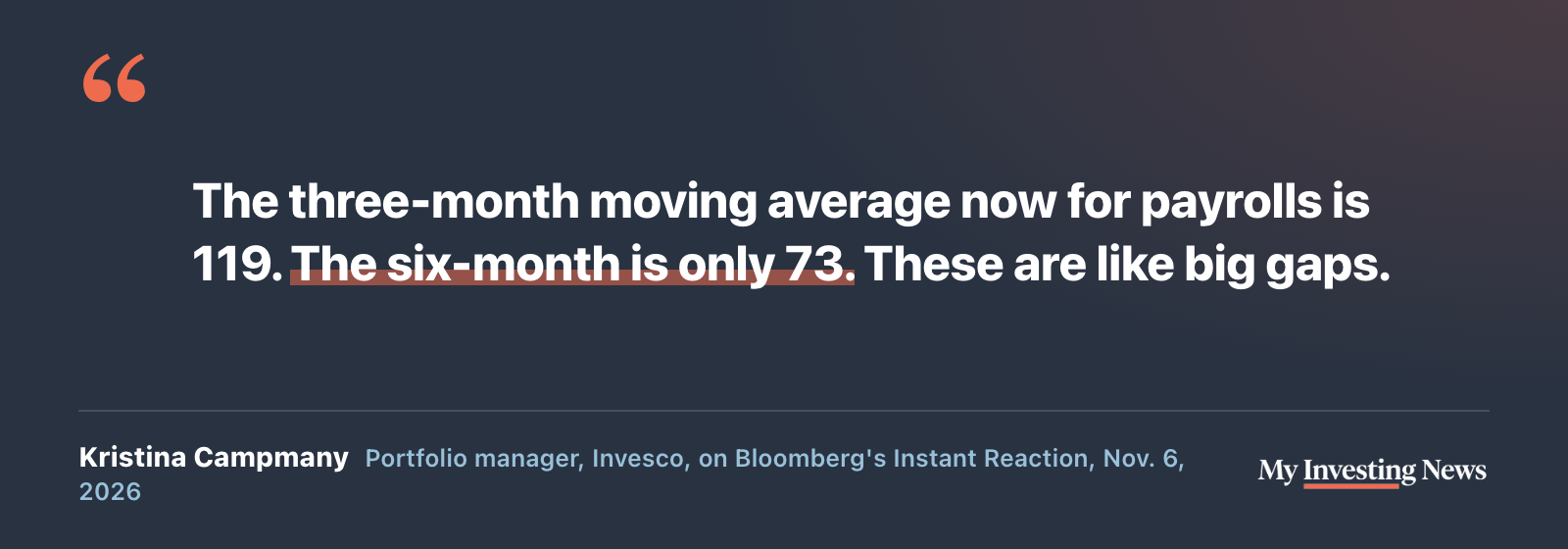
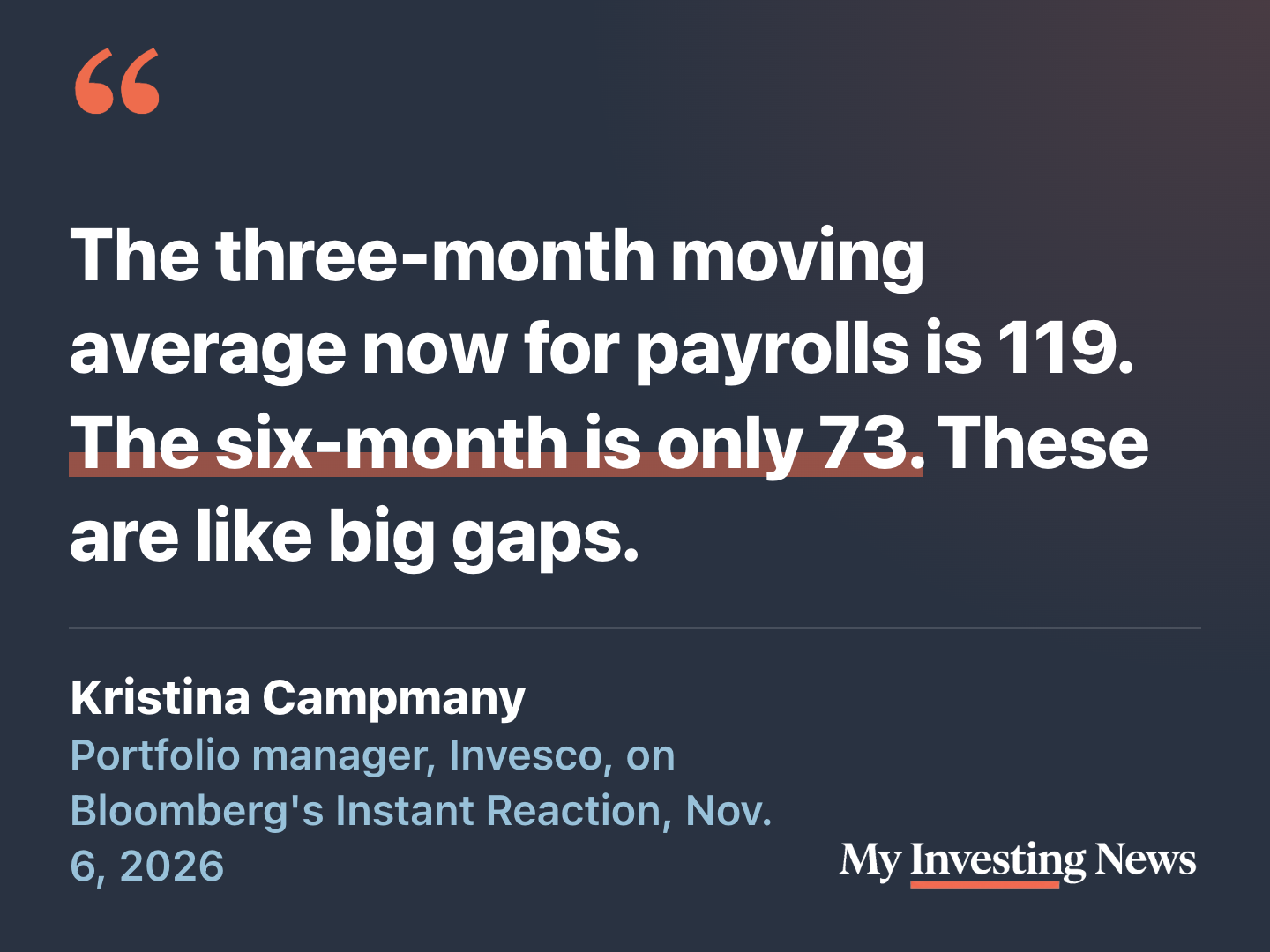
Kristina Campmany, a portfolio manager at Invesco, heard the headline and went to the averages.
Her bigger point was that bond traders had other things on their minds. “I don’t think that’s where the market’s focused at all,” she said, pointing to the elections, oil, the Middle East, stocks and AI.
Checking the Averages
Averages smooth out a noisy series, so her numbers are worth a look. Using the figures in the Nov. 6 report, payroll growth averaged 137,000 a month over August, September and October, and about 83,000 over the six months from May. Both are higher than what she said.
The gap comes from August. The October report raised August’s gain to 186,000 from 133,000. Leave August at its old figure and the averages come out to 119,000 and about 74,000, in line with her numbers. Her figures appear to use August’s earlier estimate.
Her case for looking past one month holds either way. October’s 165,000 was about 85,000 above the 80,000 average of the six months before it. One month says less than the trend, and as of the September report, the three-month average was only about 51,000.
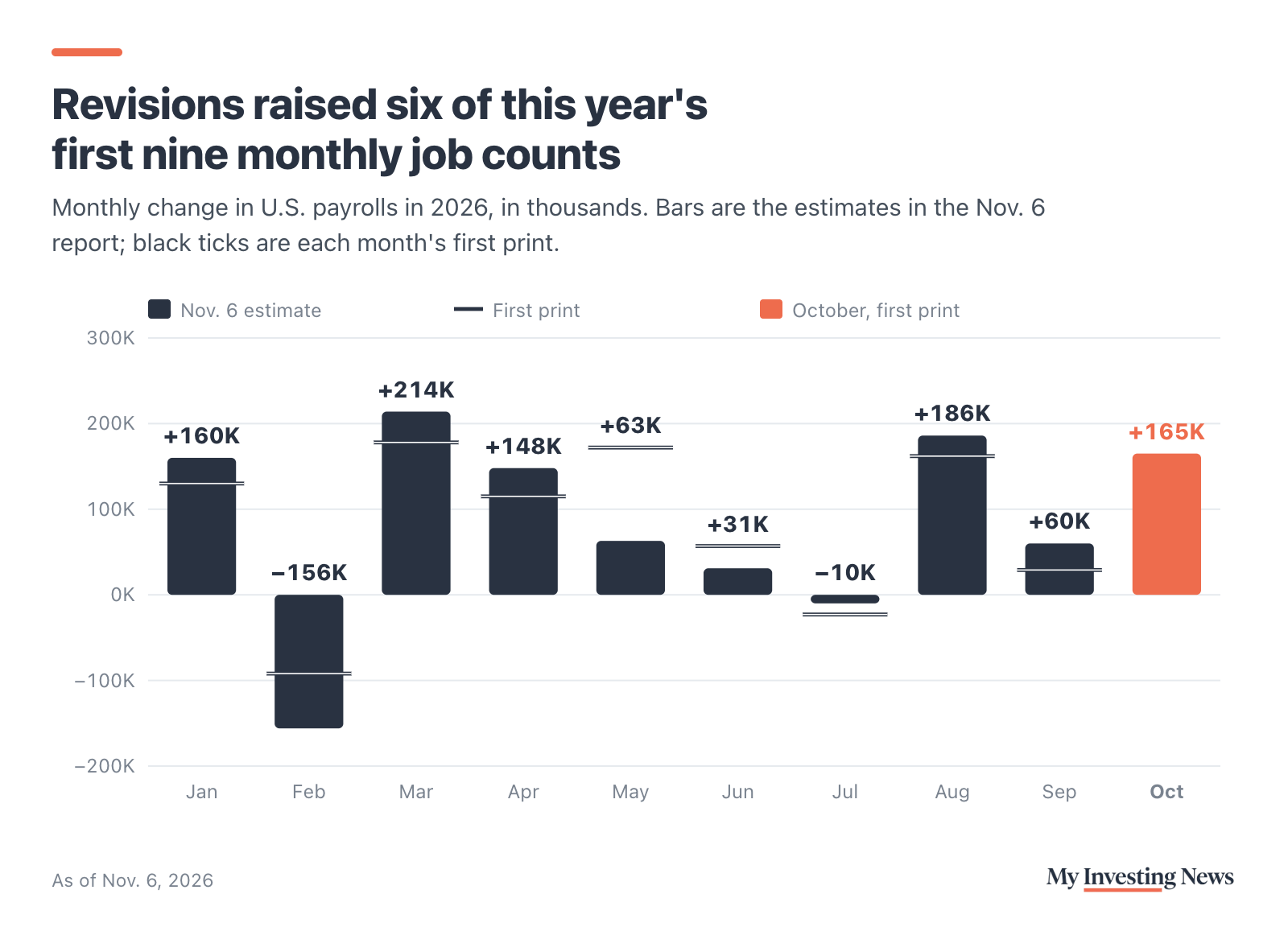
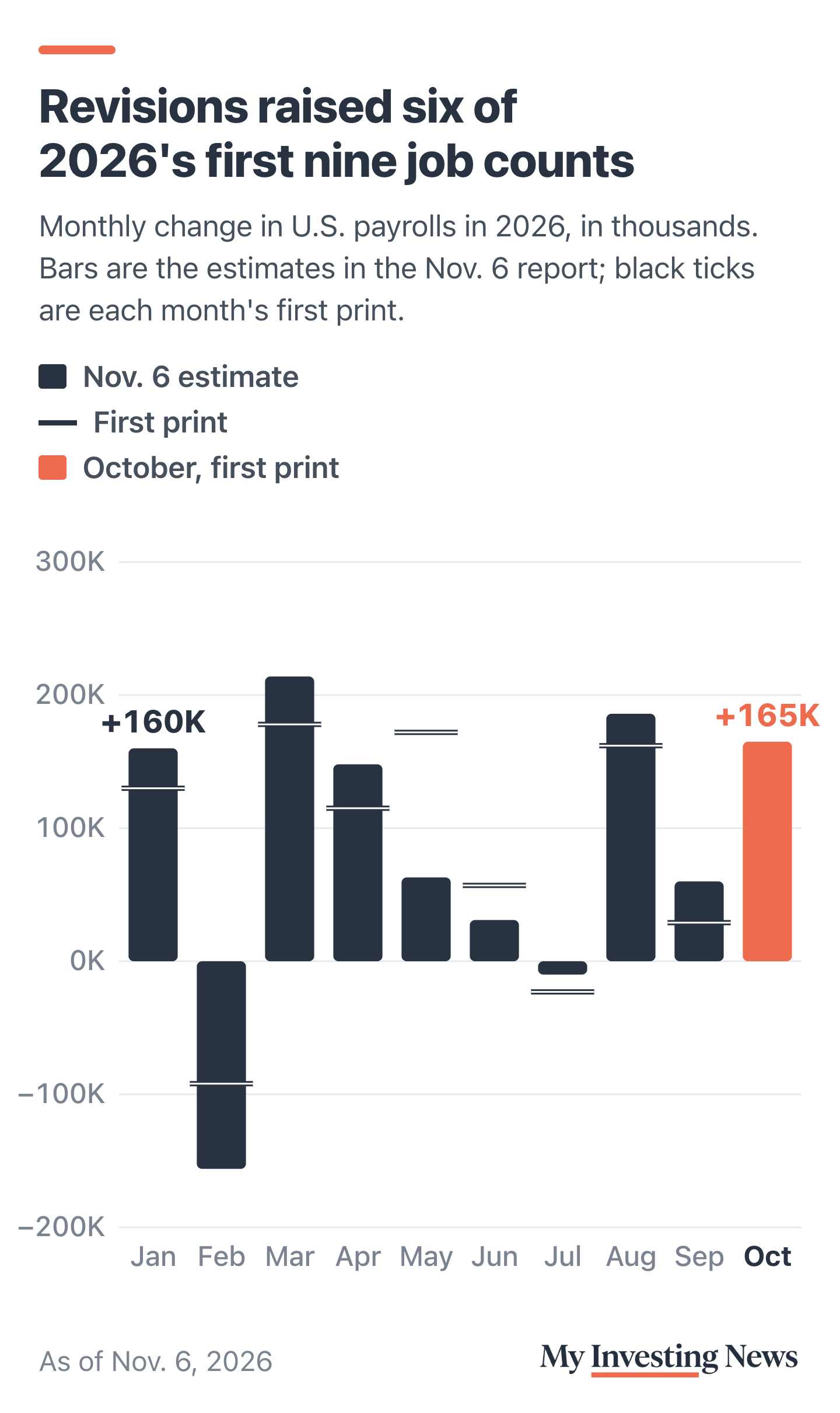
The year’s monthly counts have moved around a lot since they first came out. Six of the nine months from January to September now stand higher than their first print, and three lower, for a net decline of 32,000 jobs. May took the biggest hit: first reported at 172,000, it now stands at 63,000.
October jobs report, Nov. 6
How Much Revisions Move the First Count
October’s 165,000 is a first print. BLS revises each month’s count in each of the next two reports as more employer surveys come in, so October gets its second look on Dec. 4, when the November report is scheduled, and its third with the December report.
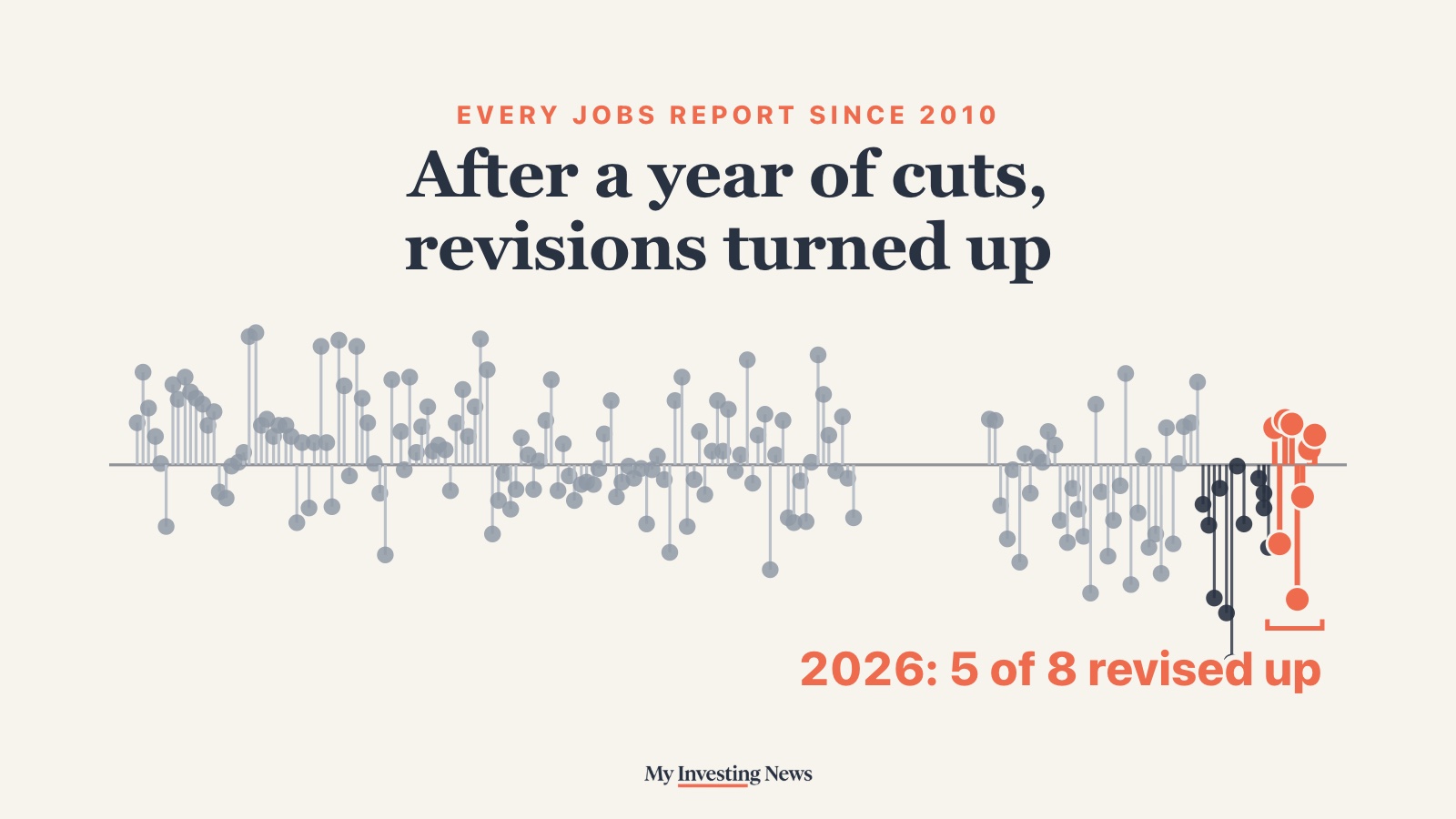
We scored every jobs report since January 2010 against FRED’s archive of past data, leaving out March 2020 through December 2021, when pandemic swings ran into the millions. Across 178 months through August 2026, two revisions raised the first count 95 times and lowered it 83 times. The typical change was 32,000 jobs, up or down.
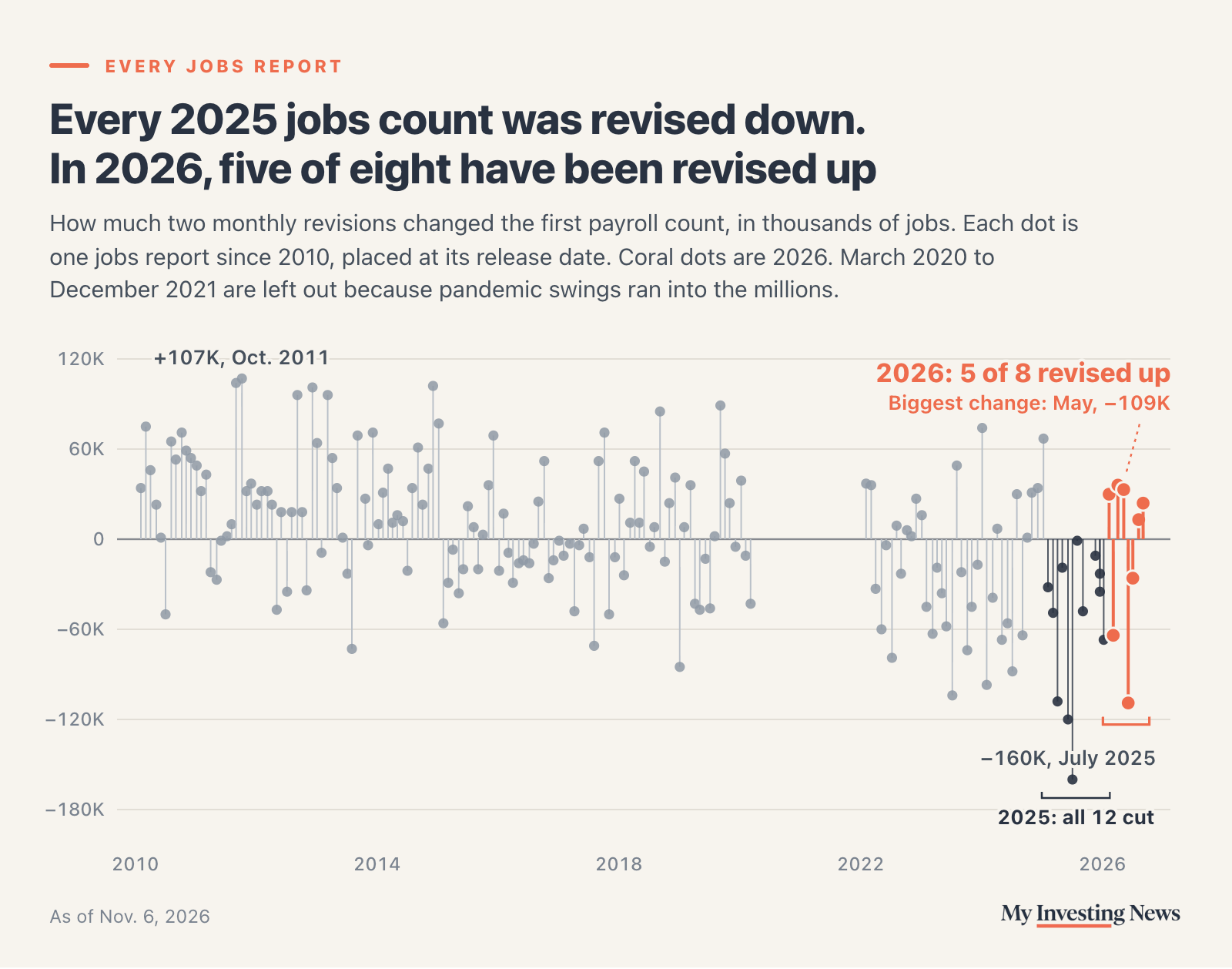
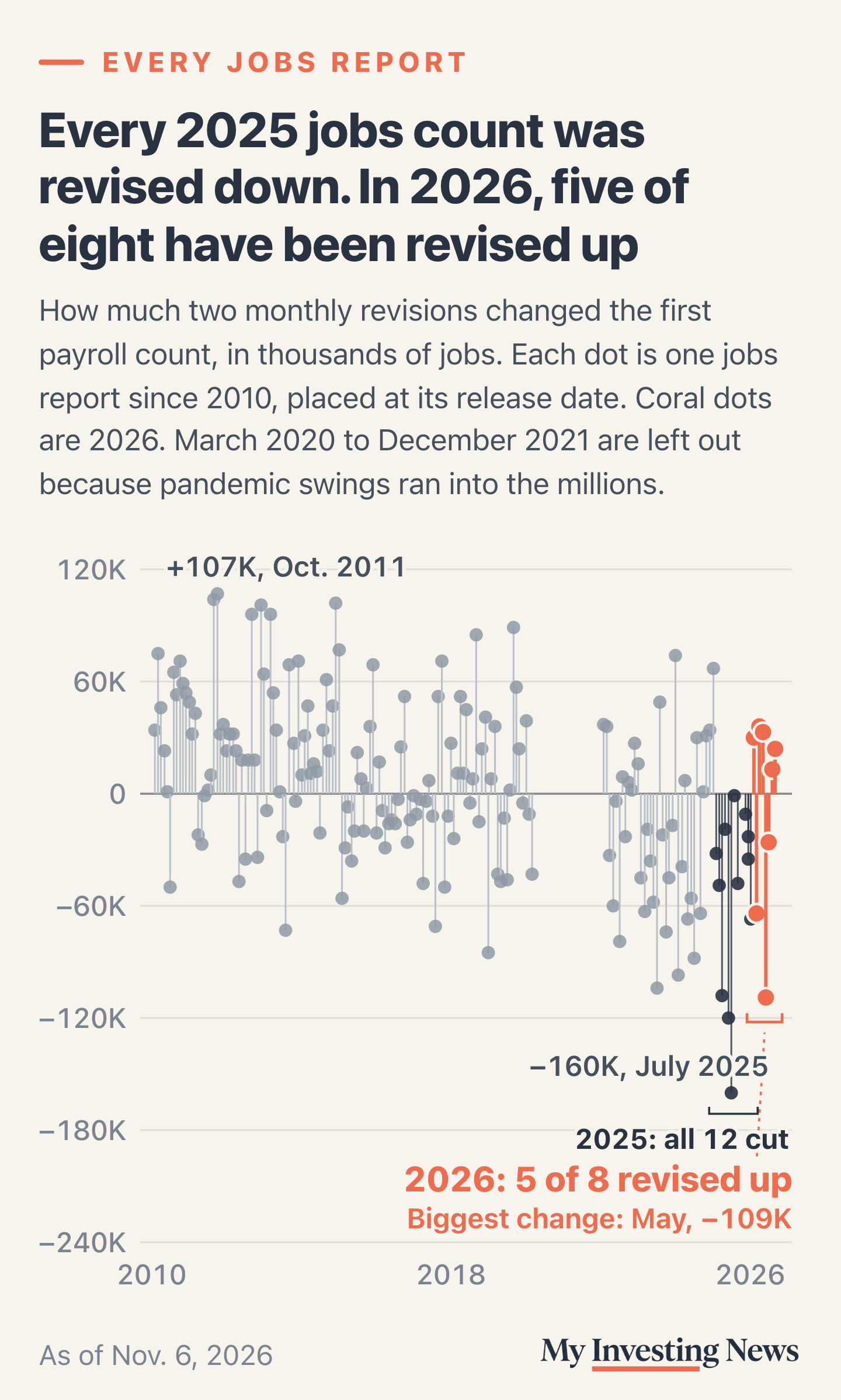
The direction has swung by year. In 2025, all 12 first counts were revised down, by an average of 56,000 jobs. In 2026, five of the eight months with both revisions in were revised up.
Big beats have mostly held. We counted 33 months since 2010 when the first print topped the prior six-month average by at least 75,000, as October did. Two revisions raised 21 of them and cut 12. In 26 of the 33, the month still beat that average by 75,000 or more after the revisions.
Low Hiring, Low Firing
Claudia Sahm, the former Federal Reserve economist behind the Sahm rule recession signal, described the backdrop on the same show. “The labor market has had this really uncomfortable, curious balance of the low hiring but the low firing,” she said. “People are holding on to their jobs, which is a good thing.”
She tied slow pay growth to quitting. “If workers are out there quitting to get better jobs, that’s when they have the leverage for the higher wages,” Sahm said. The quits rate rose to 2.1% in September from 1.9% in August, the Labor Department’s job openings survey showed on Nov. 3. That is near the middle of its range since 2000 and below its 3.0% peaks in November 2021 and April 2022. Pay has been a sore spot for a while: lower earners got raises and still got poorer from 2022 to 2025, the Fed’s Survey of Consumer Finances found.
What to Watch
The November report on Dec. 4 will carry the first revision to October and the second to September. If October holds near 165,000, the three-month average stays far above the roughly 51,000 pace it showed before the Nov. 6 report. A cut the size of May’s, with nothing else changed, would bring it down to about 101,000.
Campmany’s averages of 119,000 and 73,000 match the data with August at its pre-revision figure. With the Nov. 6 revisions they are 137,000 and about 83,000, still well below October’s 165,000. Since 2010, strong first prints have more often been revised up than down, but one report is a single reading, and the next two revisions arrive Dec. 4 and with the December report.