Where we heard itA trader on the panel of CNBC’s Fast Money, Nov. 4, 2026, the day after Democrats won the Senate; Nancy Marshall-Genzer on Marketplace Morning Report, Nov. 5, 2026.
Democrats’ Senate win on Nov. 3 puts a familiar name in line for one of Wall Street’s most important gavels. Elizabeth Warren of Massachusetts is the ranking Democrat on the Senate Banking Committee, and when the new Congress sits in January she is the expected chair, pending the party’s committee assignments.
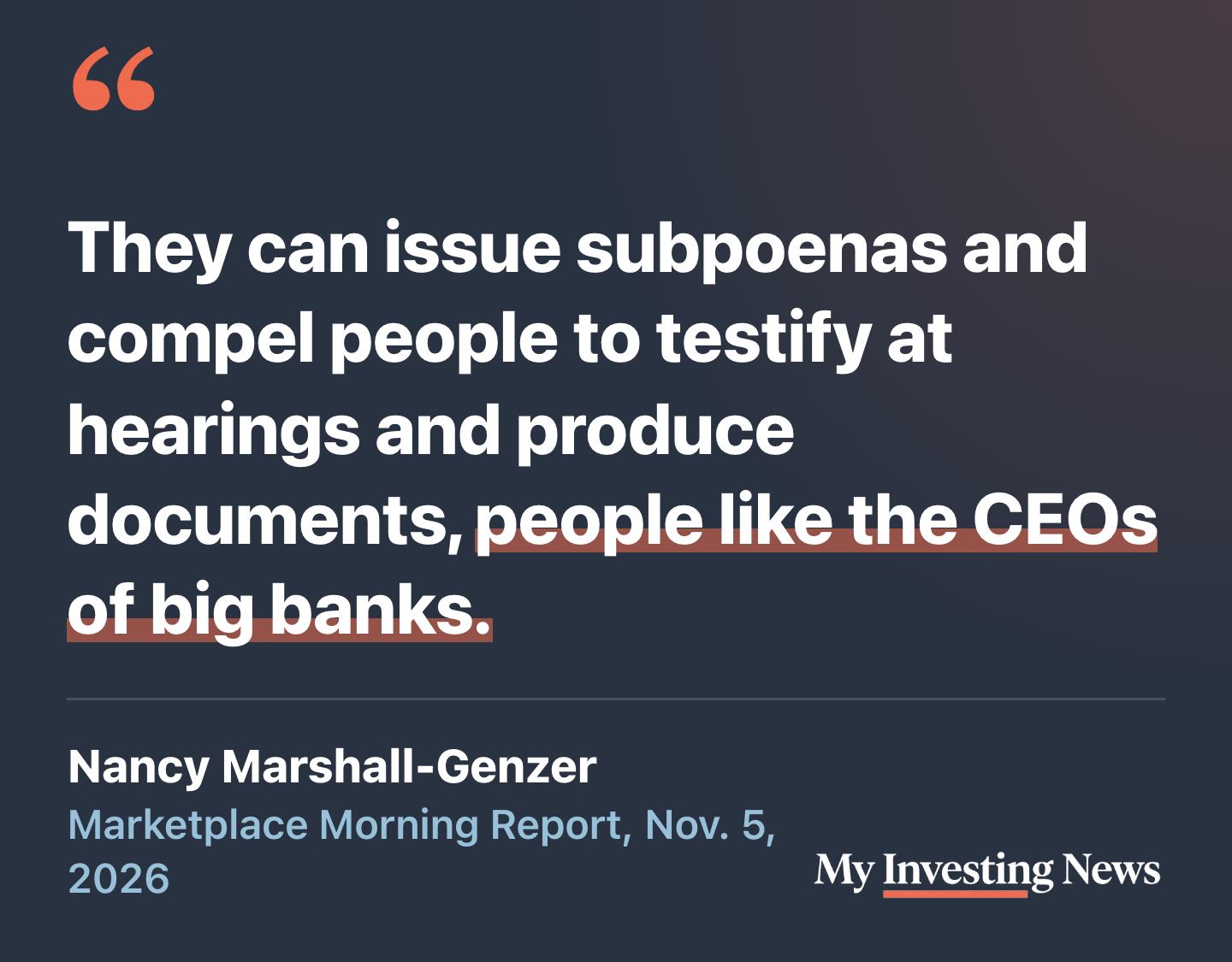
Traders on CNBC’s Fast Money weren’t worried. “Elizabeth Warren taking over the helm for the banking sector, she can’t do anything,” one panelist said on Nov. 4. “She could call those CEOs to Congress, they could testify, but he’ll veto anything that he doesn’t want to be done.” Bank stocks agreed that day: the KBW Nasdaq Bank Index rose 2.4%, against 1.6% for the S&P 500. Marketplace’s Nancy Marshall-Genzer laid out what a Democratic chair can still do the next morning:

Whether a chair matters to bank stocks is something the record can answer. Senate Banking has changed parties nine times since 1980. We measured how bank stocks did against the whole U.S. stock market in the year after each switch, starting from the day control became known, using daily industry returns from Kenneth French’s data library, dividends included.
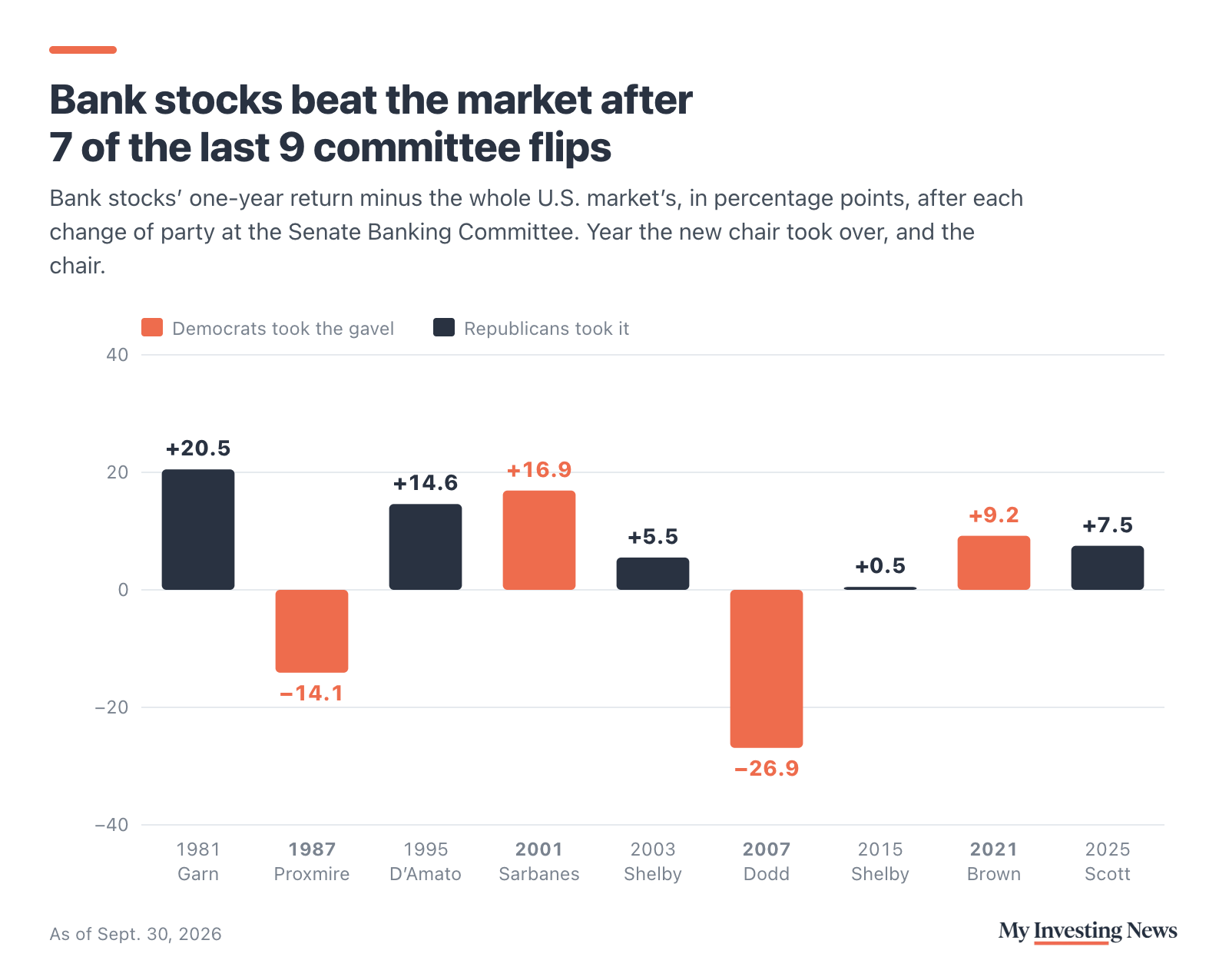
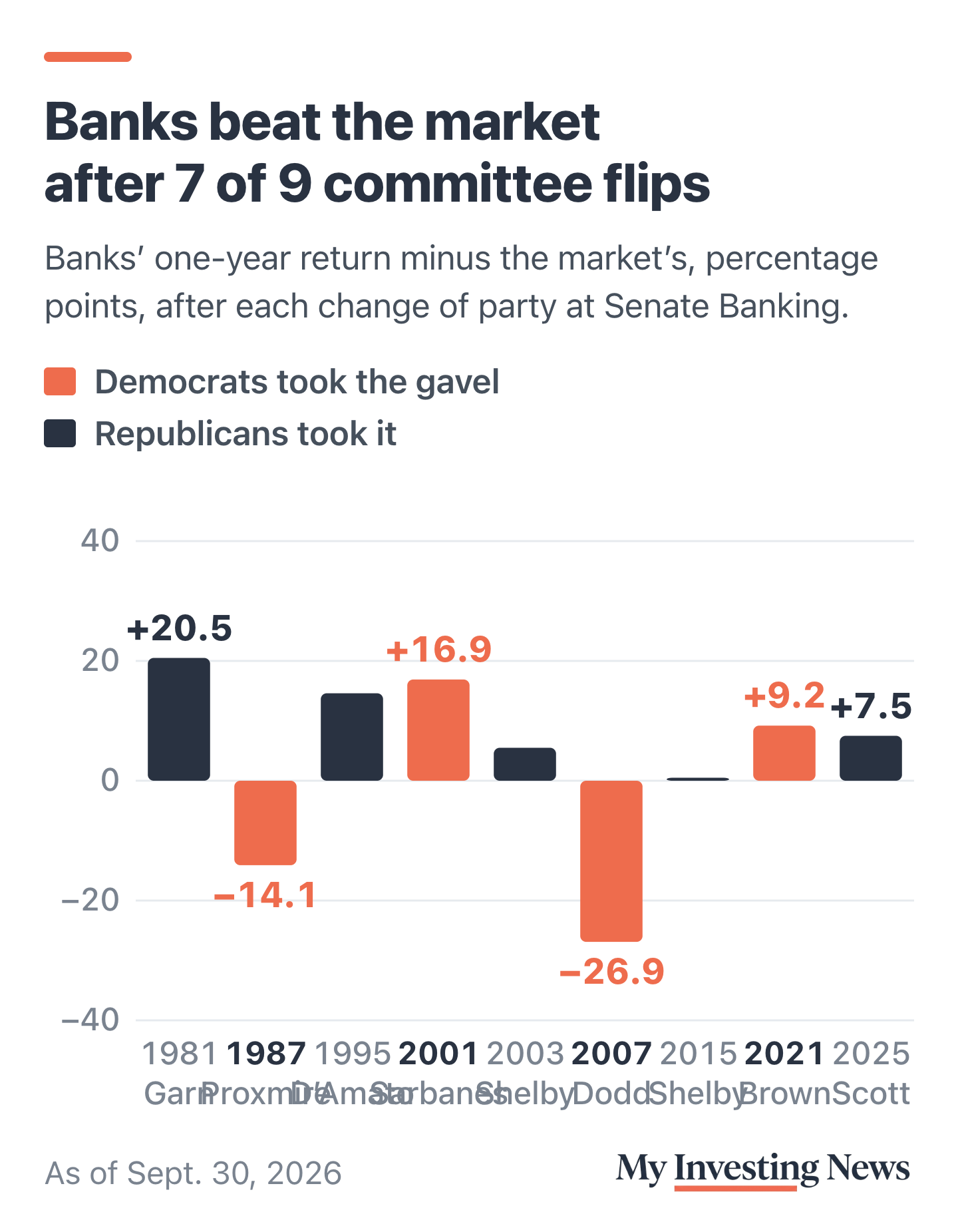
Banks Beat the Market After 7 of 9 Flips
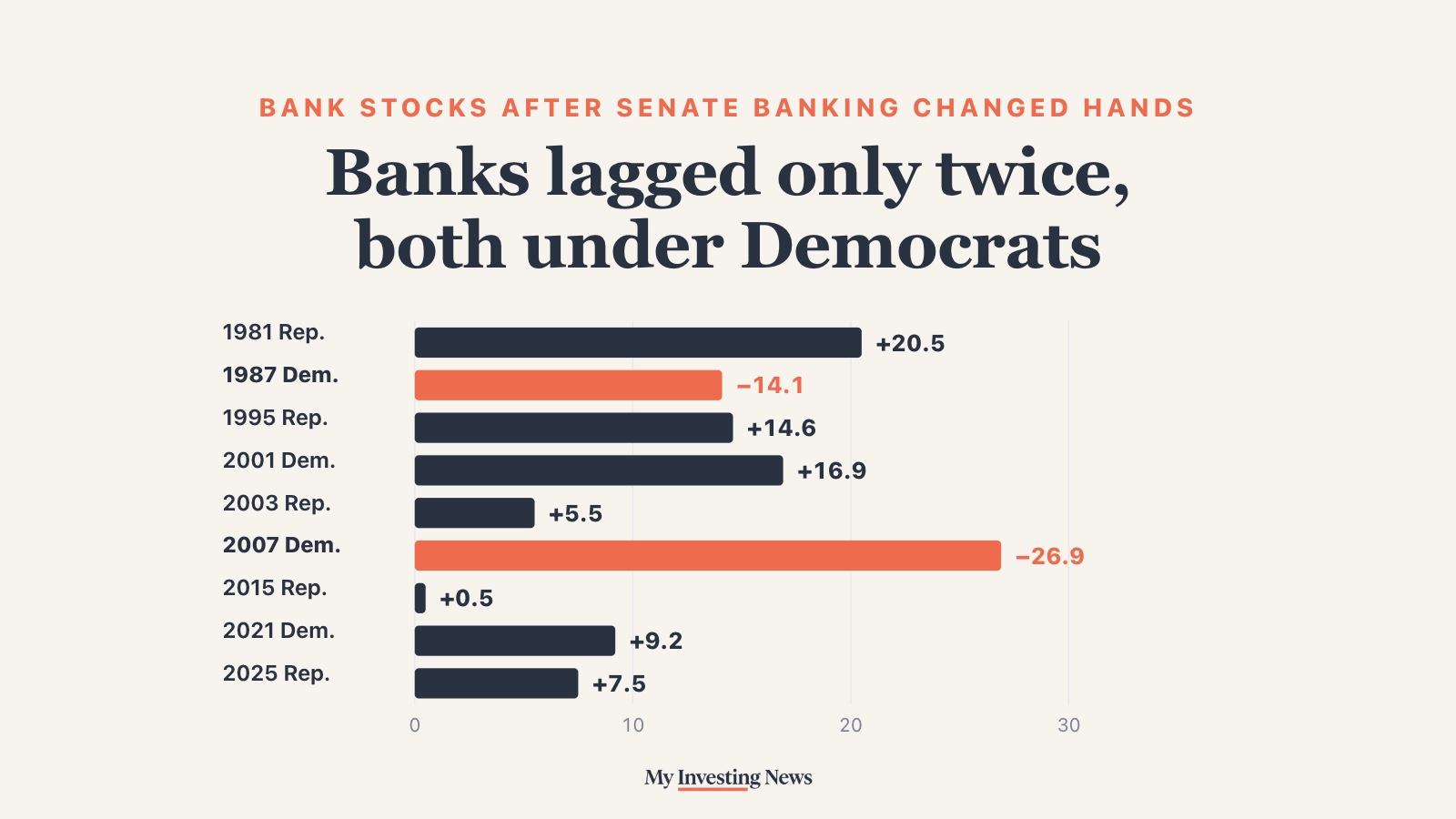
Bank stocks outran the market in the year after 7 of the 9 changes. After the five Republican takeovers, they beat it every time, by 9.7 percentage points on average. After the four Democratic takeovers, the record splits: banks led by 16.9 points after Paul Sarbanes took the gavel in 2001 and by 9.2 points after Sherrod Brown took it in 2021, and trailed by 14.1 points in 1987 and 26.9 points in 2007. That works out to an average shortfall of 3.7 points.
Both Misses Came With a Crisis
The two bad years say more about the economy than the committee. The year after Democrats won the Senate in November 1986 ran through the October 1987 crash, and bank stocks lost 14.7% as big lenders set aside reserves for bad loans to Latin America. The year after the November 2006 election ran into the subprime mortgage bust: banks fell 17.6% while the market gained 9.3%. In 2001, the opposite happened. Democrats took over in June, after Sen. Jim Jeffords left the Republican Party, and banks gained 2.2% in a year when the market fell 14.7%.
The setup this time is closest to 1987, 2001 and 2007, when a Republican president faced a Democratic Senate. Banks lagged in two of those three. Nine episodes is a small sample, and none of them shows a chair moving bank stocks on their own.
Bank stocks and the Banking Committee
What a Chair Can Do
The panelist’s point about the veto is right for new laws: a Democratic Senate can’t pass bank rules over a Republican president’s objection. A chair’s power is the agenda. As Marshall-Genzer noted, a Democratic committee can subpoena documents and bring bank CEOs in to explain how they manage risk, and the Senate must confirm nominees for regulators such as the FDIC and the Securities and Exchange Commission. The same panelist flagged where Warren and the White House overlap, naming credit card fees and credit rating agencies as the places to worry. Warren has pushed on markets beyond banking, too; she wants lawmakers barred from owning stocks.
Banks’ two bad years after a flip were crisis years: 1987 and 2007
Bank stocks’ return minus the whole U.S. market’s, in percentage points, from the day control of the Senate Banking Committee became known, by trading day. Dark lines: Democratic takeovers. Gray: Republican. Coral: the KBW Nasdaq Bank Index vs. the S&P 500 since Nov. 3, 2026.
What to Watch
Watch the Senate Democrats’ committee assignments, which settle who chairs Banking, and the first hearing list the new chair puts out. Credit card companies and big-bank CEOs are the obvious early targets. Bank earnings in January will show whether the rally holds; fund managers have already been picking among the big banks after third-quarter earnings. Rates matter more than any hearing: nine of 10 big banks expected the Fed to cut in 2026, and it raised rates instead.
The record backs the traders’ shrug: bank stocks beat the market after 7 of the last 9 changes of party at Senate Banking. Both misses came under Democrats, in 1987 and 2007, but both were crisis years. A Warren gavel brings hearings and subpoenas; the bigger risk to bank stocks is credit, not the committee.