Where we heard itFederal Reserve, transcript of Chair Kevin Warsh’s press conference, Oct. 28, 2026. Also: Kansas City Fed President Jeffrey Schmid on Bloomberg’s Odd Lots (Aug. 27), Jim Bianco on X (Oct. 29), Invesco’s Kristina Campmany on Bloomberg (Nov. 6) and Nick Timiraos on X (Nov. 10).
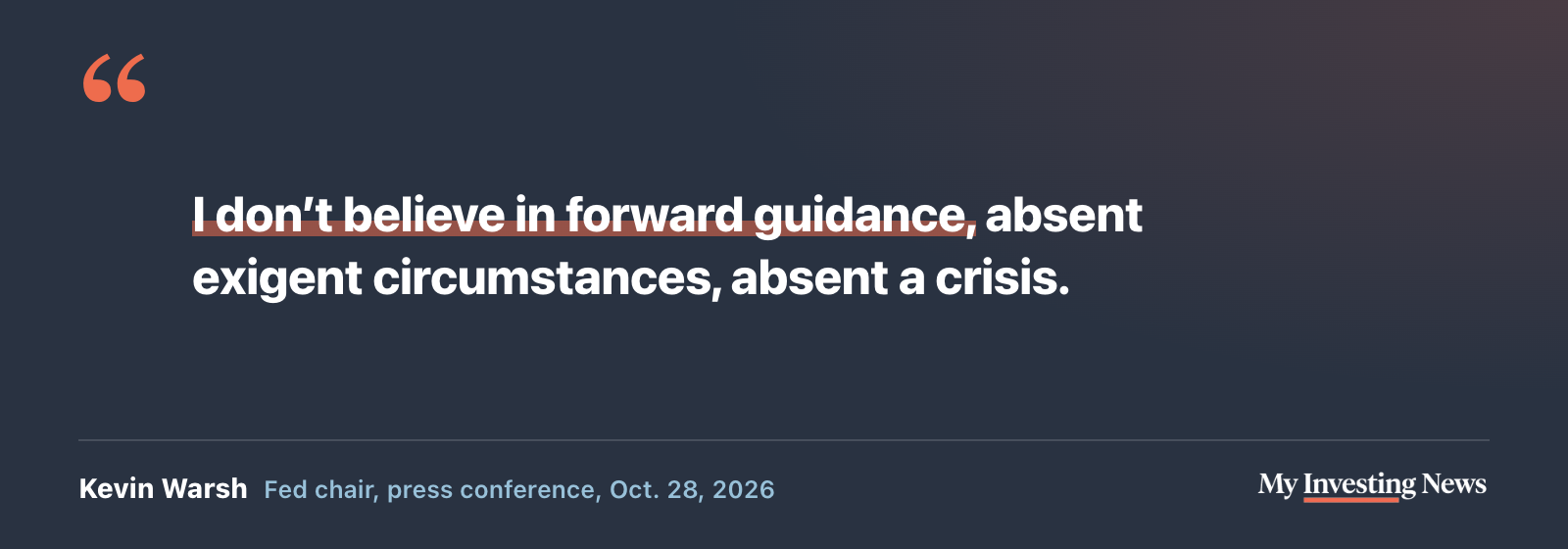
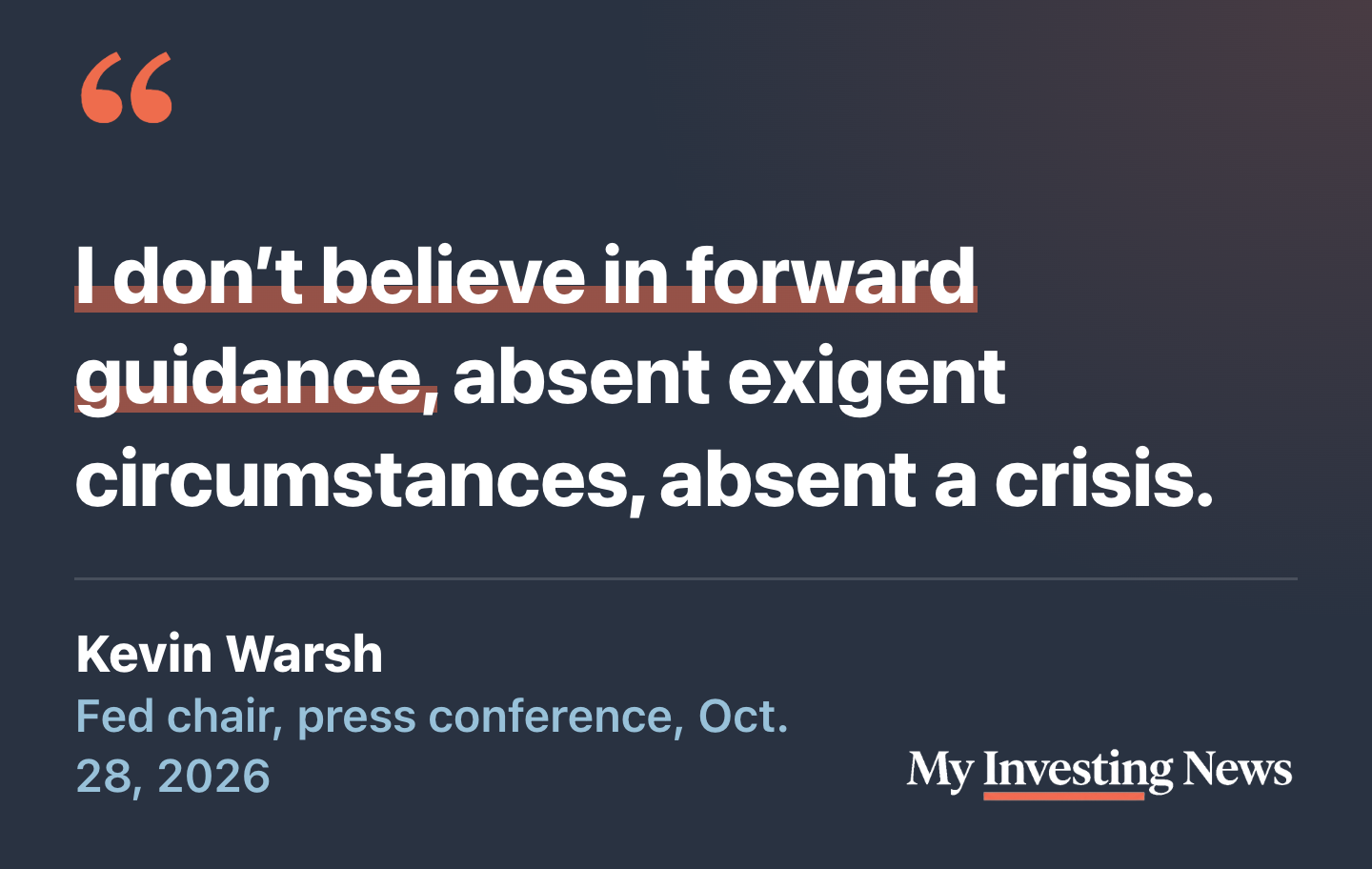
Kevin Warsh has made a habit of telling markets less. Asked at his Oct. 28 press conference whether there was still support around the table for another rate hike this year, the Federal Reserve chair said: “I don’t believe in forward guidance, absent exigent circumstances, absent a crisis.” In normal times, “especially times where the underlying real economy is this strong, I don’t believe in it. I don’t favor it.” At his first press conference as chair, on June 17, he had put it more simply: “We’ve dropped forward guidance.”
The idea has a following. Kansas City Fed President Jeffrey Schmid recalled on Bloomberg’s Odd Lots in August that Warsh has said it is “better the Fed be on the page B12 versus A1,” meaning off the front page. The Wall Street Journal’s Nick Timiraos wrote on X on Nov. 10 that Warsh “has signaled very little appetite” for tying guidance to the last few data releases. Jim Bianco of Bianco Research joked on Oct. 29 that the chair “could come out for 15 minutes” at a sports-style press conference while other officials wait in the back room.
Not everyone thinks it has made the Fed quieter. On Bloomberg on Nov. 6, Invesco portfolio manager Kristina Campmany said bond investors are “still grappling with this Fed that doesn’t want to have forward guidance from the chair, but the rest of the committee is giving forward guidance and we have very different messaging meeting to meeting.” (On the same show she broke down October’s payroll averages.) So we tested what Fed talk does to markets, using every scheduled Fed decision since February 1994, when the Fed began announcing its decisions the same day.
Fed Days Got Louder When the Chair Started Talking
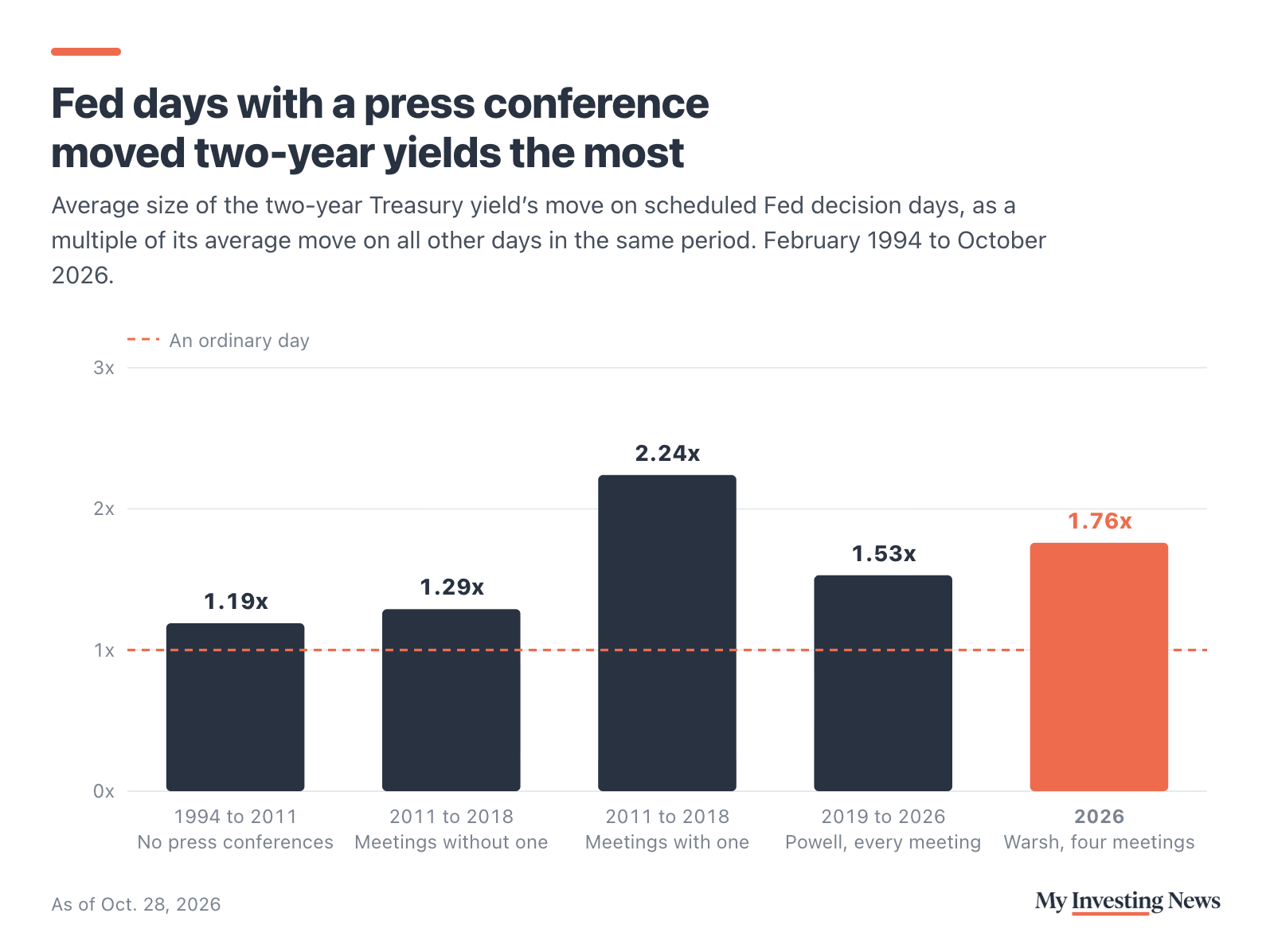
The test uses the two-year Treasury yield, the market rate most tied to Fed policy, on all 262 scheduled decision days through Oct. 28, 2026. Daily yields come from the Treasury via the St. Louis Fed. Because the two-year barely moved in the zero-rate years, we compare each Fed day with the average ordinary day in the same period, so the eras are judged on the same footing.
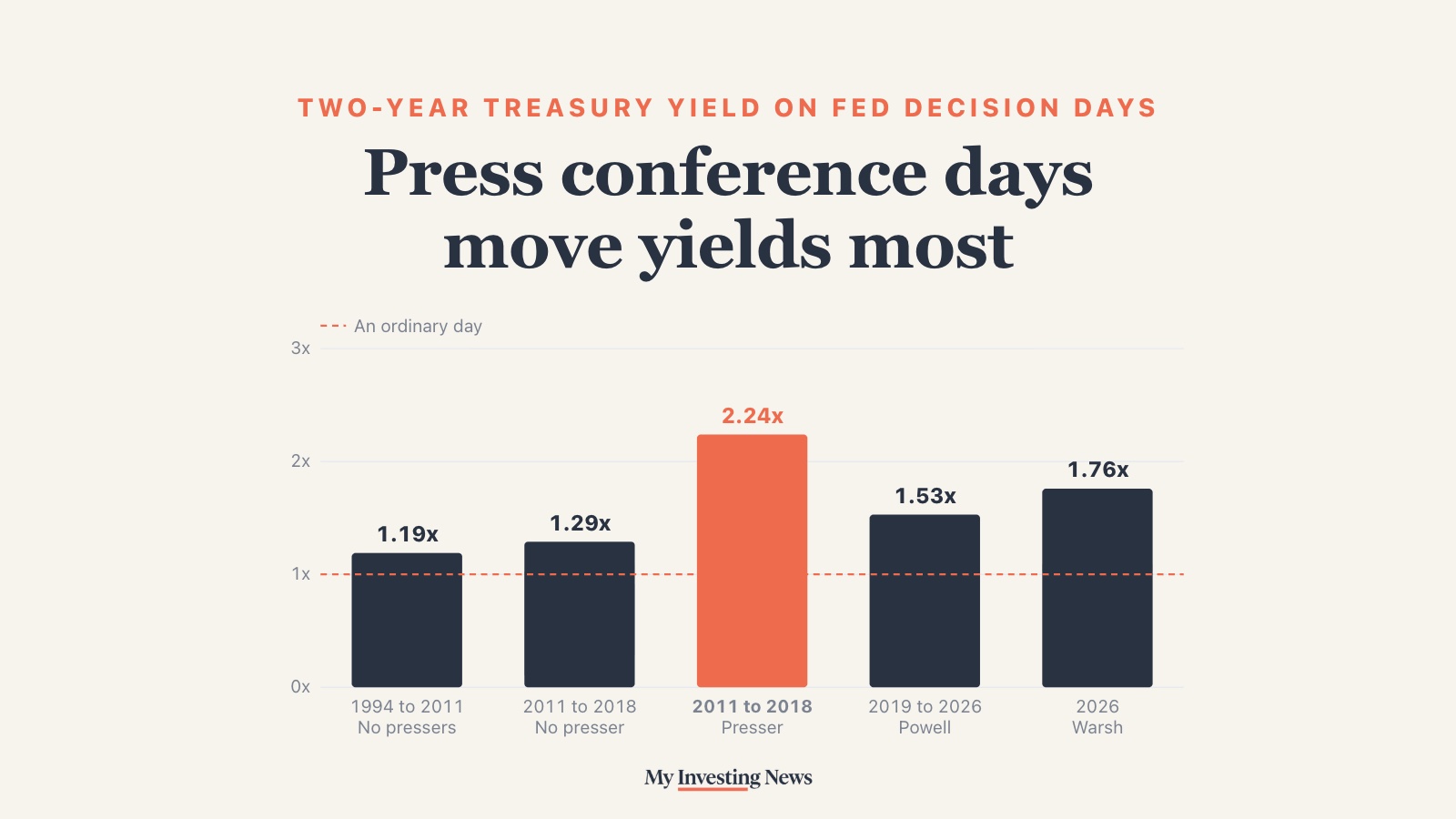
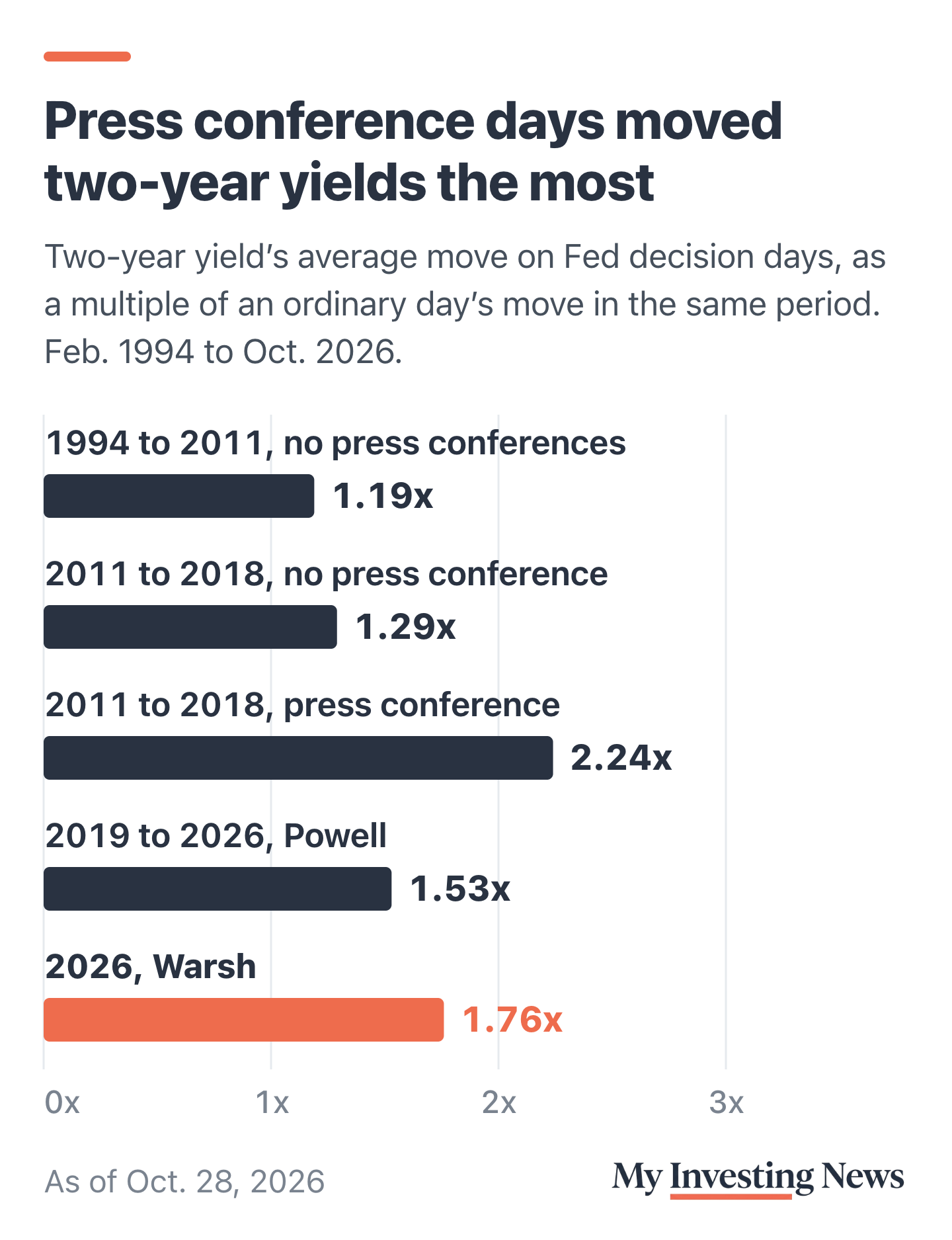
Before press conferences began in April 2011, a Fed day moved the two-year about 19% more than an ordinary day: 5.3 basis points against 4.5. From 2011 through 2018 the chair spoke after only some meetings, which makes a natural comparison. The 32 decisions followed by a press conference moved the two-year 2.24 times as much as an ordinary day. The 30 without one moved it 1.29 times as much, close to the old pattern. The press conference meetings were also the ones with fresh economic projections and the likeliest to bring a policy change, so the talking is not the only difference.
Once Jerome Powell began holding a press conference after every meeting in 2019, Fed days settled at 1.53 times an ordinary day. Across all decisions since April 2011, the two-year moved 61% more on Fed days than on other days, more than three times the extra 19% before.
Warsh’s First Four Meetings Moved Markets More
Warsh’s Fed days have been anything but quiet. Across his four meetings, June through October, the two-year moved an average of 7.3 basis points, against 4.1 on other days since June, or 1.76 times. The biggest came on June 17, when the Fed held rates and Warsh declared that “inflation is a choice.” The two-year jumped 15 basis points, and only 9 of the 262 Fed days since 1994 saw a bigger move. On Sept. 16, when the Fed raised rates a quarter point to 3.75% to 4%, it rose 7 basis points.
Stocks have fared worse. The S&P 500 fell on three of Warsh’s four decision days, by 1.21% in June, 1.52% in July and 0.45% in September, before a 0.28% gain on Oct. 28. That averages -0.72%. From 1994 to early 2011 the index rose on 84 of 138 Fed days, with an average gain of 0.34%. Under Powell it rose on 28 of 58. Four meetings is a small sample, and two of them came as the Fed moved toward and then delivered a hike, so this says more about the policy than the talking.
Two-year Treasury yield on Fed decision days
He Is Saying Less, Word for Word
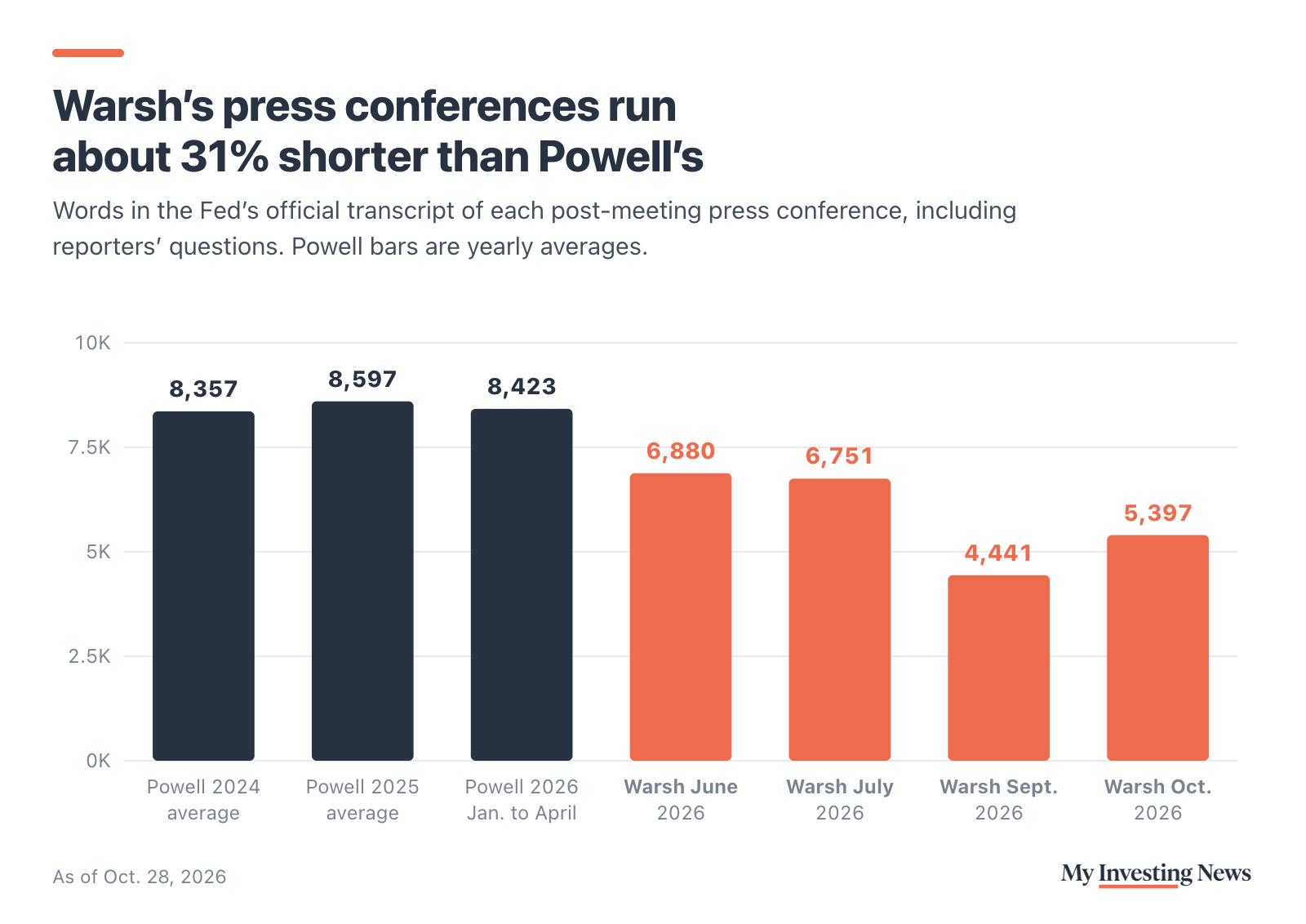
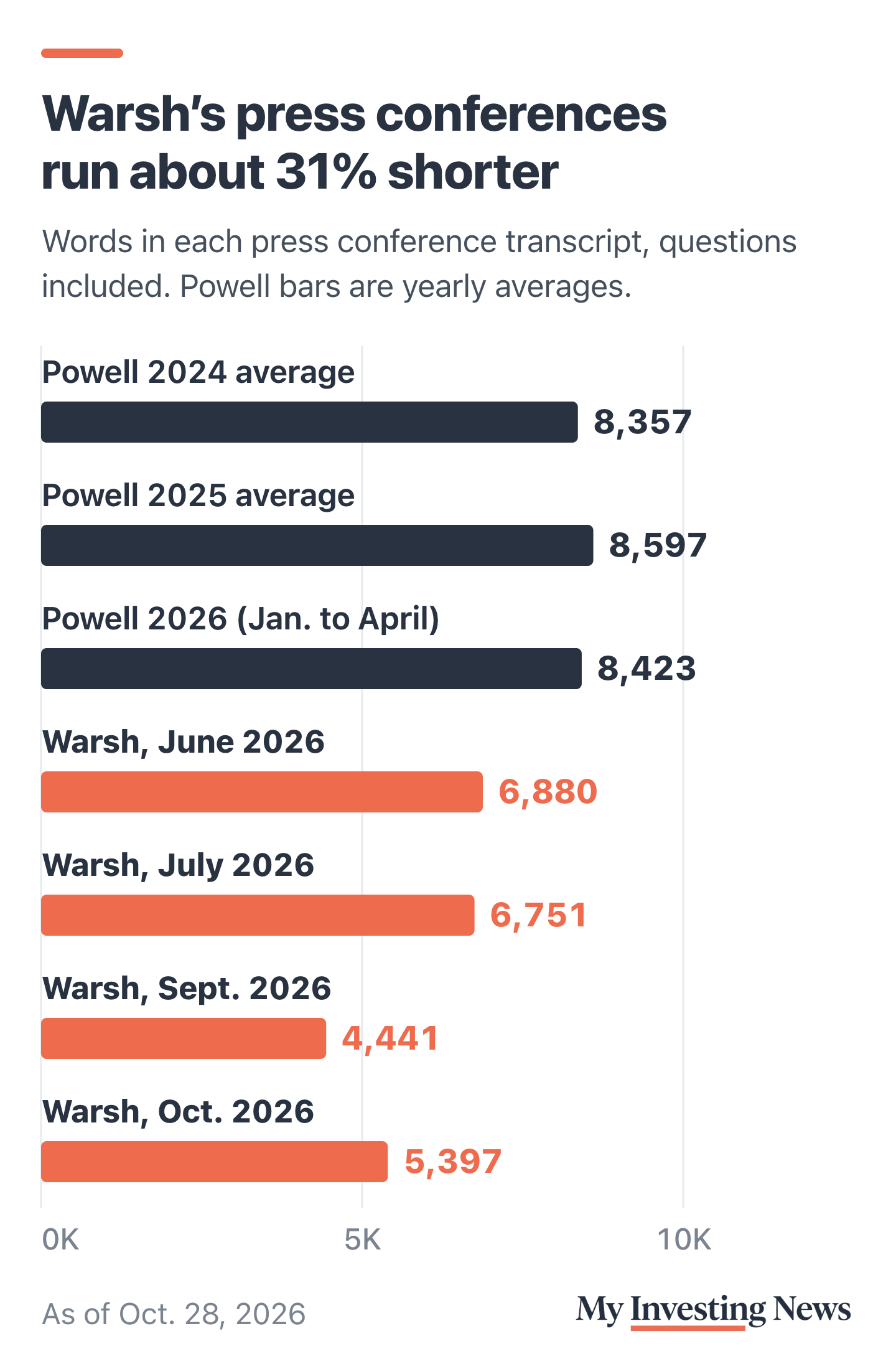
Warsh has kept the press conference, but it has shrunk. The Fed’s official transcripts of Powell’s 19 press conferences from January 2024 to April 2026 averaged 8,468 words, counting reporters’ questions, and none ran shorter than 7,166. Warsh’s four have averaged 5,867, about 31% less. The Sept. 16 session, the day of his first rate hike, ran just 4,441 words.
He is trimming the schedule too. On Oct. 28 he said that “in 2027, one meeting will focus exclusively on broad monetary policy strategy, with neither a vote on the federal funds rate nor a policy statement anticipated,” and that he expects two such meetings in 2028. The Fed’s posted 2027 calendar still lists eight meetings and does not yet say which one will skip the vote.
What to Watch
The next decision comes on Dec. 9, at the end of a two-day meeting that also brings new economic projections from every official. In the 2011 to 2018 record, those projection meetings with a press conference were the biggest market movers of all. A shorter press conference and no hints from the chair would test whether less talk calms the reaction, or whether markets simply take their cues from the projections and the other officials, as Campmany described. In October Warsh wasn’t rushing to hike even as factory data beat expectations, and the Fed’s own forecasting record has been mixed, which gives the projections plenty of room to surprise.
Warsh wants a Fed that says less, and his press conferences are already about 31% shorter than Powell’s. History suggests that may not quiet Fed days: the two-year moved 19% more than usual on decision days before press conferences and 61% more since, and in Warsh’s four meetings it has moved 1.76 times as much as on an ordinary day.