Where we heard itOdd Lots, Bloomberg’s markets podcast, “CME’s Terry Duffy on the Disconcerting State of Finance Regulation,” Oct. 20, 2026, recorded live in Chicago. Speaker: Terry Duffy, chairman and CEO of CME Group. Episode page
Americans vote in the midterm elections on Nov. 3, and tens of millions of dollars are riding on the result in prediction markets. Two weeks before the vote, the head of the biggest U.S. futures exchange questioned whether anyone is checking the contracts behind them.
“It does feel a bit of a ready, fire, aim strategy going on right now where anything can go,” CME GroupCME chairman and CEO Terry Duffy said on Bloomberg’s Odd Lots podcast on Oct. 20. He then gave the statistic he said troubles him most.
What Duffy Said
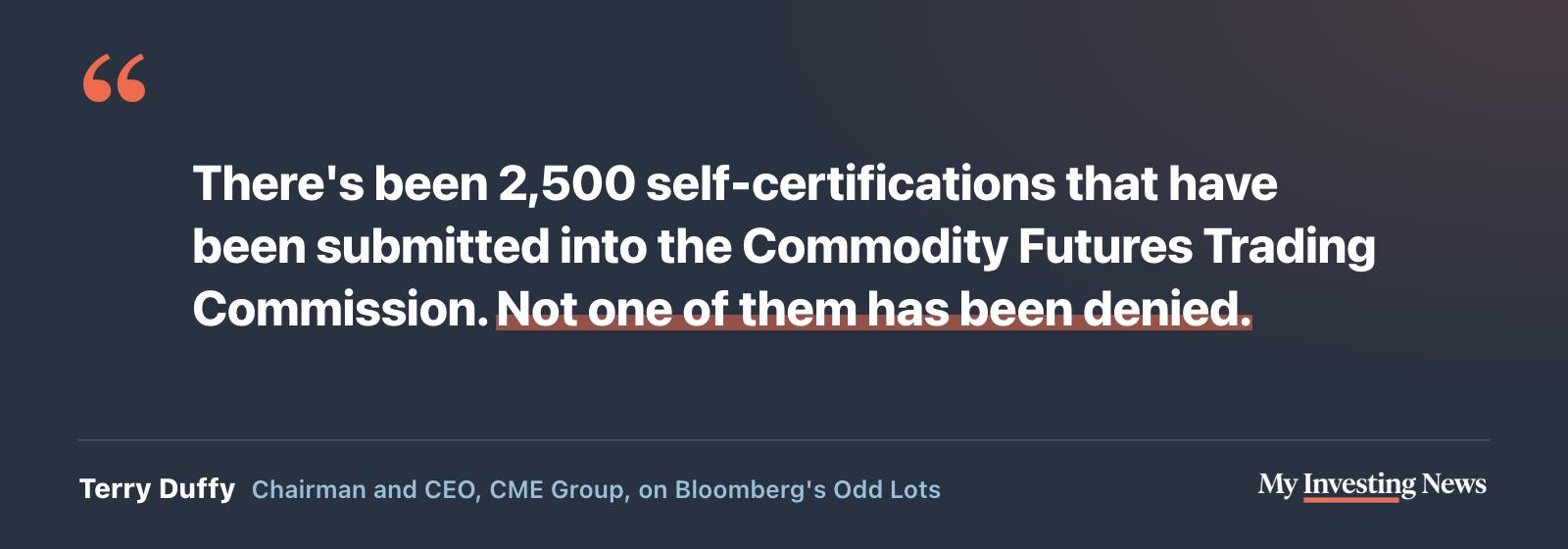
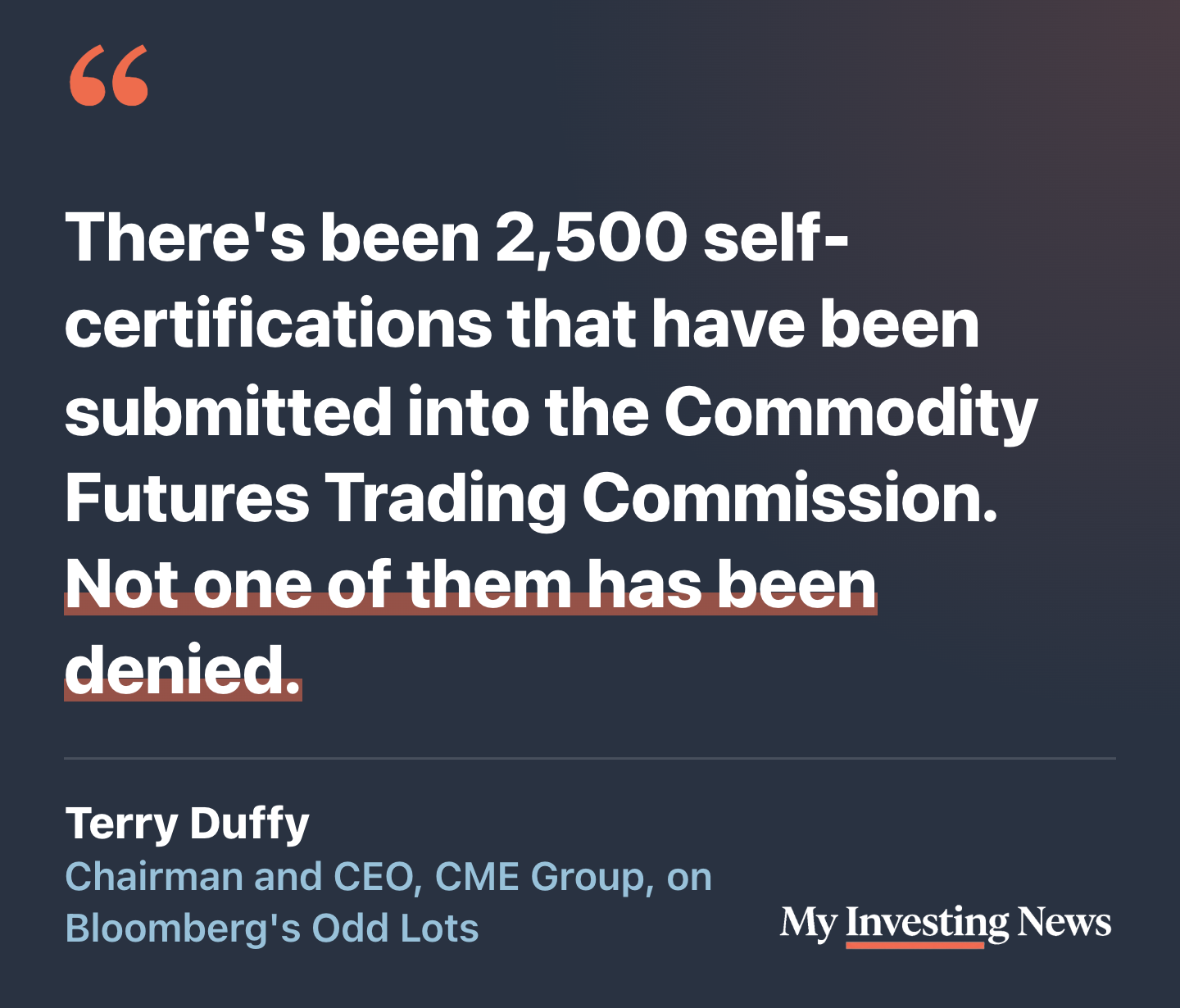
Duffy dated the count to the start of the second Trump administration. Under the rules of the Commodity Futures Trading Commission, an exchange can list a new contract by certifying on its own that it complies with the law, and the agency can step in afterward. Duffy said the agency never does: “Now how, how can it be that not one of them’s been denied?”
His example was a contract on the Nathan’s hot dog eating contest, on how many hot dogs Joey Chestnut would eat. “I have to ask, what’s the economic impact of that contract being out there?” he said, and asked how it is not in violation of “core principle three, which is susceptible, readily susceptible to manipulation.” That is the rule that says an exchange may list only contracts that are not readily open to manipulation. Duffy also called sports predictions gambling, a worry the NBA raised about prediction markets this month.
Duffy is not a neutral voice. CME competes for the same trading, and he said on the show he is not against every prediction market, only those he thinks break the rules. The episode was billed as an exit interview: he is due to step back from the CEO job next year and stay on as executive chairman.
Checking the Count
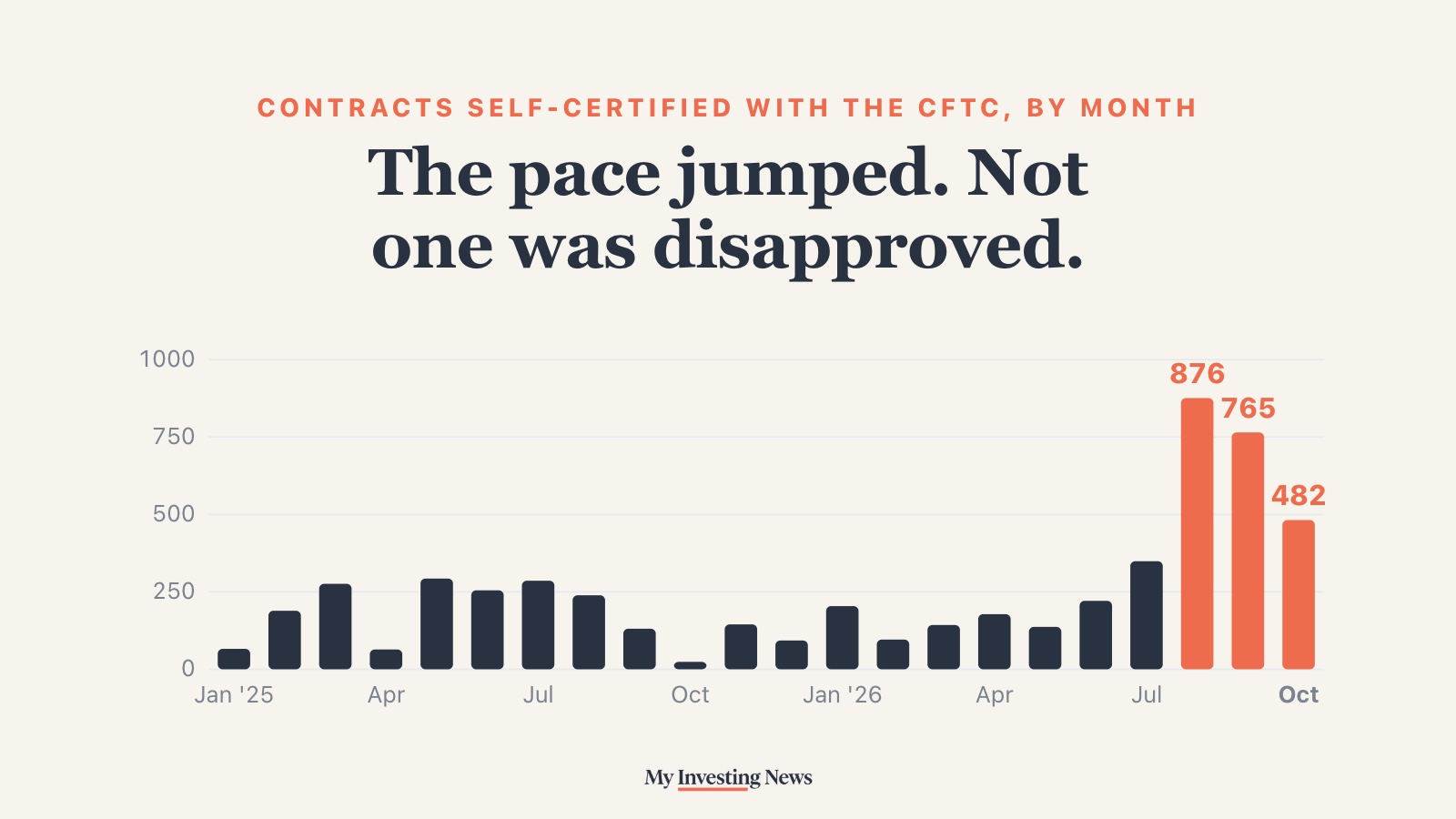
The CFTC publishes every new contract that exchanges file in a product database. We pulled every entry for U.S. futures exchanges dated Jan. 20, 2025 to Oct. 20, the day the episode ran. There are 5,782, and 5,512 of them are listed as certified. None is marked disapproved. Another 182 were withdrawn, and 75 are waiting for CFTC approval.
Our total is about twice Duffy’s 2,500. The database lists each contract separately, and one filing can cover several, so his figure may count filings. Either way, his main point holds: the list has no denials in the period. The last disapprovals it shows came on April 2, 2012, when the agency turned down 5 political contracts from the exchange then called Nadex.
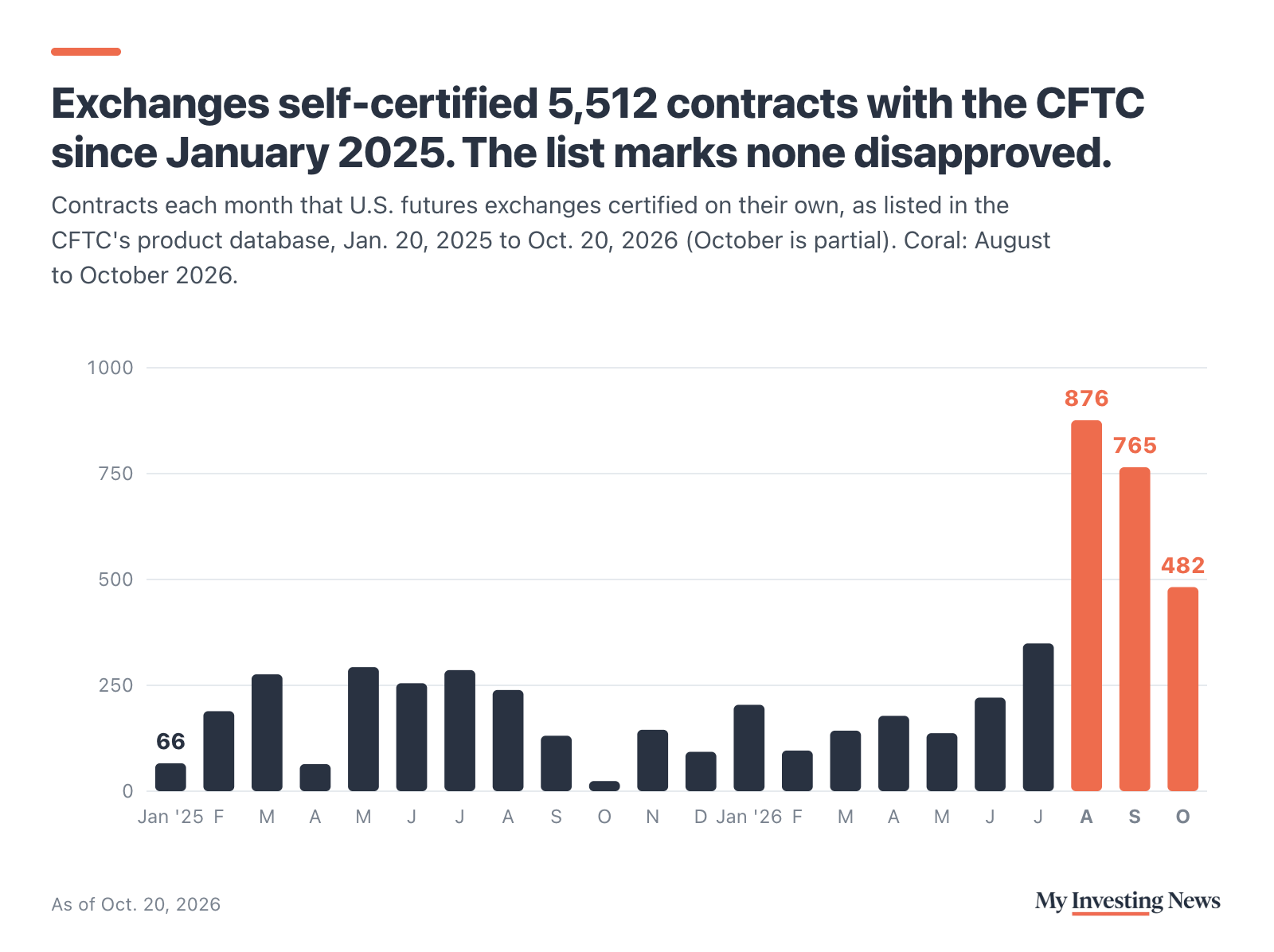
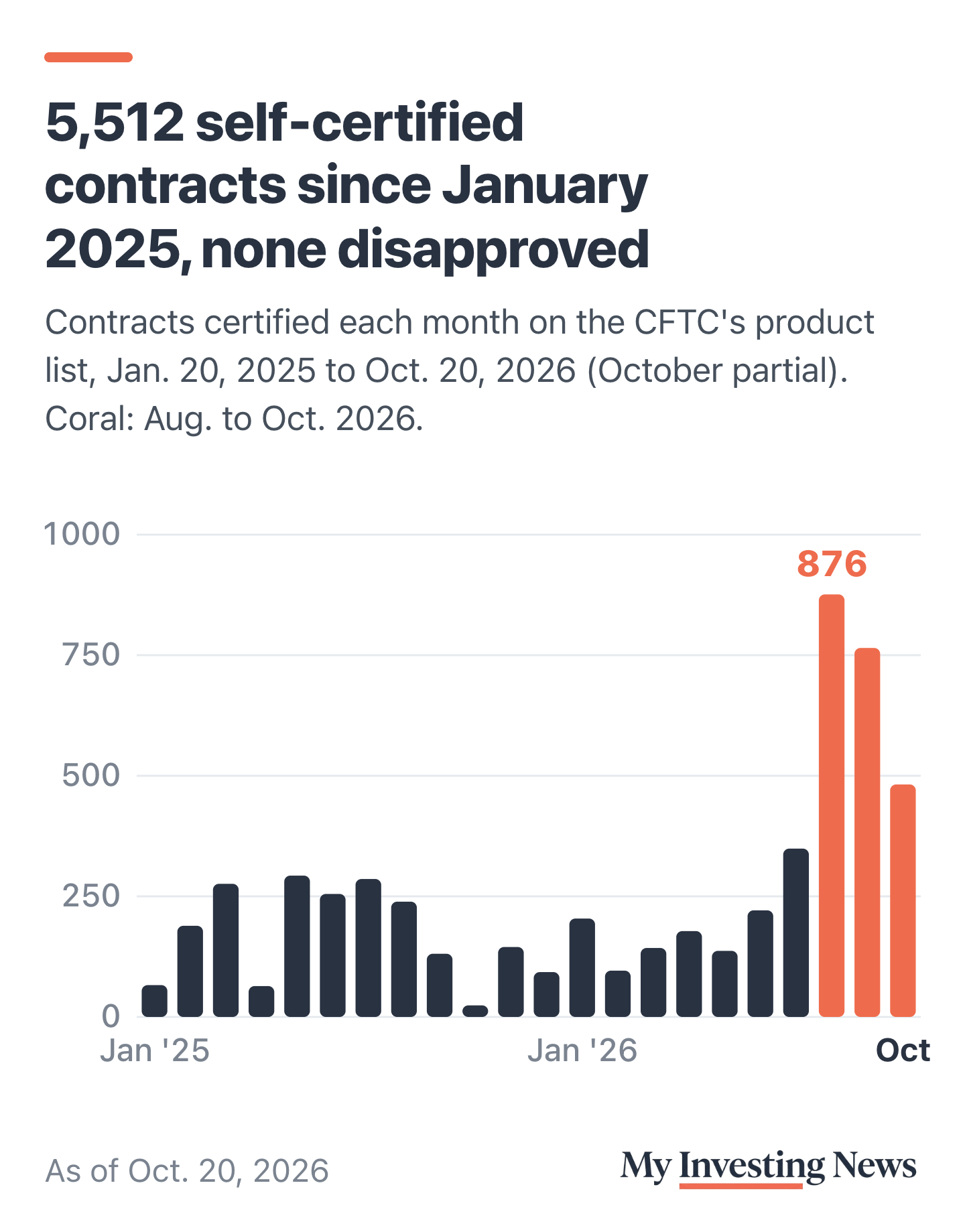
The pace has picked up. Exchanges certified 2,061 contracts in 2025 and 2,123 from Aug. 1 to Oct. 20 of this year alone. About 72% of everything certified, 3,953 contracts, falls in the CFTC’s “event” category, the kind prediction markets trade. Kalshi alone accounts for 2,100. Both hot dog contracts are on the list: Kalshi certified one in June 2025 and ProphetX another in June 2026.
CME is on the list too. CME Group’s exchanges certified 87 event contracts since November 2025, including sports contracts and, on Aug. 25 of this year, contracts on U.S. elections.
The Money Riding on Election Day
As of Oct. 27, 2026, about 11:30 p.m. ET, Polymarket showed $24.2 million traded on which party wins the House and $10.1 million on the Senate, $34.3 million together. Its “balance of power” market, which pays on the combination, had $40.1 million. The biggest single race on Polymarket is California’s governor contest, at $42.8 million.
Kalshi counts in contracts, each paying $1 if right, so its figures don’t add to Polymarket’s. At the same time, its House control market had traded 75.4 million contracts and its Senate market 20.4 million. In early October, bettors gave Republicans about a 36% chance of holding the Senate.
Prediction markets before the vote, in four numbers
Late Money, and a Lesson From Brazil
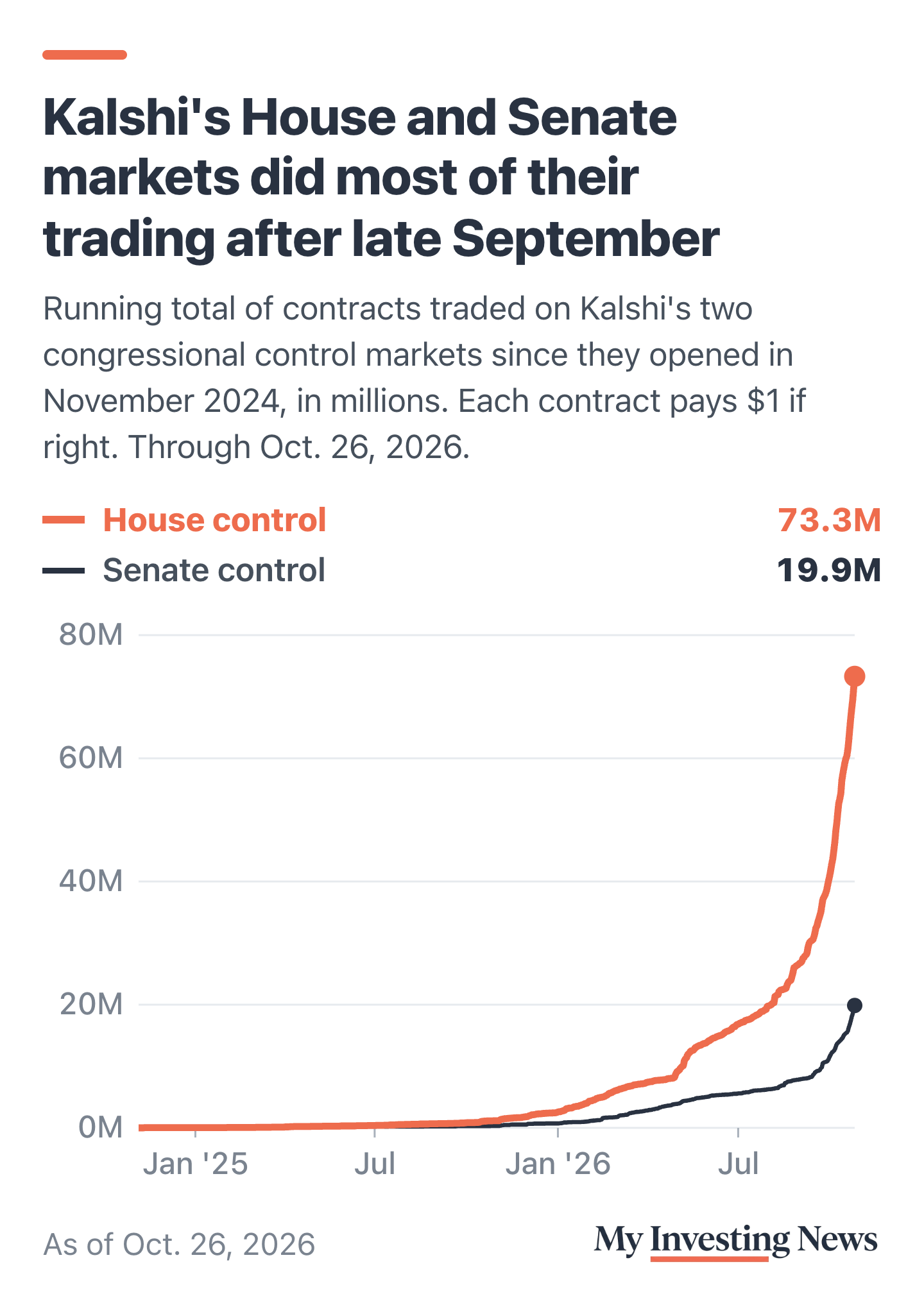
On Kalshi, most of the U.S. money arrived late. Its House market traded 2.5 million contracts before 2026 and 33.1 million from Oct. 1 to Oct. 26. Both of its congressional control markets did more than half of all their trading after Sept. 23.
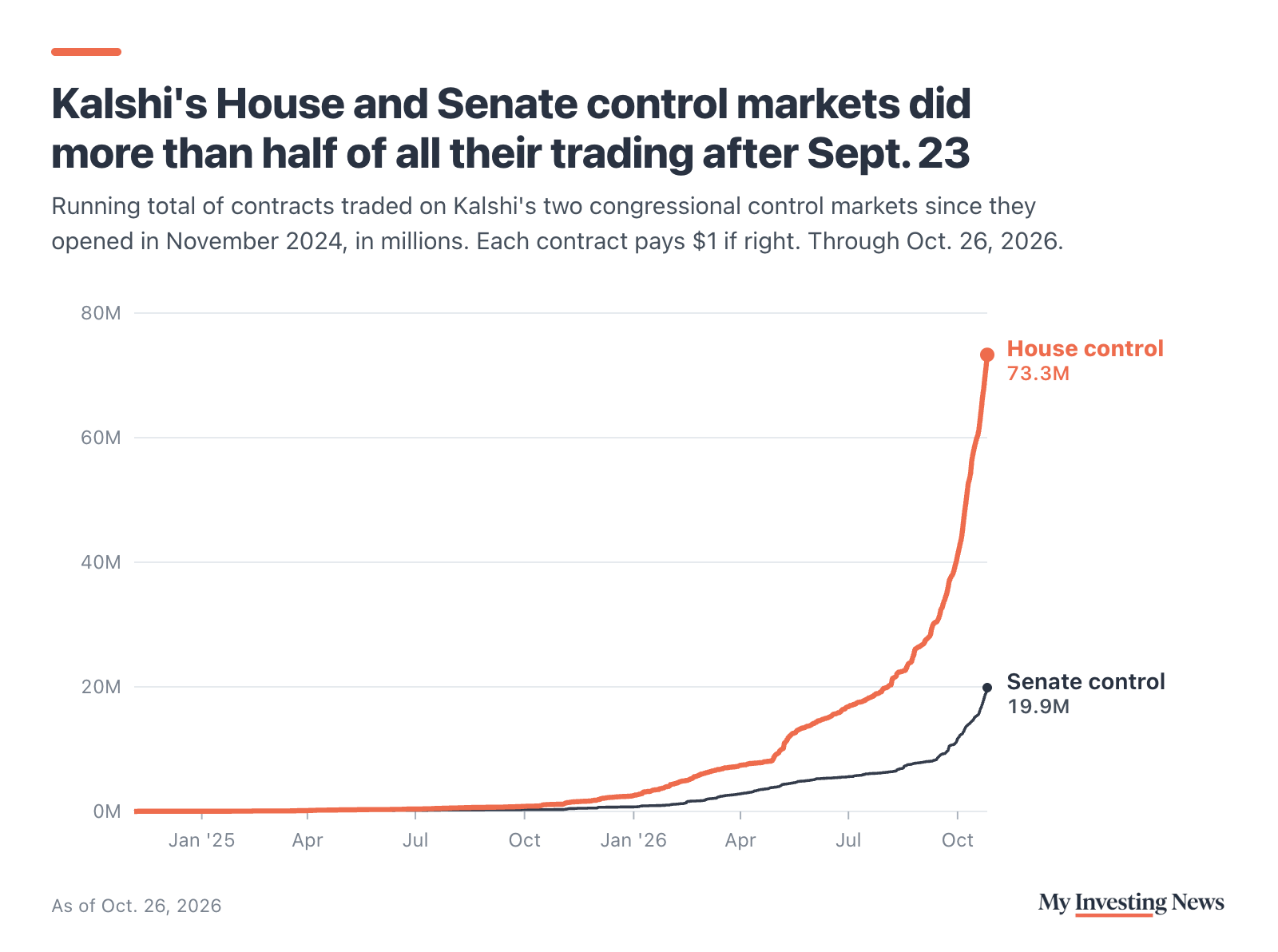
Those are the same kind of contract the CFTC refused to allow on Kalshi in September 2023, when it ruled that congressional control contracts involved gaming and were contrary to the public interest. Kalshi fought the order in court, and the markets are open today.
For size, Polymarket’s market on Brazil’s presidential election drew $249.1 million, about 7 times its U.S. House and Senate markets combined. At 8 a.m. New York time on the day of the Oct. 25 runoff, bettors there gave Flavio Bolsonaro a 79% chance. Luiz Inácio Lula da Silva won, and the market paid out on Lula.
What to Watch
The House and Senate markets settle on which party wins control of each chamber, which may take days if races are close. Watch whether the CFTC stays or reviews any contract before then, which would be its first denial on the list since Duffy began counting. Also watch who wants a share of the business: Fanatics CEO Michael Rubin has said betting companies and prediction companies are competing for the same customer, and CME now lists its own election contracts.
Duffy says the CFTC hasn’t denied one of about 2,500 self-certified contracts. Its own list backs him up and shows more: 5,512 certified since January 2025 and none disapproved, with the pace highest in the months before the vote. His own exchange is on that list too. The money on the midterms tops $34 million on Polymarket’s House and Senate markets alone, and on Kalshi most of it came in the final weeks.