Where we heard itCNBC, Fast Money, Oct. 26, 2026. Speakers: host Melissa Lee and Tim Seymour of Seymour Asset Management. Also: Eric Balchunas, Bloomberg Intelligence, on X.
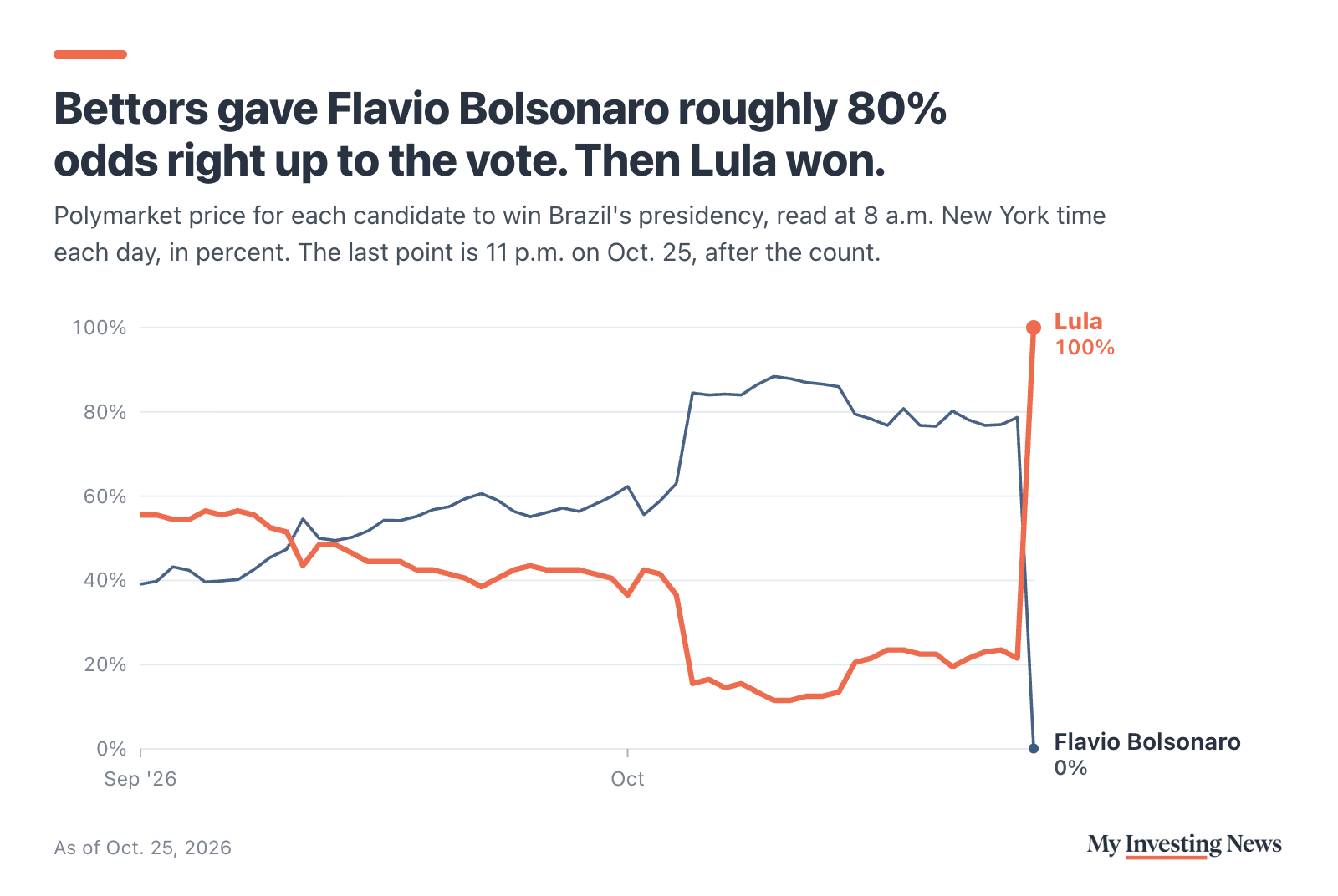
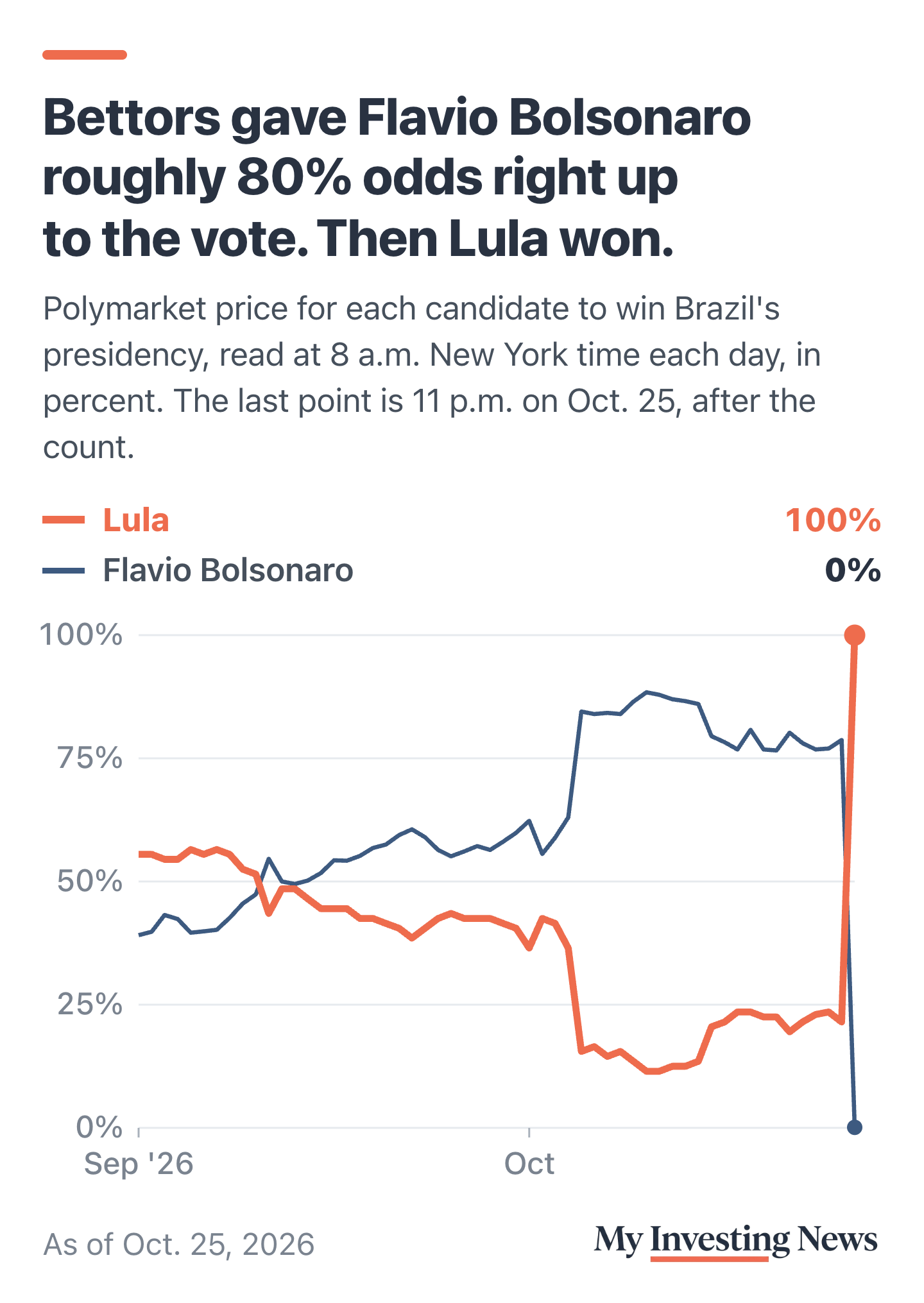
Bettors put about $249 million on who would win Brazil’s presidency on Polymarket, and on the morning of the Oct. 25 runoff they had a clear favorite. At 8 a.m. New York time, they gave Flavio Bolsonaro, the son of former President Jair Bolsonaro, a 79% chance. President Luiz Inácio Lula da Silva won.
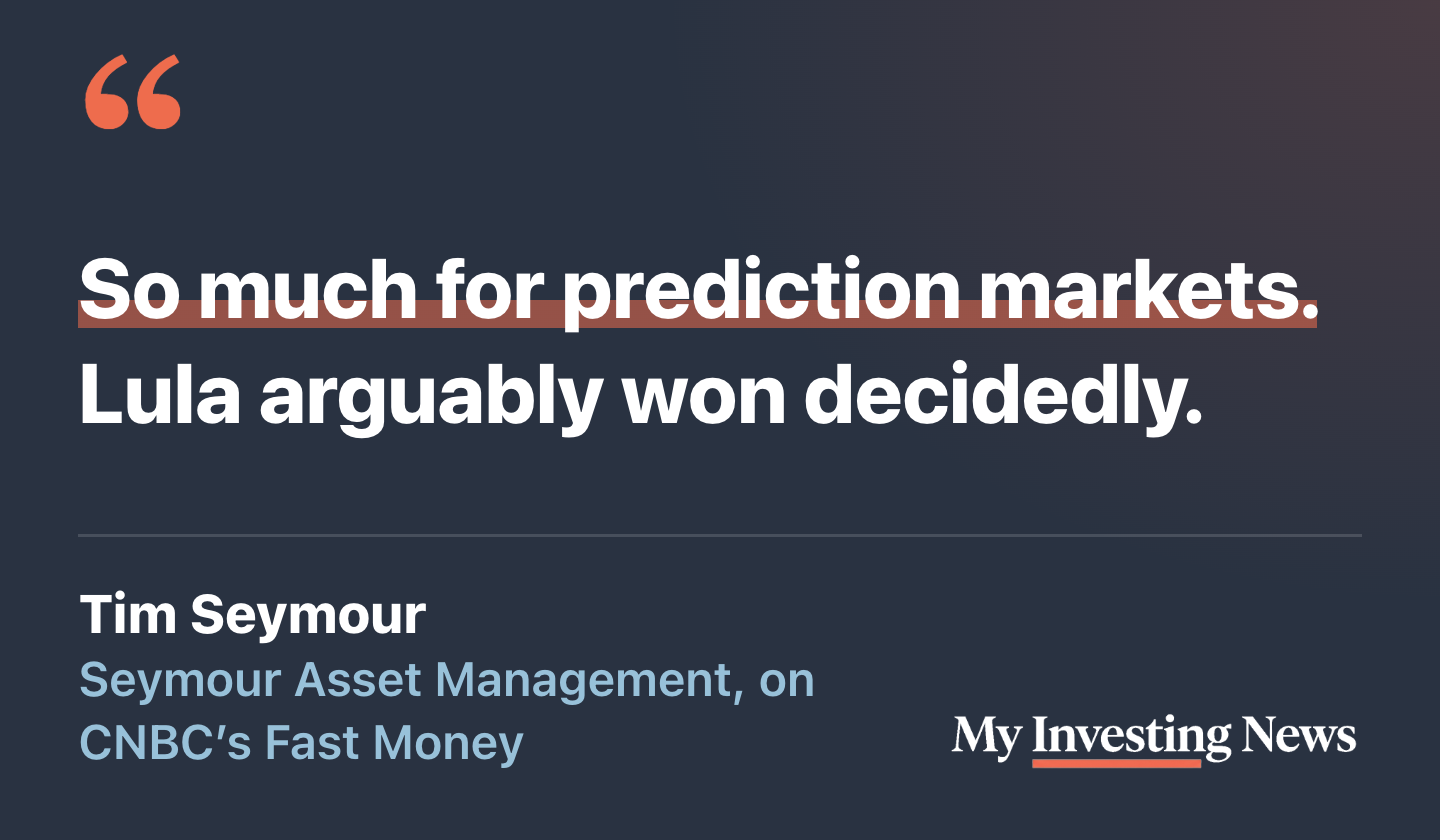
Investors had leaned the same way. Brazil’s biggest U.S.-listed fund jumped 12.5% on Oct. 5 after Bolsonaro led the first round, and on Oct. 26 it had its second-worst day since 2000. On CNBC’s Fast Money that evening, Tim Seymour, who had expected a Bolsonaro win, summed it up:

What Bettors Expected
The odds swung after the first round. On Sept. 1, Lula was the Polymarket favorite at 56%. Bolsonaro led the Oct. 4 first round by 47.0% to 45.2%, and by 2 p.m. New York time on Oct. 5 bettors had him at 84%. He peaked at 89% on Oct. 9. In the final week, his 8 a.m. readings stayed between 77% and 81%.
Lula won with about 51.8% of the vote and a lead of nearly 4.4 million votes, CBS News reported, citing Brazil’s electoral court. Bolsonaro refused to concede and asked for the results to be annulled.
How wrong were bettors? On the winner, badly. On the shape of the race, less so. Polymarket’s separate margin market, read at the same 8 a.m. hour, put 65% on a result decided by less than 4 points either way, and that is what happened: it settled on Lula by under 4 points. But it priced that exact outcome at 18.5%, against 80% for a Bolsonaro win of any size. Seymour called the win decisive. The 3.6-point margin fell inside the range bettors saw as likely, on the side they thought less likely.
Host Melissa Lee said on the same show that both Kalshi and Polymarket had shown Bolsonaro at 80% or better from Saturday night through Sunday, and that he had “even cited these odds in some of his rallies.” We could not independently confirm the rally remarks. The odds on control of the U.S. Senate face their own test on Nov. 3, and prediction markets are already drawing scrutiny from sports leagues.
Brazil’s runoff, in four numbers
Brazil’s Biggest ETF Had Its Second-Worst Day Since 2000
The iShares MSCI Brazil ETFEWZ fell 19.8% on Oct. 26, from $42.59 to $34.15. Only March 16, 2020, when it fell 23.1%, was worse in daily data back to July 2000. It closed 8.8% above its intraday low of $31.40 and added 0.4% on Oct. 27, to $34.30.
Bloomberg Intelligence ETF analyst Eric Balchunas noted on X that volume broke the fund’s record at “just about $10b,” more than MicrosoftMSFT traded that day. Exchange data backs him up: 299.0 million EWZ shares at the close comes to about $10.2 billion, against about $10.1 billion for Microsoft.
What Came Next After EWZ’s Other Worst Days
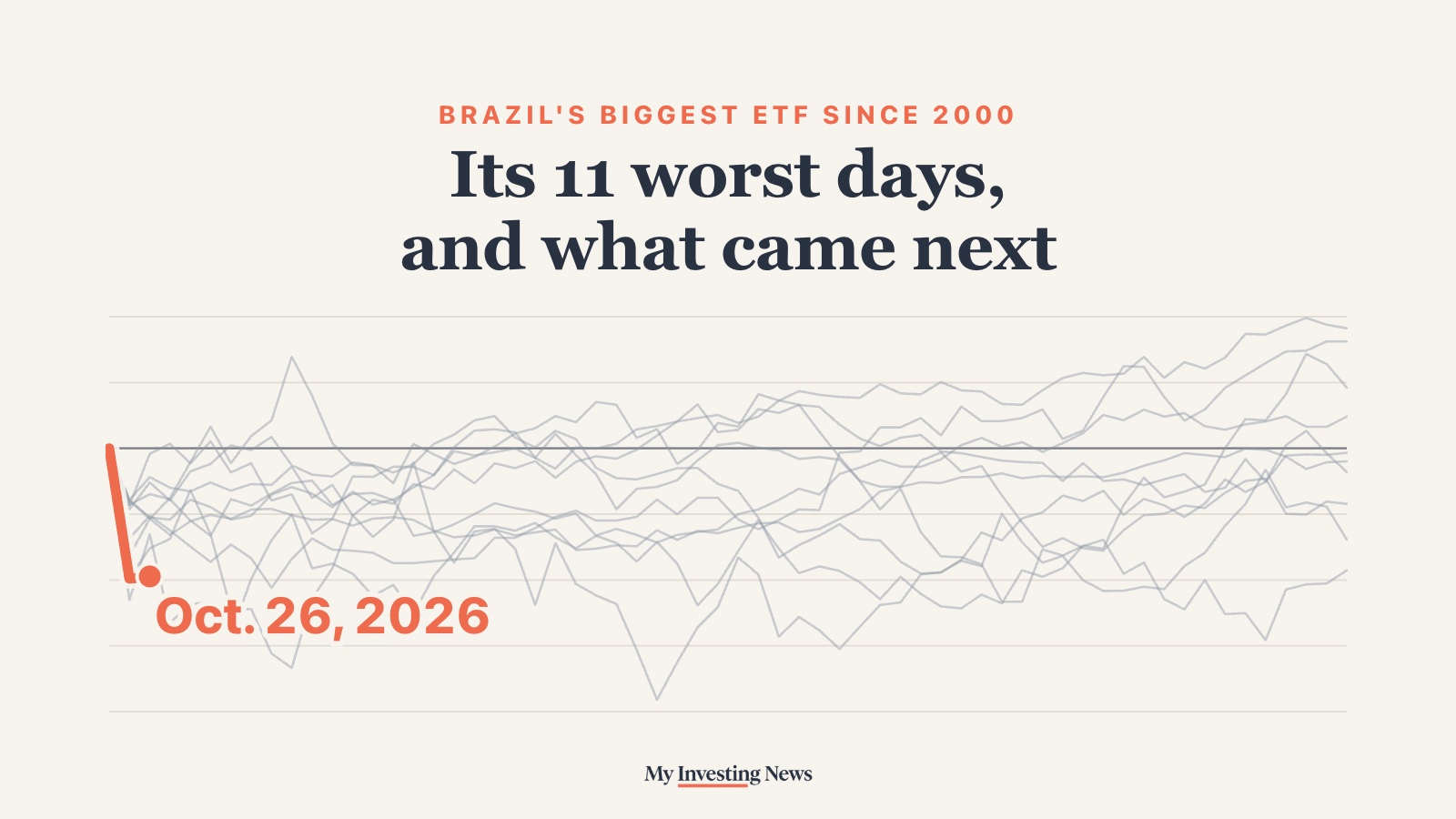
We lined up EWZ’s 10 other worst one-day drops since 2000, each at least three months apart, and tracked the next 60 trading days, about three months. The fund was higher 60 trading days later than at the close of the drop in nine of 10 cases, with a median gain of 10.8%. Only four had made back the whole drop by then. Measured from the close before the drop, the median case was still 1.3% lower at day 60.
After EWZ’s 10 other worst days since 2000, it rose over the next 60 trading days nine times. Only four fully recovered.
Each line is one of the fund’s worst one-day drops (at least three months apart), drawn from the close before the drop through the next 60 trading days, dividends included. Oct. 26, 2026 is coral.
The closest match by size is Oct. 15, 2008, a 19.6% drop in the middle of the financial crisis. The fund kept falling for another five weeks before it recovered. After the March 16, 2020 crash, it was up 42% three months later. The one case that was lower after 60 trading days, July 29, 2002, came three months before Lula won the presidency for the first time. Ten past drops are a small sample, and none of them came with a disputed result. Election shocks have hit other emerging markets too, as India’s election fight shows.
What to Watch
Three things: whether EWZ holds above its Oct. 26 intraday low of $31.40, how Brazil’s courts handle Bolsonaro’s challenge, and whether prediction-market odds hold up better in the U.S. midterms on Nov. 3.
Bettors on Polymarket gave Flavio Bolsonaro about 79% odds on the morning of Brazil’s runoff, and Lula won by about 3.6 points. EWZ then had its second-worst day since 2000, down 19.8% on record volume. It has usually been higher three months after its worst days, but a disputed result is a risk the past cases do not cover.