Trending Now:
Updated: October 27, 2026 by Eric Bleeker
A small-market World Series is forcing a collision between the story MLB owners want to tell and the one playing out on the field, and sports business analyst Andrew Brandt says the timing could not be worse for ownership heading into the most contentious labor fight the sport has never seen before.
Updated: October 27, 2026 by AJ Tiarsmith
Builder moods just cratered to levels not seen since 2012, and the incentives flooding the market look generous until you do the math on who actually benefits from them.
Updated: October 27, 2026 by Jeremy Phillips
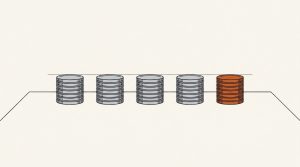
Game show producers hire statisticians and run hundreds of secret trial games before a single episode airs, and the prize ladder you see on screen was engineered to make you bet against yourself. The same psychological trap shows up in real financial decisions, especially when retirement money is on the line.
A Chanel bag, a Met Gala ticket, a Virgin Galactic seat, and a Manhattan penthouse all inflated at wildly different rates since 2016, and one of them actually got cheaper. The price your wallet feels depends entirely on what you buy.
Updated: October 27, 2026 by Joel South
Hot inflation data hit markets this week and traders immediately sold gold and silver, following logic that seems airtight on the surface. Peter Schiff says that logic has the whole situation exactly backwards, and his reasoning changes what the data actually signals.
Updated: October 28, 2026 by AJ Tiarsmith
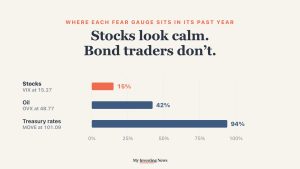
An RBC derivatives strategist says today's stock market resembles a duck gliding across a pond, and the volatility data hiding beneath the surface suggests the legs are churning faster than most investors realize.
Wilmington Trust's Meghan Shue thinks pessimism is easy but wrong, and she is leaning into the one corner of the market that has trailed for years and is sliding right now. Her reasons for doing so run directly against Paul Tudor Jones's warning about what hits stocks in 2027.
Updated: October 28, 2026 by Joel South
Five years of flat returns on Indian stocks now collide with street protests, a Supreme Court battle, and allegations that the country's top election official rewrote the voter rolls in secret. What that combination means for a US portfolio is worth a closer look.
Hours after a former ICC judge won the Nobel Peace Prize, the Trump administration moved against the court itself in a way that now puts American companies doing business with it on a six-month clock to cut ties.
A single OpenAI revenue figure sent AI stocks tumbling, then recovering, all in one day because investors could not agree on what that number actually measured. The gross versus net distinction at the heart of the confusion reveals a larger problem brewing between private AI giants and the public markets they now move.
Singapore's foreign minister just named a surprising new top trading partner, and he says the semiconductor and AI industries drove the shift. His remarks carry bigger implications for how supply chains across Southeast Asia are quietly being redrawn.
A midterm shift in congressional control could put the biggest names in tech under oath before a committee, and one senior policy strategist says the market is already pricing in who gets to hold the gavel.
RBC's head of derivatives strategy sees a dangerously quiet options market and says one category of risk has been completely left out of the pricing. Her argument centers on a threat she calls the single most mispriced thing she tracks.
Treasury yields are climbing toward levels not seen in years. Ed Yardeni reads it as a sign of strength, pointing to better growth and productivity, a rethinking of neutral rates, and more Fed rate hikes ahead.
Treasury yields just hit territory not seen in a year, and mortgage rates followed them straight up, ignoring a jobs report that should have pulled them back down. Find out what bond traders saw in the details that the headline missed.
Molly Graham spent nearly 20 years watching people deliberately opt out of management, and she thinks AI just assigned them the job anyway. The psychological cost she describes is not what most productivity pitches mention.
A soft jobs report just scrambled the outlook for stocks, bonds, and working families all at once, and three experts looking at the same data reached three completely different conclusions about what it means.
Updated: October 28, 2026 by Eric Bleeker
Softer inflation data arrived and a top Fed official left his rate hike plans completely untouched, while bond markets are pricing in far more tightening than the Fed itself expects. Someone has this badly wrong, and the repricing when the gap closes will hit bond holders hard.
Updated: October 28, 2026 by Jeremy Phillips
Tens of millions of children are about to get Trump Accounts whether their parents ask for one or not, but the $1,000 government deposit comes with a catch that depends entirely on when your child was born.
Congress just handed college sports something almost no industry ever receives, and the fight over who it actually protects has barely begun.
Thailand's foreign minister says the real sticking point in US tariff talks has nothing to do with the tariff rate itself, and his choice of words reveals exactly where mid-sized economies lose leverage in this era of trade as foreign policy.
Two of Asia's most seasoned diplomats argue the most transformative technology in human history has arrived at the single worst moment for the two powers building it to talk to each other. What that tension means for capital, compute, and global stability deserves a closer look.
A defense manufacturing CEO says the entire robotics conversation is focused on the wrong part of the factory. His explanation of where the real bottleneck lives challenges some expensive assumptions about what autonomous production actually requires.
A critical export figure is reshaping the power dynamic at this week's US-China trade talks in New York, where the two sides are fighting less about tariff levels than about how often they have to fight at all.
Goldman Sachs banker Gene Sykes built the financial case for LA 2028 on a structure so unusual it requires broadcasters to buy rights to Games in cities that have not yet been chosen. The logic behind that bet reveals something strange about how the Olympics actually works as a business.
A Goldman Sachs M&A banker put a precise number on the gap between corporate AI announcements and actual shareholder results, and the distance between those two things is more uncomfortable than most earnings calls let on.
Drones operating across three simultaneous conflict zones have quietly crippled something more critical than oil production, and a top energy advisor says the diesel market is now completely untethered from the rules that used to keep prices predictable.
Washington held back a new China tariff just before Xi and Trump sit down, and Bloomberg's trade lead reads that move in a way that flips the usual power narrative on its head.
As Bessent sits down with China's top economic official ahead of a Trump-Xi summit, a foreign policy expert who just returned from unofficial talks in Beijing says both sides share the same AI fears but warns that anyone hoping for a breakthrough is aiming at the wrong target.
Semiconductor wages already sit well above the national average, yet chipmakers like Samsung and TSMC are describing a staffing race they are not sure they can win. The reason traces back to a single bottleneck deep inside the American university system.
A former White House AI advisor is drawing sharp lines between existential catastrophe and a misconfigured sandbox, but the incident he uses to make that case keeps getting more complicated with every new report.
Altimeter Capital's Brad Gerstner is picking a fight with one of the most-cited AI infrastructure forecasts of 2026, and his argument has nothing to do with chips or software. The binding constraint, he says, sits somewhere most investors aren't watching.
Ursula von der Leyen opened her 2026 State of the Union address by calling the EU simultaneously the strongest and the most precarious it has ever been, and she meant both claims at once. What she said next reveals why that paradox may be the most consequential framing European investors have heard in years.
California's wealthiest residents are funding a ballot strategy so clever that voters who want to tax billionaires could accidentally vote against themselves. The mechanics behind Propositions 41 and 42 are where the real fight is happening.
The CNBC Fed Survey just recorded its sharpest one-month swing in rate hike expectations in recent memory, and the economists behind it are pointing to something bigger than energy prices to explain why.
Updated: October 28, 2026 by Antonio Freyelli
Pfizer and Starbucks are both staging turnarounds investors can point to, but for a retiree choosing between them, the question of which one actually fits a real income portfolio cuts in a surprising direction.
Updated: October 28, 2026 by Mike Barrington
The Treasury just doubled the size of its bond buybacks and may tap nearly a trillion dollars in government cash to fund them, and both gold and Bitcoin moved violently in response. Here is what the move actually signals about liquidity, long-term yields, and what retirees need to watch.
Treasury just doubled the size of certain long-term bond buybacks, sending yields lower before markets reversed course. For retirees leaning on bonds for steady income, understanding what that move actually signals about federal borrowing and rate risk could matter more than the headline suggests.
A U.S.-Canada trade deal looks close, but close is doing a lot of work right now. Three stocks with real exposure to the outcome stand to gain or lose depending on details that negotiators have not yet finalized.
Long-term Treasuries now pay enough that a fat dividend yield no longer justifies skipping the hard questions about debt, cash flow, and whether the payout can survive a downturn. Five popular income stocks are put to the test.
Bank of America sees massive upside in Nvidia, but the same strategy driving that optimism also puts hundreds of billions of dollars on the line in ways most investors have not fully worked through.
Joel Greenblatt's latest 13F filing sent analysts scrambling to label it a defensive pivot, but the five biggest moves tell a far more complicated story about where Gotham is actually placing its bets.
Published: August 11, 2026 by Andrew Clemente
Nvidia just announced a plan to bring some of Wall Street's biggest names into the AI infrastructure boom, and the headline number sounds staggering. But the financial commitment Nvidia itself has actually made tells a very different story.
Published: August 10, 2026 by Andrew Clemente
The Supreme Court forced Washington to refund roughly $100 billion in tariff revenue to American businesses, but Treasury Secretary Scott Bessent has a pointed warning for consumers who think that money is coming their way.
Published: July 31, 2026 by Andrew Clemente
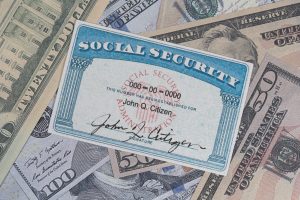
Social Security's retirement fund is heading toward a crunch that could shrink monthly checks for millions of households, and a surprising pair of senators think they have found a way to change the math before the clock runs out.
Updated: July 27, 2026 by Andrew Clemente
Jim Cramer is warning investors that the biggest near-term risk in several high-flying technology stocks may not be weak earnings […]
A Bicentennial quarter really did sell for $19,200, but that does not mean the 1776-1976 coin sitting in a kitchen […]
The June 2026 jobs report delivered a reassuring headline and a more complicated warning underneath it. The unemployment rate edged […]
Published: April 10, 2025 by Ian Cooper
In 2024, President Trump said he would not cut Social Security or Medicare. In fact, he specifically stated, “I will […]
Published: October 3, 2023 by My Investing News Staff
Before U.S. markets open on Thursday, three companies in food and beverage businesses are on deck to report quarterly results.