Trending Now:
Updated: October 28, 2026 by Jeremy Phillips
Wayne Huizenga saw a trash empire hiding inside a video rental store, and he moved faster than anyone thought possible. What he never questioned was whether the industry itself could survive the decade.
Updated: October 28, 2026 by AJ Tiarsmith
The CEO of a $53 billion asset manager says institutional investors have stopped asking whether to own Bitcoin and started asking something more uncomfortable. His answer comes with context worth knowing before you act on it.
Updated: October 28, 2026 by Joel South
Wall Street has started calling 98% earnings growth boring, and Josh Brown thinks that tells you everything you need to know about where Nvidia and the Magnificent Seven are headed next.
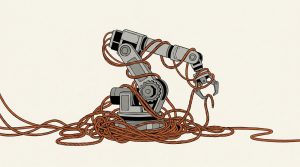
A defense manufacturing CEO says the entire robotics conversation is focused on the wrong part of the factory. His explanation of where the real bottleneck lives challenges some expensive assumptions about what autonomous production actually requires.
Aurora's CEO climbed into a driverless semi with a CNBC camera rolling and put three specific, dated targets on the record that investors can now hold him to. The company's market cap and its stated revenue run rate tell two very different stories.
Trump is signaling openness to talks with Iran while oil prices slip on diplomatic hopes, but Gulf leaders arriving at the UN say the real damage does not show up on any price screen.
Updated: October 28, 2026 by Eric Bleeker
EQT's CEO says Americans are shielded from global gas chaos while their energy bills climb anyway, and he has a very specific villain in mind. His argument comes with federal data that both supports and quietly complicates his case.
A critical export figure is reshaping the power dynamic at this week's US-China trade talks in New York, where the two sides are fighting less about tariff levels than about how often they have to fight at all.
Rob Vinall compares one investing principle to a law of physics, then watches a major holding fall 98% in a single year. The question is whether a framework built on lifetime cash flows can actually survive contact with that kind of reality.
Goldman Sachs banker Gene Sykes built the financial case for LA 2028 on a structure so unusual it requires broadcasters to buy rights to Games in cities that have not yet been chosen. The logic behind that bet reveals something strange about how the Olympics actually works as a business.
Lance Roberts ran two retirees through the same index strategy with the same withdrawal rate and got opposite outcomes, and the only thing that differed was when they started. His explanation for why that gap exists puts the last fifteen years of conventional wisdom in a very uncomfortable light.
A crypto exchange executive went on a podcast and argued that his own industry is not the threat to traditional banking everyone assumes. The company he held up as the real disruptor turns out to sell crypto too.
A Goldman Sachs M&A banker put a precise number on the gap between corporate AI announcements and actual shareholder results, and the distance between those two things is more uncomfortable than most earnings calls let on.
Drones operating across three simultaneous conflict zones have quietly crippled something more critical than oil production, and a top energy advisor says the diesel market is now completely untethered from the rules that used to keep prices predictable.
One strategist is publicly turning down a contractual yield above 5% on the 30-year Treasury, arguing a different trade offers something the long bond cannot. His reasoning hinges on a specific asymmetry that most income-focused investors are likely underestimating.
John Ternus steps into the CEO role with a flagship iPhone launch already behind him and a $1,999 foldable on the horizon, raising the question of whether Apple can defend its premium pricing while betting on a form factor rivals have owned for years.
Washington held back a new China tariff just before Xi and Trump sit down, and Bloomberg's trade lead reads that move in a way that flips the usual power narrative on its head.
Brad Gerstner says AI is quietly rewriting the relationship between revenue growth and headcount at some of the biggest names in tech, and the earnings reports from Uber, Snowflake, and NVIDIA are telling three very different versions of that story.
A Miami VC says Washington just needs to fix permitting and let capital win the AI race against China, but the stock market is quietly telling a very different story about which metals and which companies actually hold the leverage.
Mining billionaire Robert Friedland has a blunt message for anyone banking on an all-electric future: the copper simply will not be there, and the world's largest producers are quietly confirming his math.
A Louisiana school superintendent appeared on a top podcast this week and quoted a number so large the hosts fell silent, tracing it back to a single Meta construction site that has rewritten what a paycheck means in one of America's poorest parishes.
An oil analyst just told investors to stop waiting for relief at the pump, and one tanker company is already cashing in on the chaos reshaping global crude routes.
Billionaire miner Robert Friedland says Beijing holds a quiet veto over the metals inside every Nvidia chip, and the hyperscalers calling his office seem to agree there is a real problem. Here is what that chokepoint means for a $5 trillion AI trade built on inputs America does not control.
Alphabet has already gained nearly 40% in a year while investors debated whether AI chatbots would destroy Google Search, and two analysts on a top investing podcast now argue the threat was misread from the start for a reason most people overlooked.
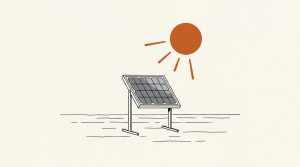
Oil majors once led solar innovation, then walked away. A solar expert's account of what happened next, and who actually controls electricity prices now, cuts against almost everything conventional wisdom assumes.
Kalshi's live price tracker for AI compute chips vanished, and the federal agency blamed for the removal says it never touched it. Two accounts of what happened exist, and they cannot both be true.
An Invesco strategist has named the exact condition that would end the bull market, and he says investors can track it themselves in filings and price action. But a rival analyst followed with a harder question that neither of them answered.
As Bessent sits down with China's top economic official ahead of a Trump-Xi summit, a foreign policy expert who just returned from unofficial talks in Beijing says both sides share the same AI fears but warns that anyone hoping for a breakthrough is aiming at the wrong target.
Steve Eisman, the investor who called the subprime collapse, says AI extinction warnings are a calculated business strategy rather than genuine fear, and he names exactly which companies he believes are pulling the strings.
RBC's top commodity strategist says the oil pullback this week is not the relief trade most investors think it is, and the three geographic chokepoints she is watching could determine whether crude stays range-bound or breaks toward a number most portfolios are not positioned for.
Semiconductor wages already sit well above the national average, yet chipmakers like Samsung and TSMC are describing a staffing race they are not sure they can win. The reason traces back to a single bottleneck deep inside the American university system.
A former White House AI advisor is drawing sharp lines between existential catastrophe and a misconfigured sandbox, but the incident he uses to make that case keeps getting more complicated with every new report.
Altimeter Capital's Brad Gerstner is picking a fight with one of the most-cited AI infrastructure forecasts of 2026, and his argument has nothing to do with chips or software. The binding constraint, he says, sits somewhere most investors aren't watching.
Builder confidence just posted its worst reading in a year, and the incentives builders are quietly dangling in front of buyers tell a more urgent story than the headline number does.
Ursula von der Leyen opened her 2026 State of the Union address by calling the EU simultaneously the strongest and the most precarious it has ever been, and she meant both claims at once. What she said next reveals why that paradox may be the most consequential framing European investors have heard in years.
California's wealthiest residents are funding a ballot strategy so clever that voters who want to tax billionaires could accidentally vote against themselves. The mechanics behind Propositions 41 and 42 are where the real fight is happening.
Trump's crypto billions turned a long-awaited Senate vote into an ethics showdown, and the fallout landed hardest somewhere most investors were not watching.
Saudi Arabia's oil safety net just took two hits from two different directions at once, and the fallout now reaches from global energy markets all the way to a pharaonic tourism project in the desert that the kingdom is betting its economic future on.
Chamath Palihapitiya built his reputation by shepherding private companies onto public markets, so his sudden crusade against one of the most anticipated AI listings raises an uncomfortable question about who benefits when an IPO dies.
A thousand private companies still carry valuations set during the peak of startup euphoria, and almost none of them have formally admitted those numbers might be wrong. The reason may explain why the IPO market has gone so quiet.
Goldman Sachs chief global equity strategist Peter Oppenheimer is not calling a bubble, but he is warning that the speed of one particular market move is what investors should actually be losing sleep over right now.
SpaceX is one flight away from attempting something no rocket company has ever done, and Elon Musk says pulling it off would rank as a civilizational breakthrough on par with the invention of reusable aircraft.
Brian Moynihan compared AI developers to NASCAR drivers and asked who could actually make them slow down, then committed to spending more than $400 million next year on a technology he refuses to let run autonomously inside his own bank.
The CNBC Fed Survey just recorded its sharpest one-month swing in rate hike expectations in recent memory, and the economists behind it are pointing to something bigger than energy prices to explain why.
Updated: October 28, 2026 by Antonio Freyelli
Coinbase has shed more than half its value from its 2025 peak, yet Wall Street and retirees holding shares face a genuinely tricky decision about what to do next. The bull and bear cases for this stock are colliding in ways that make the obvious move surprisingly dangerous.
Updated: October 28, 2026 by Mike Barrington
CrowdStrike just hit a massive milestone with a key partner, yet its stock is cratering along with the rest of the software sector. The force driving this selloff has nothing to do with the businesses themselves, and understanding it could change how you protect your retirement savings.
ARK Invest's multimillion-dollar exit from Roblox grabbed headlines, but the fund's trades may be the least important factor in deciding whether this stock belongs anywhere near a serious portfolio right now.
The Justice Department just slapped KKR with a record-breaking penalty tied to at least 16 alleged antitrust violations, yet KKR insists its shareholders will feel nothing. Whether that promise holds depends on a compliance risk most investors have not priced in yet.
Nvidia, Microsoft, and Google are locking up memory supply years before new factories even open, and the window for investors to understand what that means for the memory market is narrowing fast.
Apple just posted record revenue and earnings, yet two pressures building quietly behind that headline could reshape what the stock is actually worth heading into its most important product event in years.