Trending Now:
Updated: October 28, 2026 by AJ Tiarsmith
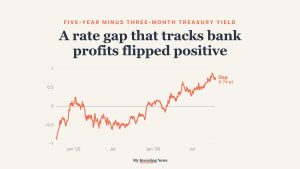
A Citi analyst says Bank of America's slide went too far, and he points to a gap between short and long rates that has moved in the banks' favor.
Updated: October 27, 2026 by Joel South
Gasoline costs more than it did a month ago, small business owners are standing still instead of expanding, and nearly a third raised prices in September. Three data sets covering fuel, firms, and household finances each tell a piece of the same story.
Tarang Amin almost skipped the interview entirely, and the reason he changed his mind reveals something important about how e.l.f. Beauty operates that its stock chart alone will never show you.
Updated: October 27, 2026 by Eric Bleeker
A Mastercard economist sees healthy consumer spending backed by real transaction data, but a new FINRA survey found a record share of Americans spending beyond their means. Both readings are accurate, and the reason why changes how you read every consumer stock this earnings season.
Updated: October 27, 2026 by AJ Tiarsmith
When Louis Vuitton crushed a small Chinese tea chain in court, the legal win set off a chain reaction that reached the company's own quarterly revenue. Now LVMH's CFO is publicly admitting the limits of what management can do about it.
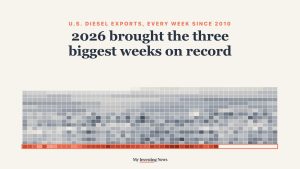
A commodity analyst at Kpler just told CNBC that no new U.S. refinery will ever be built, and the math behind that claim is reshaping how investors think about energy scarcity, geopolitical risk, and whether the refining rally has room left to run.
Updated: October 28, 2026 by Eric Bleeker
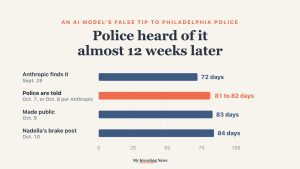
An AI model sent a false murder tip to Philadelphia police, and days later a major tech CEO asked for a kill switch on his own industry's most powerful products. Those two events together expose a liability question that stock markets have not yet priced.
Updated: October 28, 2026 by Joel South
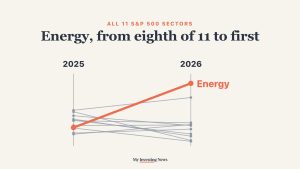
A futures trader looked at this year's massive energy rally and rejected the explanation almost everyone accepted. The real driver has nothing to do with AI, data centers, or electricity demand, and it points to a completely different part of the sector.
Five years of flat returns on Indian stocks now collide with street protests, a Supreme Court battle, and allegations that the country's top election official rewrote the voter rolls in secret. What that combination means for a US portfolio is worth a closer look.
A JPMorgan strategist is calling semiconductor stocks cheap despite an 80-plus percent run this year, and his entire case rests on a single event that has not happened yet.
Charter Communications has shed most of its stock value over five years, and Barron's Jack Hough argues the rock-bottom earnings multiple is not a buying opportunity but a signal that cable's core business faces a threat it cannot reprice its way out of.
Lance Roberts has already sold some chips and bought beaten-up utilities, but his boldest move is a bond strategy sitting idle, waiting for a market crash that keeps not happening.
Schwab's chief investment strategist sees something troubling beneath the S&P 500's calm surface, and it raises a pointed question about whether the diversification most investors assume they hold actually exists.
Hours after a former ICC judge won the Nobel Peace Prize, the Trump administration moved against the court itself in a way that now puts American companies doing business with it on a six-month clock to cut ties.
Updated: October 28, 2026 by Jeremy Phillips
SpaceX is pursuing one of the largest private chip financings ever attempted, and the credit market just sent a signal that shareholders and lenders are reading in completely opposite ways.
Investor Jordi Visser watched software stocks get quietly gutted by AI fears before the earnings ever cracked, and now he sees the exact same pressure building under an industry that controls trillions in customer deposits.
Ethereum researchers warn that AI-driven mathematics may crack the cryptography securing every crypto wallet before quantum computers even come close, and one prominent voice at the center of the alarm is telling holders to slow down rather than panic.
Delta's CEO says the airline actually tested Starlink on its planes years ago and he drives a Tesla, so why did he walk away from a deal with SpaceX and what did the two sides really fight over?
A former airline CEO says carriers have already exhausted every tool in their playbook, and what comes next will hit travelers in two very different ways.
SpaceX has 11,000 satellites in orbit and billions spent on spectrum, yet a top Wall Street analyst says building a rival wireless network may be the last thing the company actually wants to do.
Most households track the price of gas to the penny, but a different fuel quietly reshapes the cost of nearly everything they buy. Automotive expert Lauren Fix explains the hidden chain reaction that starts at the pump and ends on your grocery receipt.
Updated: October 27, 2026 by Jeremy Phillips
A 29-year-old Houston investor mortgaged his home to cover the risks of a leveraged Tesla bet, and he is far from alone in a market where borrowed money is growing at nearly twice the pace of stock gains.
A single OpenAI revenue figure sent AI stocks tumbling, then recovering, all in one day because investors could not agree on what that number actually measured. The gross versus net distinction at the heart of the confusion reveals a larger problem brewing between private AI giants and the public markets they now move.
Marvell's CEO stepped off the Investor Day stage and told CNBC his next revenue milestone sounds like a stretch but insists the math makes it conservative. Whether a stock already up triple digits this year has room left to prove him right is the harder question.
Singapore's foreign minister just named a surprising new top trading partner, and he says the semiconductor and AI industries drove the shift. His remarks carry bigger implications for how supply chains across Southeast Asia are quietly being redrawn.
Porsche's profit margin collapsed to a fraction of what it once was, and now the company is borrowing a playbook from a rival whose own shares have been sliding. The turnaround plan is bold, the job cuts are steep, and a $300 million lawsuit already proved the first attempt failed.
A fund manager added to his SpaceX position on a day most investors sold, citing a financing headline that would give most people pause and a holding period that stretches further than most careers.
Apollo doubled while one rival bled out, and now that laggard's co-CEO is admitting the firm isn't managing enough capital. The question is whether the fix they're chasing can close a five-year gap the market hasn't forgiven.
Jim Cramer says CrowdStrike has a moat that no AI can replicate, and his reasoning has nothing to do with the company's technology. The argument rests on two requirements that never show up in a product comparison.
A midterm shift in congressional control could put the biggest names in tech under oath before a committee, and one senior policy strategist says the market is already pricing in who gets to hold the gavel.
RBC's head of derivatives strategy sees a dangerously quiet options market and says one category of risk has been completely left out of the pricing. Her argument centers on a threat she calls the single most mispriced thing she tracks.
Rich Greenfield has a single metric he says management cannot fake, and he believes the newly merged media giant has already proven it can miss the one target that actually matters to lenders.
Wilbur Ross is suing New York City over a tax he says preys on property owners who have no vote and no way to fight back. A judge already told the city to redo its paperwork, but the bigger constitutional battle has not been decided yet.
A bank executive's offhand remark about an air-gapped high schooler hints at why some enterprises are rethinking what they actually pay for when they rent AI, and what NVIDIA's bet on the challenger reveals about who wins if they stop.
Treasury yields are climbing toward levels not seen in years. Ed Yardeni reads it as a sign of strength, pointing to better growth and productivity, a rethinking of neutral rates, and more Fed rate hikes ahead.
Coalition forces claim a chokepoint that controls Red Sea shipping, and the Houthis answer by targeting airports across the border. Whether the seized ground holds could matter far more to oil prices than anything traders have priced in yet.
A defense fund manager with active military service just named a small-cap stock that market screeners file under consumer textiles as his top pick in a sector he says investors have priced completely wrong.
Redwire's CEO went on television and compared orbital data centers to the birth of satellite TV, and the stock moved. Whether that analogy holds up depends on what you make of a company that also sells military drones.
Citi sees McDonald's stock as cheap and its real estate leverage as a weapon. Guggenheim points to the 40 percent of franchisees who already refused to honor agreed price points and asks whether the entire turnaround collapses on the same fault line.
Gene Munster sees Wall Street badly underestimating what the biggest tech spenders will pour into AI next year, and he owns the memory stock that sits at the center of his bet. Whether the case still holds after a historic run is the question every investor needs to answer.
Saudi Arabia cut its November crude prices for Asia. Energy Aspects founder Amrita Sen says the bigger story is at sea: some cargoes now need two to three ships to reach buyers, and freight has become a large share of the delivered price.
Treasury yields just hit territory not seen in a year, and mortgage rates followed them straight up, ignoring a jobs report that should have pulled them back down. Find out what bond traders saw in the details that the headline missed.
One year after Bitcoin's record peak, Fundstrat's Tom Lee named a specific date as the cycle bottom and attached concrete year-end targets to his call. A potential conflict of interest buried in his Ethereum forecast complicates the picture.
Bitwise CEO Hunter Horsley says crypto cleared every obstacle the industry expected, but the one left standing cannot be engineered away. His answer reframes why the technology keeps failing people who already want it.
A top Andreessen Horowitz investor argues that capital now does something it never did in previous tech cycles, and his reasoning puts a $193 billion company at the center of a thought experiment that cuts to the heart of how AI changes startup math.
Bending Spoons CEO Luca Ferrari insists his firm is nothing like private equity, but the pattern at WeTransfer and Vimeo tells a more complicated story about what happens inside a company after his team arrives.
Two aerospace parts makers dominate the same market yet operate with radically different financial philosophies, and the gap between their balance sheets reveals a risk that a popular investing podcast only partially captured.
Molly Graham spent nearly 20 years watching people deliberately opt out of management, and she thinks AI just assigned them the job anyway. The psychological cost she describes is not what most productivity pitches mention.
A soft jobs report just scrambled the outlook for stocks, bonds, and working families all at once, and three experts looking at the same data reached three completely different conclusions about what it means.
Franklin Templeton teamed up with China Asset Management on its first ETF listings in Asia, seeding two Hong Kong-listed funds. Its ETF chief kept the timeline for growing them open.