Trending Now:
All the latest news from MyInvestingNews.
Published: November 3, 2026 by AJ Tiarsmith
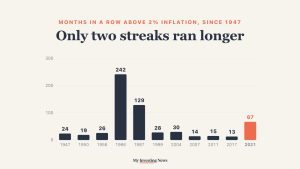
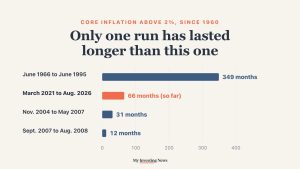
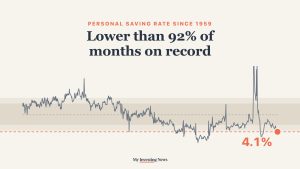
Inflation has run above 2% for 67 straight months, a streak only two since 1947 have topped. Real hourly pay is down 0.7% over the past year, though it has fallen in 14 years without a recession before.
Published: November 3, 2026 by Joel South
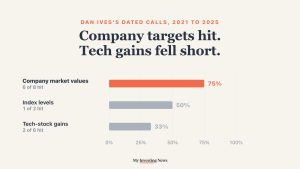
Dan Ives says the S&P 500 will reach 8,000 this year, 3.6% above its Oct. 27 close. Scored by a fixed rule, he hit 9 of his 16 dated calls since 2021, and his previous S&P 500 target fell about 1% short.
Published: November 3, 2026 by Eric Bleeker
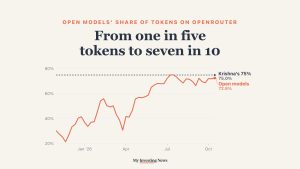
IBM’s CEO says economics, data control and geopolitics will push most AI work to open-weight models. On the OpenRouter marketplace they handled 72.6% of tokens in the week of Oct. 19, at list prices up to 99% below what GPT-4 cost.
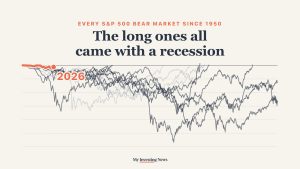
KPMG’s chief economist says a long 25% slide, plus maybe 10% more, would tip the U.S. into a mild recession. Every S&P 500 bear market since 1950 that fell for more than a year came with one, and households now hold more stock relative to income than ever.
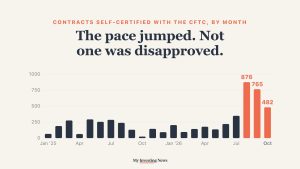
The CFTC's own product list backs him up: exchanges self-certified 5,512 contracts from January 2025 to Oct. 20, 2026, and none is marked disapproved. On Kalshi, most of the midterm betting came after Sept. 23.
Published: November 2, 2026 by Jeremy Phillips
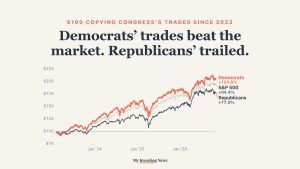
Warren says presidents and members of Congress shouldn't own individual stocks. Since February 2023, a fund copying Democrats' disclosed trades returned 104.8% to an S&P 500 fund's 94.4%, its Republican twin 77.9%, and the studies that found a big edge for Congress as a whole used 1980s and 1990s trades.
Published: November 2, 2026 by AJ Tiarsmith
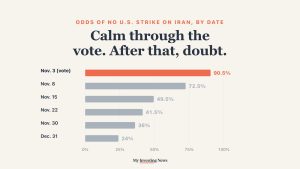
Jim Cramer and Morgan Stanley’s Mike Wilson both flagged the risk of U.S. strikes on Iran after the Nov. 3 vote, and Polymarket’s odds fall from 90.5% for a calm Election Day to 36% through Nov. 30. The same markets missed the last two breaks, pricing the calm at 95.5% and 98.8% the evening before.
Published: November 2, 2026 by Eric Bleeker
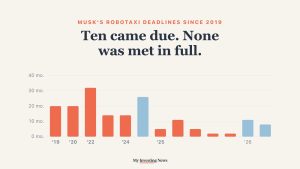
None of the 10 robotaxi deadlines Elon Musk has set that have come due was met in full. Texas’s driverless registry now lists 1,080 Tesla robotaxis, 573 of them Cybercabs, second only to Waymo.
Published: November 2, 2026 by Joel South
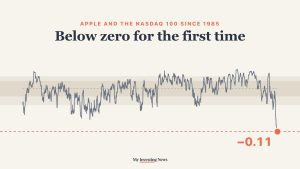
Apple’s three-month correlation with the Nasdaq 100 fell below zero on Aug. 10, something it never did in data back to 1985. Bilello’s cash point holds too: six of the Magnificent Seven line up the same way on free cash flow and this year’s return, with Amazon the exception.
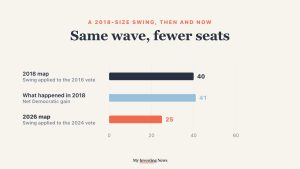
Wingrove says the House "looks gone" for Republicans and the map has shrunk since 2018. Swing districts actually rose from 70 to 78, but on this year's maps a 2018-size swing flips 25 Republican seats in our model, down from 40 on the 2018 map.
Published: November 1, 2026 by Joel South
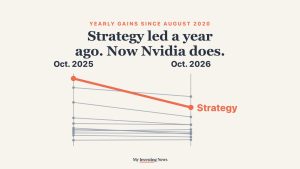
Saylor told Bloomberg that bitcoin and Strategy have beaten every big stock but Nvidia since 2020. Through the Oct. 27 close, Strategy returned 48.0% a year and bitcoin 36.2%, lower than he said, though only Nvidia did better among the Magnificent Seven.
Published: November 1, 2026 by AJ Tiarsmith
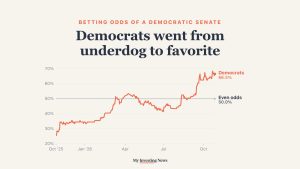
Cramer told CNBC that holding a 50-50 Senate would suit Republicans, while bettors give Democrats a 66.5% chance of control. We checked 111 Senate race markets since 2018: favorites priced at 70 cents or more won 92 of 93, but those priced under 70 cents won only 8 of 18.
Published: November 1, 2026 by Jeremy Phillips
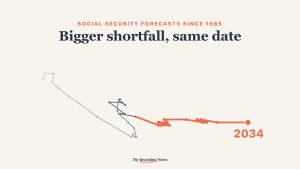
Across 44 annual reports, the projected run-out year has ranged from 2029 to 2051 and has held between 2033 and 2035 since 2012. Without a fix, today's under-40 workers would still be owed roughly 70% to 75% of scheduled benefits.
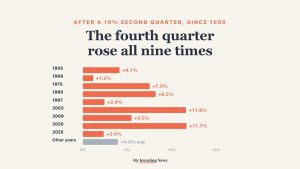
The Carson Group strategist's count is exact for every year since 1950, and those fourth quarters beat the average. But most fourth quarters rise anyway, and the streak broke once, in 1948.
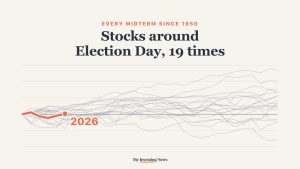
The Morgan Stanley strategist calls a midterm selloff a chance to buy. The S&P 500 pulled back 3% or more in the 10 trading days on either side of the vote in 12 of 19 midterms since 1950, and was higher a month later in 16.
Published: October 31, 2026 by AJ Tiarsmith
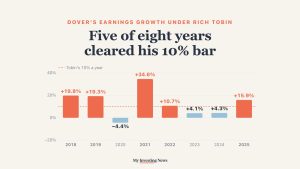
Tobin told Mad Money that Dover compounds earnings about 10% a year. Its filings show adjusted EPS grew 12.5% a year from 2017 to 2025, though three of those eight years fell well short of 10%.
Published: October 31, 2026 by Joel South
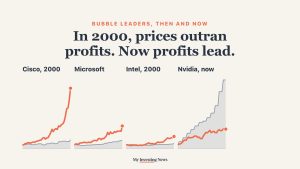
We ran the CNBC regular’s claim against the leaders of the dot-com bubble. In 2000, stock prices ran far ahead of profits. Over the past three years, Nvidia’s profits grew 18-fold while its market value grew five-fold.
Published: October 31, 2026 by Eric Bleeker
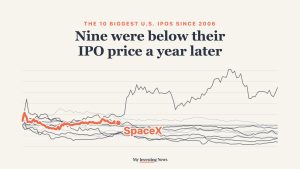
Nine of the 10 most valuable U.S. IPOs of the past 20 years were below their offer price a year later, with a median loss of 32%. Bettors on Polymarket expect Anthropic to close its first day between $1.75 trillion and $2 trillion.
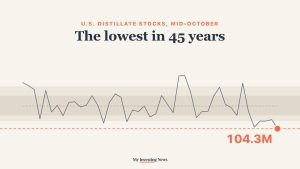
Wright told CNBC the diesel squeeze is a global problem. EIA data back him: U.S. distillate stocks are the lowest for mid-October since weekly records began in 1982, though measured in days of supply, 2022 was a bit tighter.
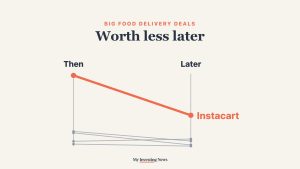
Reuters says DoorDash is in talks to buy Instacart at about $17 billion. Of four big delivery deals since 2020 with a later price to check, only Postmates was worth more later, and every buyer's stock trailed the S&P 500 two years on.
Published: October 30, 2026 by Jeremy Phillips
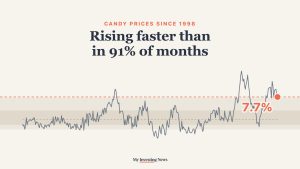
Sen. Warren listed Halloween packs up as much as 23%. The official candy price index rose 7.7% in the year to September, about twice overall inflation and faster than in 91% of months since 1998.
Published: October 30, 2026 by Eric Bleeker
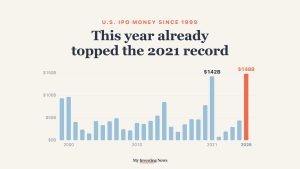
Cramer told Mad Money viewers that new stock supply is the biggest threat to this bull market. IPO proceeds have hit a record $148.3 billion, and four of the five biggest IPO years before this one were followed by a falling market.
Published: October 30, 2026 by AJ Tiarsmith
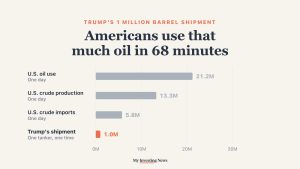
Trump greeted a tanker of Venezuelan crude in Corpus Christi on Oct. 27. EIA data show the cargo equals about 68 minutes of U.S. oil use, and Venezuelan oil was already arriving at 571,000 barrels a day.
Published: October 30, 2026 by Joel South
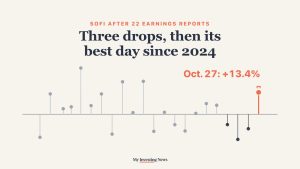
SoFi’s stock jumped 13.4% on Oct. 27 after the company raised its 2026 revenue target again. Its own filings back the growth claims, but its profit target has moved only a penny a share since January.
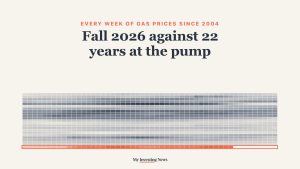
In the prices drivers pay, Bianco is right: every fall reading this year beat the old record of $3.91 from 2022. Adjusted for inflation, seven falls since 2004 cost more, led by 2012 and 2008.
Published: October 29, 2026 by Joel South
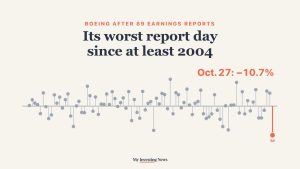
Guy Adami says Boeing is more than a year behind on free cash flow. By Boeing's own 2022 plan, the $10 billion goal has slipped three years, and the Oct. 27 drop was its worst report-day reaction since at least 2004.
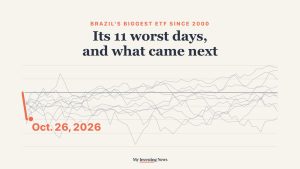
Polymarket favored the loser right up to the vote, though its margin market saw a close race. We checked what bettors expected, and what EWZ's worst days since 2000 say about what comes next.
Published: October 29, 2026 by Jeremy Phillips
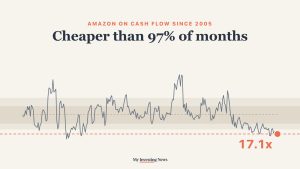
We tested the Carson Group strategist's claim against 21 years of Amazon's results. Trailing earnings and cash flow back him up, though Anthropic gains do much of the work. The sales multiple says the opposite.
Published: October 29, 2026 by Eric Bleeker
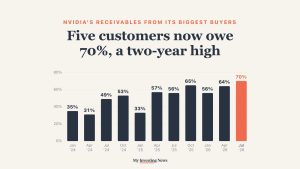
Nvidia’s July filing backs up the Big Short investor’s receivables number to the percentage point. Sales are spread more widely, and the reason the bills piled up is longer payment terms for a few big buyers.
Published: October 29, 2026 by AJ Tiarsmith
The former Fed governor told CNBC the Fed risks hiking into price spikes that will fade on their own. Core PCE inflation was 3.0% in August, but its three-month pace slowed to 2.0%.
Published: October 28, 2026 by Jeremy Phillips
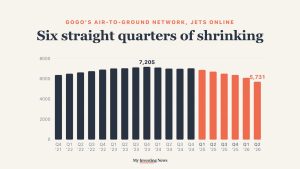
United's CEO says Starlink is now on 48% of its flights, a line Elon Musk amplified on Oct. 27. United's own numbers back the rollout, while Gogo's 48% drop since a director bought $1.1 million of stock traces to its shrinking air-to-ground network.
Published: October 28, 2026 by Eric Bleeker
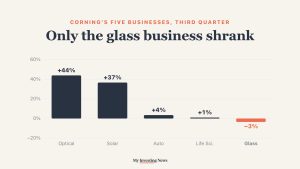
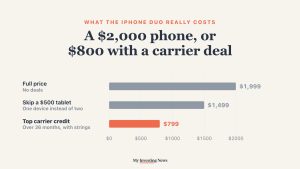
Corning's CEO went on CNBC to talk up the most Corning content ever in an Apple device and was asked why the $1,999 iPhone Duo's inner screens were cracking. He pointed to the hinge. His own quarter shows fiber now drives the company, while the glass unit shrank.
Published: October 28, 2026 by AJ Tiarsmith
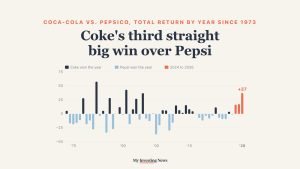
Jim Cramer says Coca-Cola “can’t stop delivering,” and this year Coke has beaten PepsiCo by 37 points with dividends, its third straight double-digit win. Over five decades, though, Pepsi has been the better stock, and Cramer called it a buy three weeks ago.
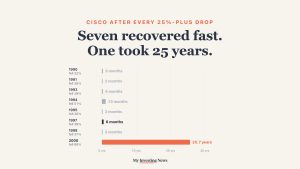
Fundstrat's Tom Lee says the AI selloff looks like Cisco's 1997 dip, which healed within months. Cisco's full record shows seven drops of 25% or more that recovered within 14 months, and one, starting in 2000, that took 25 years.
Published: October 27, 2026 by Joel South
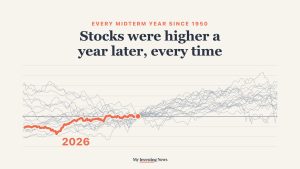
Midterm years always extract their price from investors before the calendar turns generous, and 2026 has already collected. Now a pattern stretching back to 1950 is signaling what tends to come next for the S&P 500.
Published: October 27, 2026 by AJ Tiarsmith
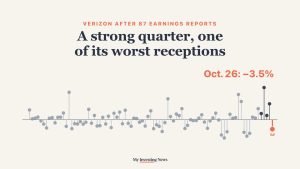
Verizon just posted subscriber numbers that shocked Wall Street, but analyst Craig Moffett says the reason behind the surge has nothing to do with what most people assumed the new CEO would do.
Published: October 27, 2026 by Jeremy Phillips
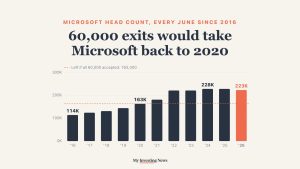
Joe Kernen sees only two explanations for Microsoft offering buyouts to a quarter of its workforce, and neither one flatters the company the way its stock price suggests it should be flattered.
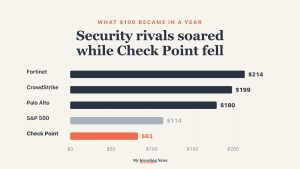
A Check Point executive who spent years as a CISO says AI has handed attackers a speed advantage that security teams have never faced before, and the gap is widening faster than most companies realize.
Published: October 27, 2026 by Eric Bleeker
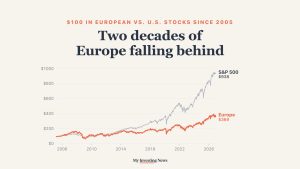
Peter Tchir sees a structural shift building in Europe that most investors are sleeping on, and he pairs it with a near-term geopolitical flashpoint that could rattle oil markets without warning.
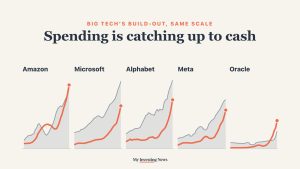
Ken Griffin just compared GPU rental markets to airline seats, and the analogy carries a brutal implication for debt-heavy chip landlords already watching their stock crater. Find out what the telecom fiber collapse of the early 2000s has to do with the AI infrastructure boom today.
Most investors chasing AI gains are focused on healthcare and finance, but Franklin Templeton's Jonathan Curtis argues they are looking at the wrong sectors entirely. His reasoning challenges a consensus trade that has drawn billions in capital.
Updated: October 28, 2026 by AJ Tiarsmith
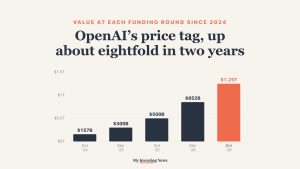
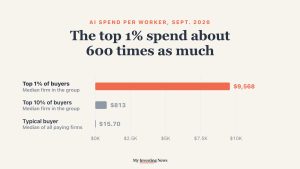
OpenAI is racing toward one of the largest private funding rounds ever, and one prominent venture investor says the valuation surprises him in a way he did not expect. His reasoning and his hesitations are worth knowing before the IPO window opens.
Updated: October 28, 2026 by Joel South
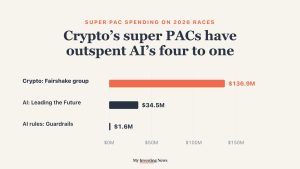
A Stanford political scientist says campaign money matters far more at one specific point in the election calendar, and AI and crypto industries already figured that out before most voters were paying attention.
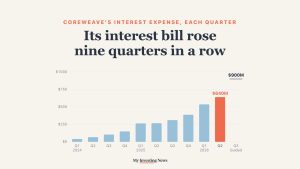
CoreWeave has shed a third of its value in a month as lenders pull back from debt-heavy AI data center operators, but NVIDIA's CEO is betting that surging demand will force the financing market to reopen before the cash runs out.
Updated: October 28, 2026 by Eric Bleeker
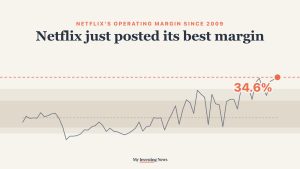
Netflix crushes legacy Hollywood on profit margins and free cash flow, yet its stock sits near multi-year lows while rivals barely break a sweat on entertainment spending. Barron's Jack Hough names the one streaming company he'd rather own, with three massive asterisks.
Ken Griffin called it a bubble, but Chamath Palihapitiya went further and traced exactly where the money originates, who is cycling it around, and why the math looks nothing like the cloud boom people keep comparing it to.
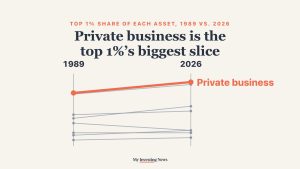
Economists studying the top of the American wealth ladder expected to find tech founders and hedge fund titans. What they found instead upended nearly every assumption about how extreme fortunes actually get built.
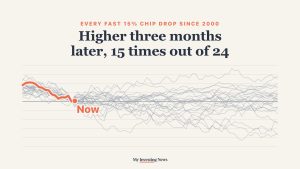
A single options trader just put $4 million on chip stocks falling further next week, even as leveraged bulls rushed in from the other side. The options flow tells two very different stories about where semiconductors go from here.
A tech insider got his hands on Apple's $2,000 folding iPhone before almost anyone else, and his verdict raises a question every tempted buyer needs to answer before opening their wallet.
Updated: October 27, 2026 by Jeremy Phillips
Apollo's chief economist says the era of cheap money is gone for good, and the AI buildout is one of the first casualties of what comes next.